
Key Takeaway
Meta-analysis of 44 RCTs finds balneotherapy significantly reduces pain and improves function across rheumatic conditions including osteoarthritis, rheumatoid arthritis, ankylosing spondylitis, and fibromyalgia, with a favorable safety profile.
Summary
This comprehensive systematic review and meta-analysis assessed the efficacy and safety of balneotherapy across the full spectrum of rheumatic diseases. The authors included 44 randomized controlled trials encompassing patients with osteoarthritis, rheumatoid arthritis, ankylosing spondylitis, fibromyalgia, and chronic low back pain.
Pooled analyses showed statistically significant reductions in pain and improvements in physical function for balneotherapy compared to control interventions. The benefits were most pronounced for osteoarthritis and ankylosing spondylitis, with moderate effects observed for fibromyalgia and rheumatoid arthritis. Subgroup analyses suggested that mineral-rich and sulfurous thermal waters were associated with larger treatment effects.
Safety data from the included trials showed that balneotherapy was well tolerated, with adverse events being mild and infrequent (typically transient skin irritation or mild fatigue). The authors concluded that balneotherapy represents a safe and effective non-pharmacological adjunct for managing pain and disability in rheumatic diseases, though they noted the need for larger, higher-quality trials with standardized protocols.
Figures
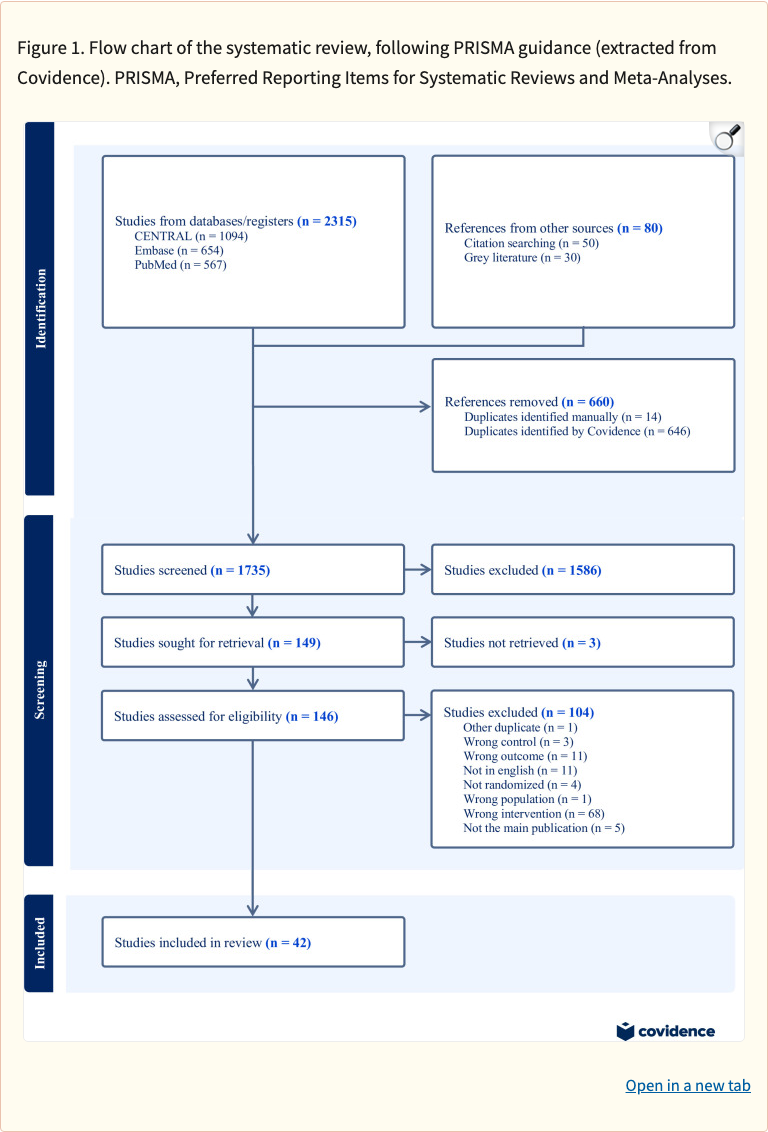 Figure 1
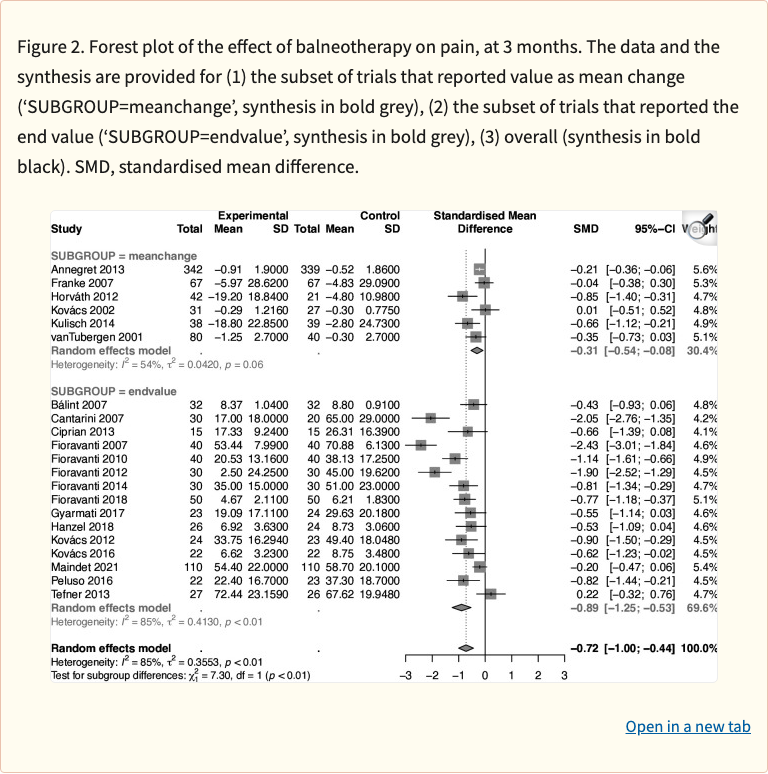 Figure 2
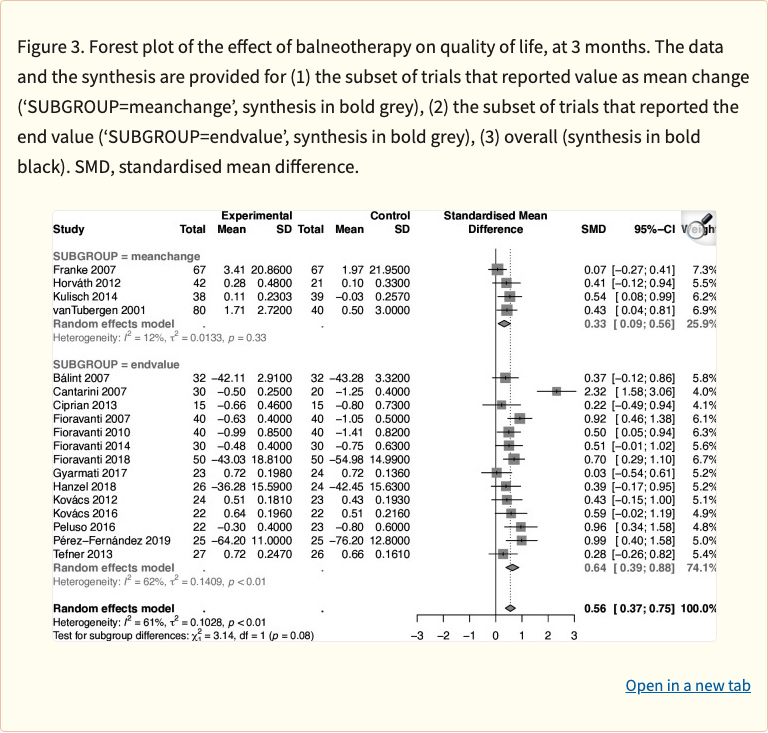 Figure 3