
Key Takeaway
BPC-157 upregulates growth hormone receptors and accelerates tendon healing through enhanced fibroblast activity
Summary
Study examining BPC-157's effects on tendon fibroblast cells and growth hormone receptor expression. Results suggest BPC-157 accelerates tendon-to-bone healing by enhancing cellular response to growth factors.
Methods
In vitro study using cultured tendon fibroblasts treated with BPC-157. Measured growth hormone receptor expression, cell proliferation, and migration. Also conducted in vivo rat rotator cuff model.
Key Results
- Significant upregulation of growth hormone receptors
- Increased tendon fibroblast proliferation
- Enhanced cell migration to injury site
- Improved tendon-to-bone healing in rat model
- Better organized collagen formation
- Faster functional recovery vs control
Figures
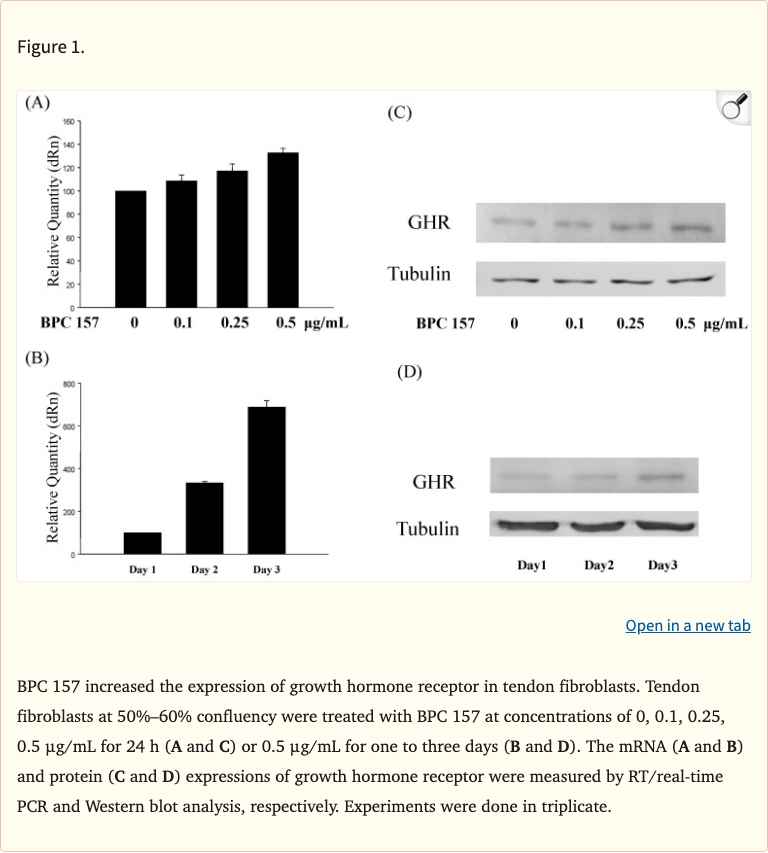 Figure 1
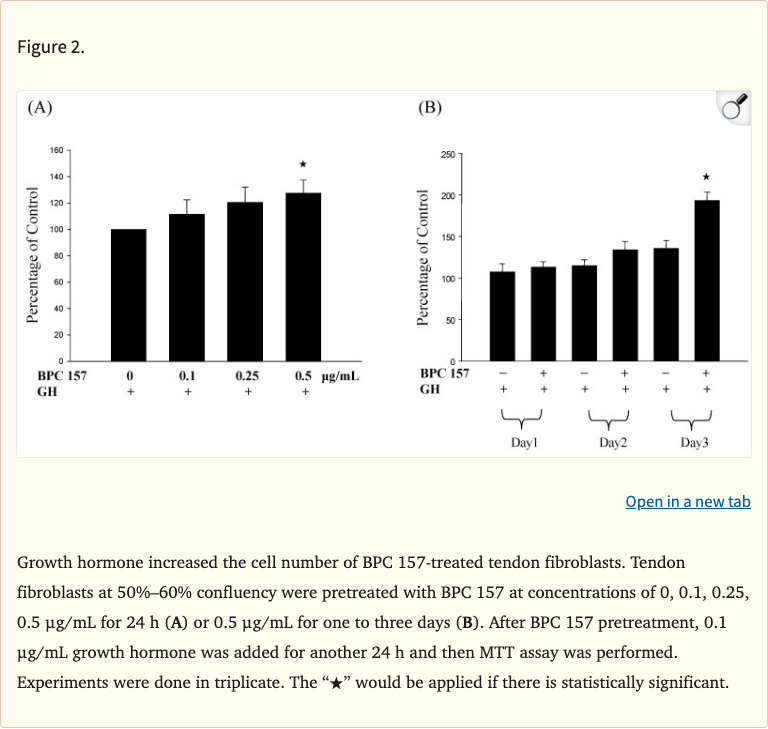 Figure 2
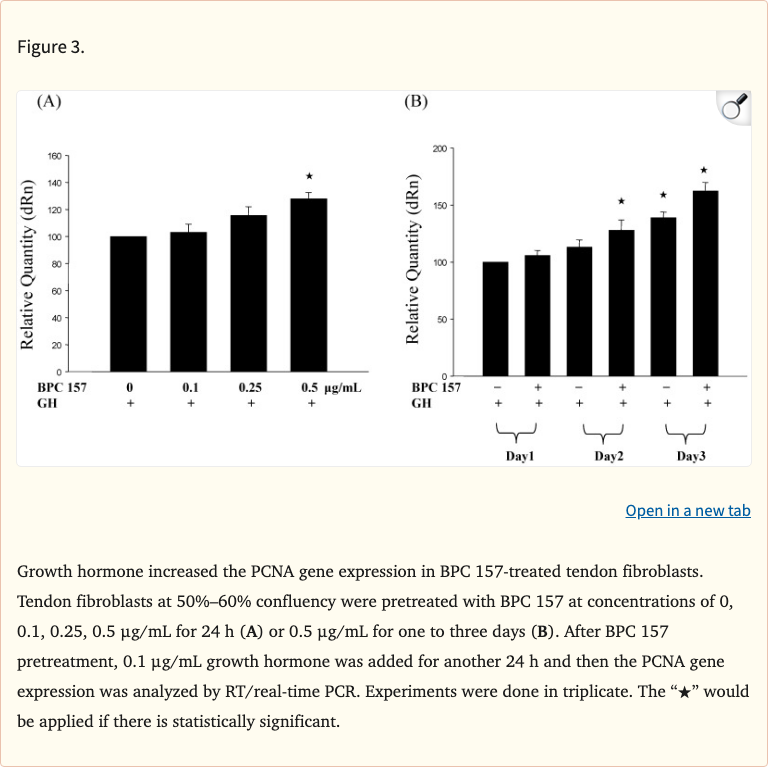 Figure 3
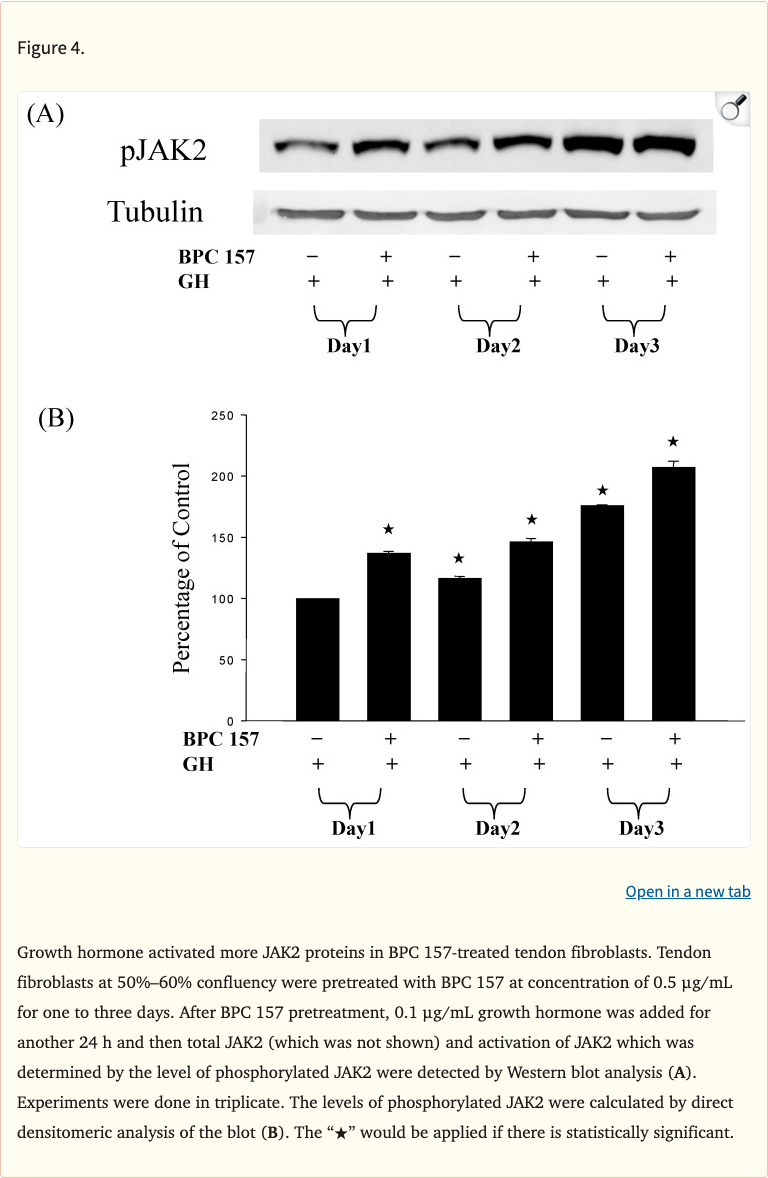 Figure 4
Limitations
- In vitro and rat model only
- No human subjects
- Specific dose-response not fully characterized
- Long-term effects not assessed