
Key Takeaway
Barefoot walking produces distinct biomechanical patterns including shorter strides, increased cadence, and greater foot muscle activation compared to shod walking.
Summary
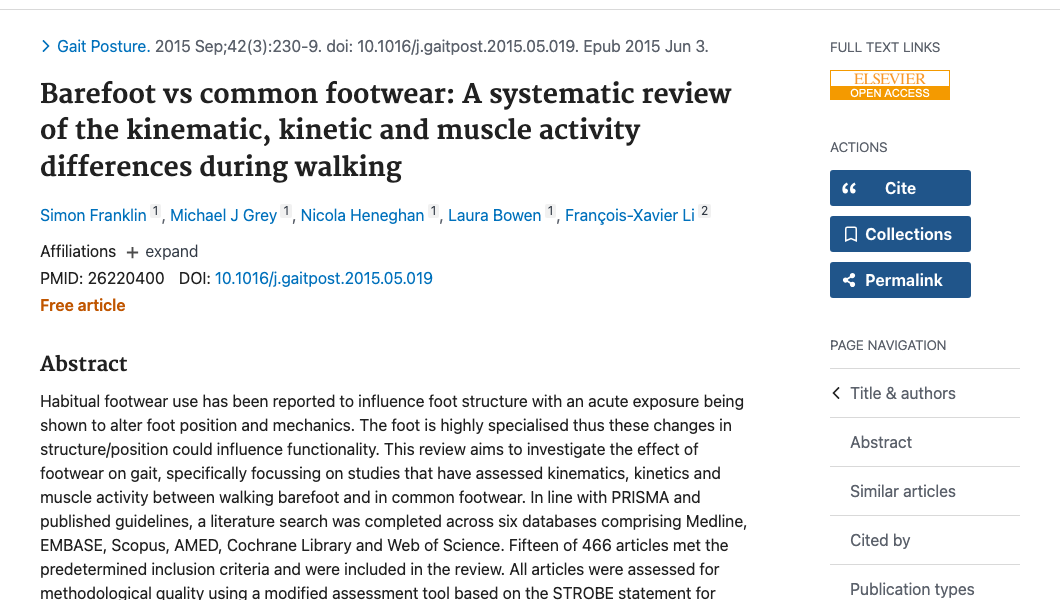
This systematic review compared the biomechanics of barefoot versus shod walking, analyzing differences in kinematics (movement patterns), kinetics (forces), and muscle activity. The review included 22 studies comparing various footwear conditions.
Barefoot walking consistently demonstrated shorter stride length, higher cadence, reduced heel strike angle, and greater activation of intrinsic foot muscles. These changes appear to be adaptations that reduce impact forces and enhance proprioceptive feedback. The findings suggest footwear fundamentally alters natural gait patterns.
Methods
- Systematic review of 22 studies
- Compared barefoot vs shod walking biomechanics
- Analyzed kinematics, kinetics, and EMG
- Multiple footwear types compared to barefoot
Key Results
- Shorter stride length barefoot
- Higher cadence (more steps per minute)
- Reduced heel strike angle
- Greater ankle plantarflexion at contact
- Increased foot muscle activity
- Lower loading rates in some studies
Limitations
- Heterogeneous study designs and measures
- Most studies lab-based (may not reflect natural walking)
- Acute effects studied (not long-term adaptation)
- Variable footwear conditions compared