
Key Takeaway
Postural stability and balance training reduce injury risk, with improvements in proprioception and neuromuscular control underlying the benefits.
Summary
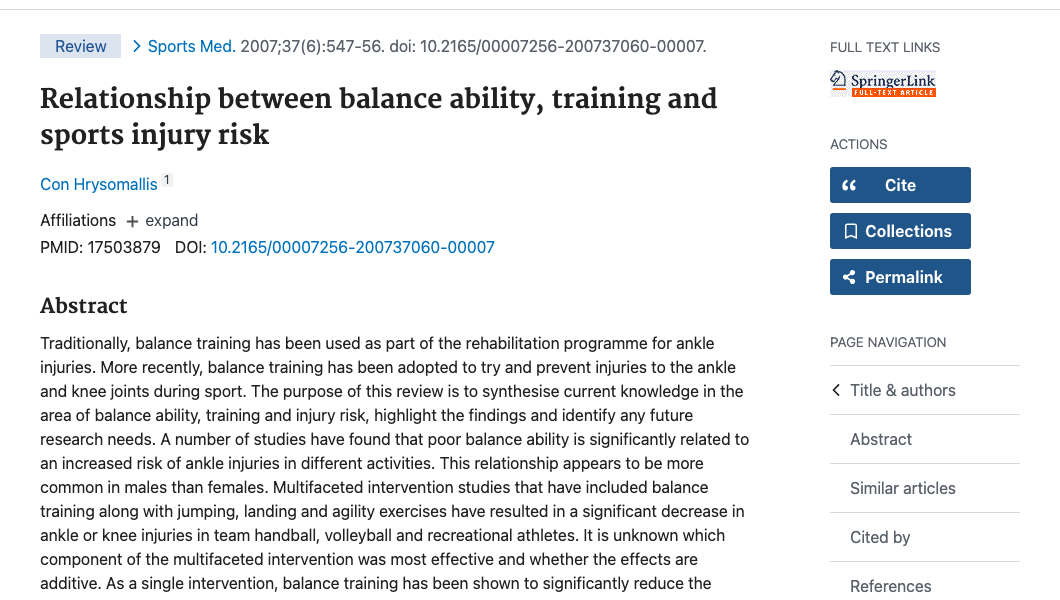
This comprehensive review examined the relationship between postural stability, balance ability, and sports injury risk. The review analyzed how postural deficits contribute to injury and how balance training can mitigate these risks.
The review found strong evidence linking poor postural control to increased injury risk, particularly for ankle sprains and ACL injuries. Balance and postural training programs were shown to reduce injury rates by 20-60% in various sports, with effects attributed to improved proprioception and neuromuscular control.
Methods
- Systematic review of balance and injury literature
- Analyzed prospective studies on injury prediction
- Reviewed intervention studies on balance training
- Examined mechanisms of postural control
Key Results
- Poor balance predicts increased injury risk
- Balance training reduces injury rates 20-60%
- Effects strongest for ankle and knee injuries
- Improvements in proprioception and reaction time
- Postural training transfers to dynamic activities
Limitations
- Heterogeneous balance measures across studies
- Variable training protocols
- Sport-specific findings may not generalize
- Difficult to isolate postural vs other training effects