
Key Takeaway
Comprehensive review concluding that claimed health benefits of raw milk lack scientific support while foodborne illness risks are well-documented
Summary
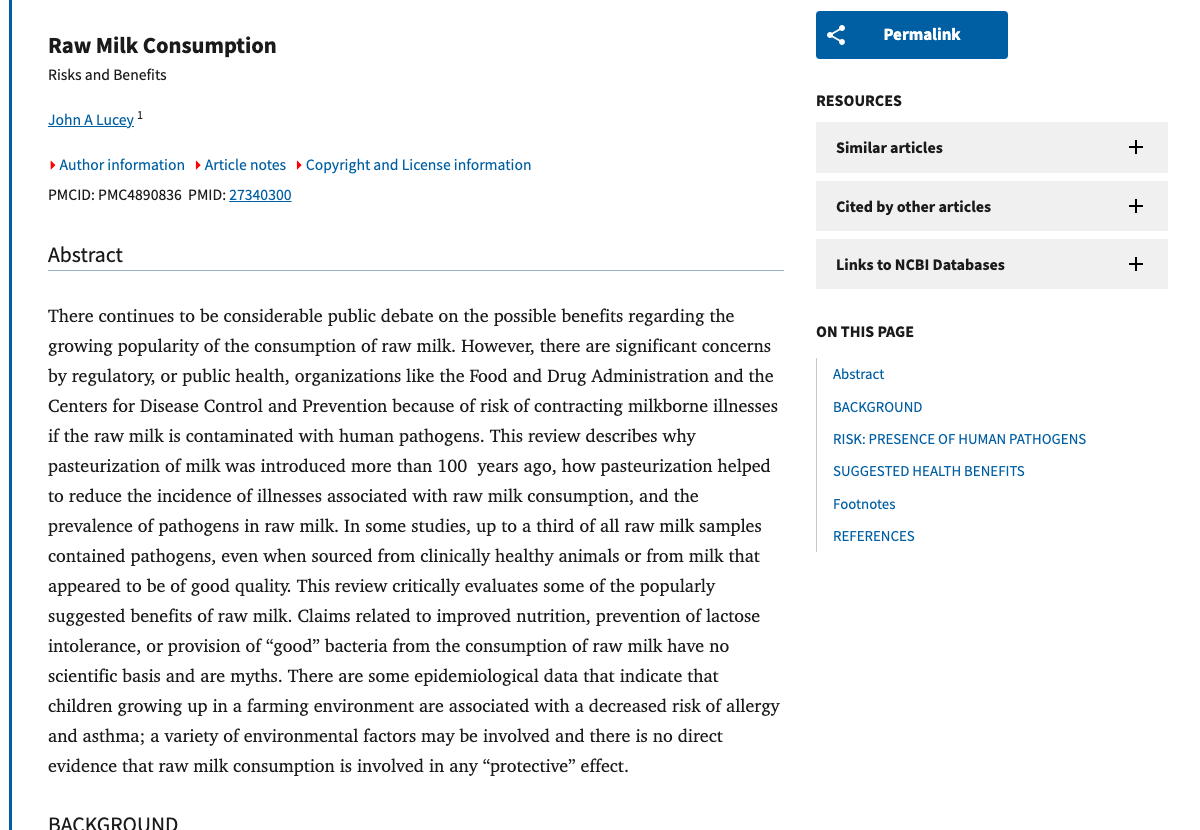
Thorough scientific review examining both the claimed benefits and documented risks of raw milk consumption. Written by a dairy science professor at University of Wisconsin-Madison, evaluating the evidence base for popular raw milk claims.
Methods
- Narrative review of published literature
- Examined nutritional claims (enzymes, vitamins, proteins)
- Reviewed epidemiological studies on allergies
- Analyzed foodborne illness outbreak data
- Compared raw vs. pasteurized milk composition
Key Results
On Nutritional Claims:
- Vitamin losses from pasteurization are minor (5-20% for B vitamins, 20% for C)
- Vitamin C not a significant nutrient in milk anyway
- Protein quality not significantly affected by pasteurization
- Enzymes in raw milk largely inactivated by stomach acid
- Lactase claim not supported by evidence
On Allergy/Asthma Claims:
- Farm studies show associations but cannot isolate raw milk effect
- Boiled farm milk shows similar (reduced) protection
- Overall farm exposure likely the key factor
- No RCTs support raw milk for allergy prevention
On Food Safety:
- CDC: raw milk 150x more likely to cause outbreaks per serving
- Pathogens documented: Campylobacter, Salmonella, E. coli, Listeria
- Children, elderly, immunocompromised at highest risk
- Even "clean" farms can have contamination events
Limitations
- Narrative review (not systematic)
- Author from dairy science background (potential bias either direction)
- Published in nutrition journal, not peer-reviewed medical journal
- Does not address quality differences between industrial and small farm raw milk
- Limited discussion of fermented raw milk products