
Key Takeaway
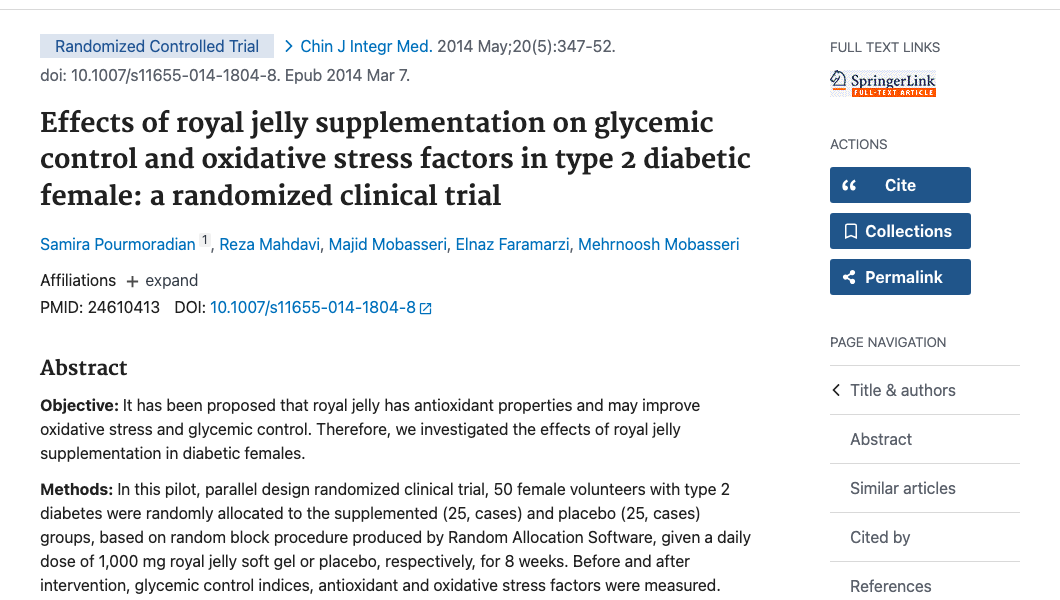
In 50 women with type 2 diabetes, 1000 mg/day royal jelly for 8 weeks significantly reduced HbA1c and increased insulin versus placebo, with concurrent improvement in antioxidant markers.
Summary
Randomized, parallel-group pilot RCT in 50 female volunteers with type 2 diabetes. Participants were allocated via random block procedure to either 1000 mg/day of royal jelly soft gels or placebo for 8 weeks. Glycemic indices, insulin concentration, and oxidative stress markers were measured before and after the intervention.
The royal jelly group showed significant reductions in mean HbA1c and significant increases in mean serum insulin compared with placebo. Changes in fasting blood glucose favored royal jelly but reached statistical significance only in some subgroup analyses. Antioxidant capacity increased and oxidative stress markers decreased in the royal jelly group.
Though modest in size, this trial is frequently cited as early human evidence that royal jelly can improve long-term glycemic control and insulin levels in type 2 diabetes. The authors recommended replication in larger, mixed-sex cohorts and with longer follow-up before clinical use.