
Key Takeaway
Therapeutic exercises significantly improve forward head posture, rounded shoulders, and thoracic kyphosis in people with upper crossed syndrome.
Summary
This systematic review and meta-analysis examined the effectiveness of various therapeutic exercise interventions for correcting forward head posture (FHP), rounded shoulders, and hyperkyphosis in individuals with upper crossed syndrome. The authors searched multiple databases and included randomized controlled trials that used exercise as an intervention.
The meta-analysis found that therapeutic exercises produced statistically significant improvements across all three postural deviations. Forward head posture showed meaningful reductions in craniovertebral angle deviations, rounded shoulders improved as measured by shoulder angle assessments, and thoracic kyphosis decreased significantly compared to control groups.
The results support a multimodal exercise approach targeting the muscle imbalances characteristic of upper crossed syndrome -- strengthening weak deep neck flexors, lower trapezius, and serratus anterior while stretching tight pectorals, upper trapezius, and levator scapulae. The findings reinforce that consistent corrective exercise can meaningfully reverse the postural changes associated with prolonged desk work and device use.
Figures
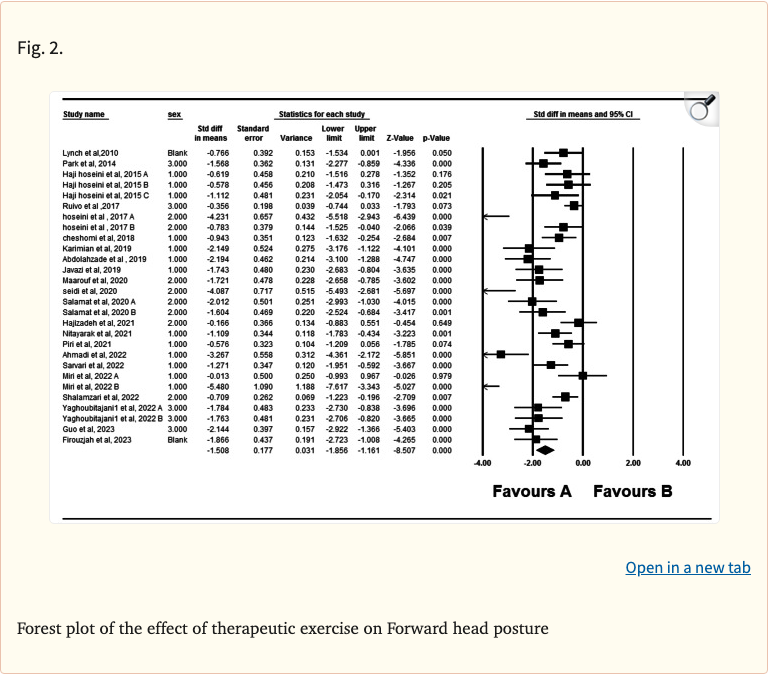 Figure 1
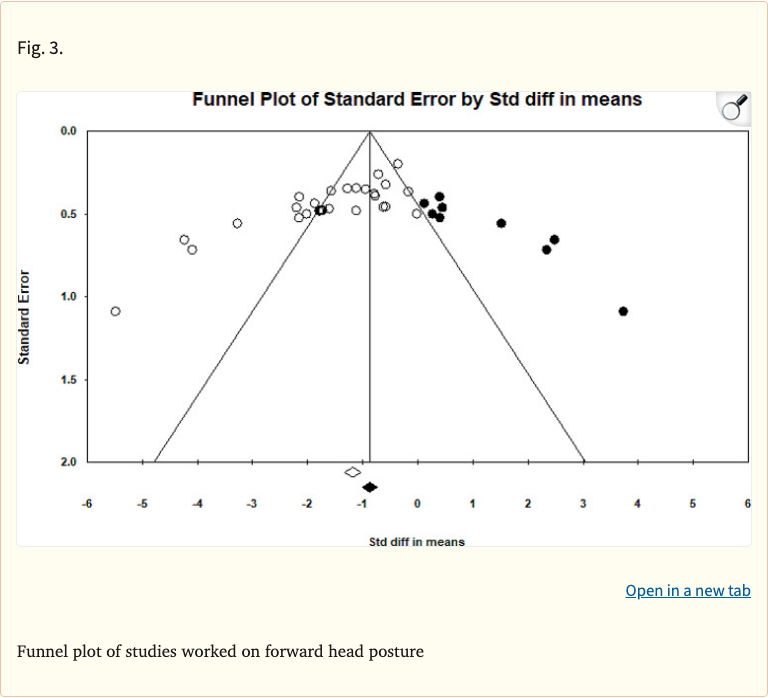 Figure 2
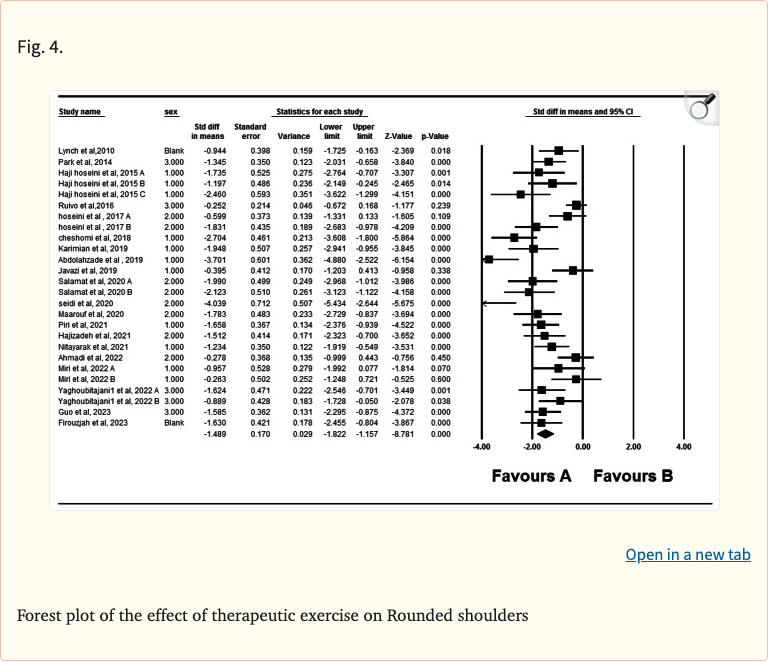 Figure 3
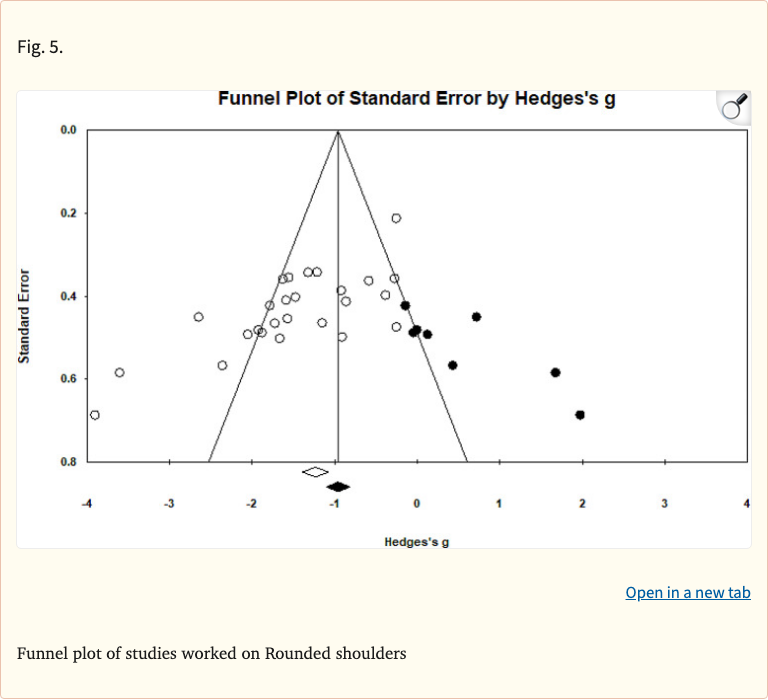 Figure 4
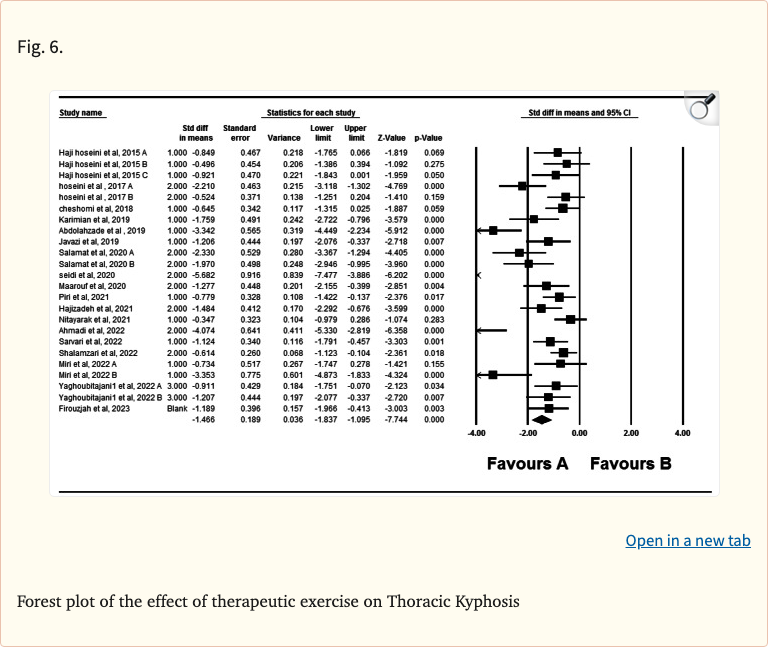 Figure 5
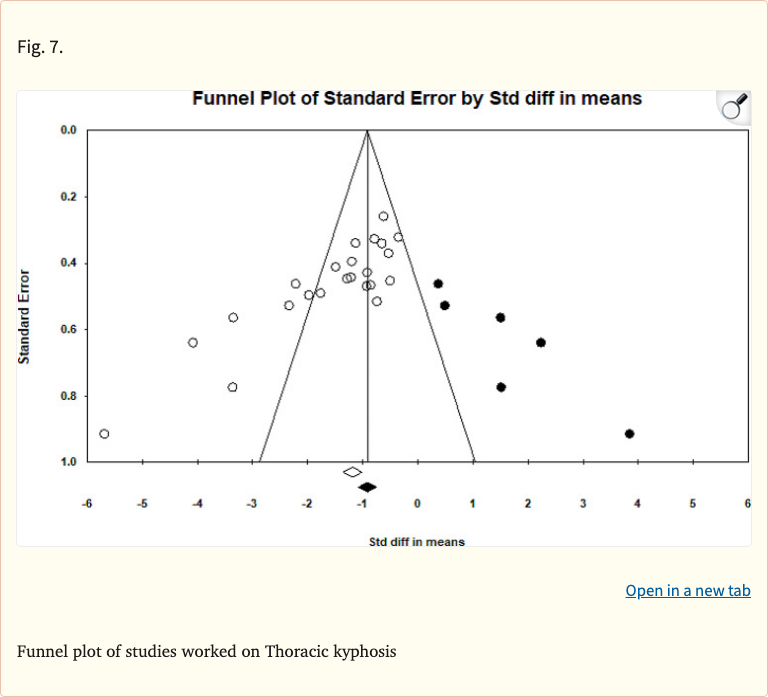 Figure 6