
Key Takeaway
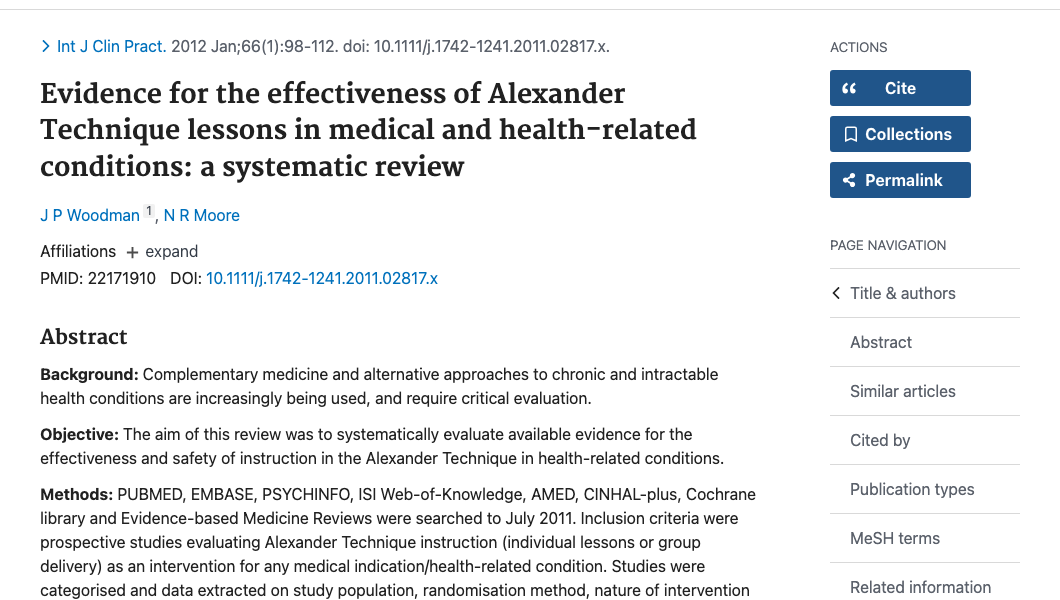
Systematic review of 18 studies found strong evidence that Alexander Technique reduces chronic back pain and disability, moderate evidence for Parkinson's disease benefits, and preliminary evidence for balance, posture, and respiratory function.
Summary
This systematic review evaluated the evidence for Alexander Technique (AT) lessons across a range of medical and health-related conditions. The authors screened 271 publications and selected 18 studies for detailed analysis, including three RCTs, two controlled non-randomized studies, eight non-controlled studies, four qualitative analyses, and one health economic analysis.
The strongest evidence was found for chronic back pain, where the landmark ATEAM trial demonstrated that AT lessons significantly reduced pain and disability compared to standard GP care, with sustained long-term improvements. Moderate evidence supported AT for Parkinson's disease, where patients showed sustained improvements in daily activity performance. Preliminary evidence suggested potential benefits for balance in the elderly, general chronic pain, posture, respiratory function, and stuttering, though insufficient evidence existed for formal recommendations in these areas.
The review concluded that AT has the most robust evidence base for chronic back pain management, while acknowledging that research in other conditions remains limited. The authors noted that the high quality of the ATEAM trial strengthened the evidence base considerably, but called for more rigorous studies across the range of conditions where AT is commonly used.