
Key Takeaway
Honey-based wound care significantly improves healing rates and reduces wound size in diabetic foot ulcers compared to standard treatments.
Summary
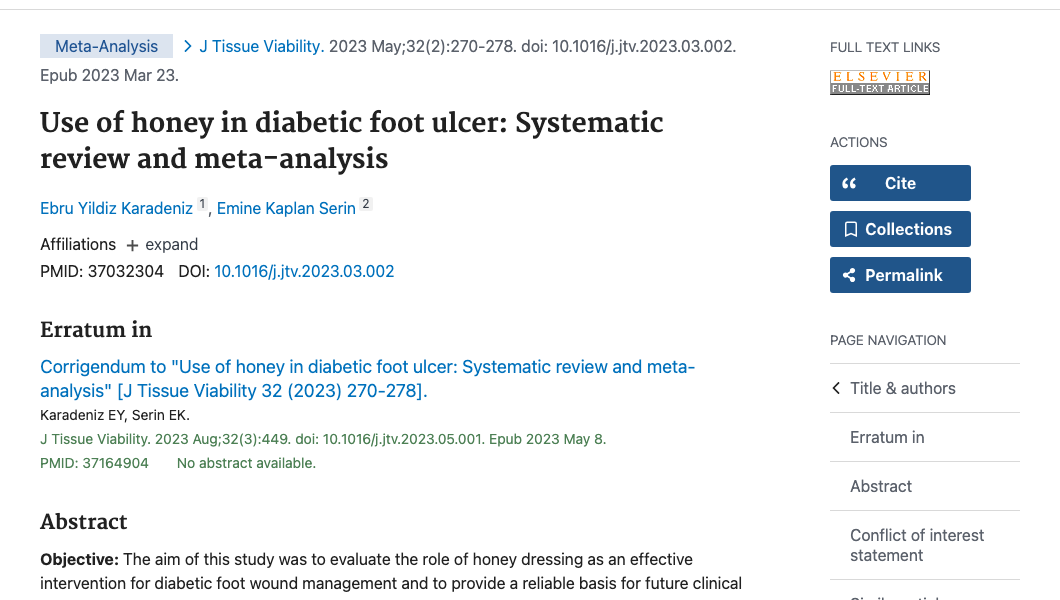
This systematic review and meta-analysis assessed the effectiveness of honey in the treatment of diabetic foot ulcers (DFUs). The authors conducted a comprehensive literature search across major databases for randomized controlled trials comparing honey-based interventions to conventional wound care in patients with DFUs.
The pooled analysis found that honey treatment was associated with significantly higher rates of complete wound healing and greater reductions in wound surface area compared to standard dressings. Honey-treated ulcers also demonstrated faster healing trajectories, with shorter mean time to wound closure.
The authors noted that honey's broad-spectrum antimicrobial activity, ability to maintain a moist wound environment, and anti-inflammatory effects make it a particularly promising adjunct for diabetic wounds, which are notoriously difficult to heal due to impaired circulation and immune function. They concluded that honey is a safe and effective complementary therapy for diabetic foot ulcer management.