Summary
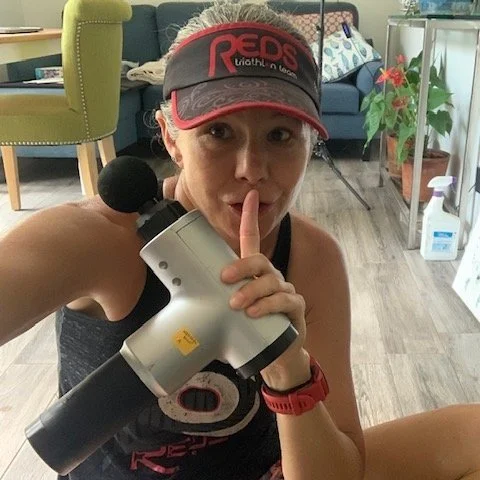
Dr. Brian Cole and co-host Steve Cashel sit down with Dr. Warren Brule, CEO of Percussion Fitness and co-developer of the Buff Enough Power Massager, to discuss the benefits of cordless percussive massage therapy. Dr. Cole shares his clinical perspective on the evidence supporting percussion devices for pre-workout mobilization, increased blood flow, tendon stretch, and post-workout recovery. Steve describes how nightly percussion therapy has helped rehabilitate his surgically repaired shoulder. Dr. Brule explains the difference between oscillatory percussion massage and reciprocating (jackhammer-style) devices. The oscillatory approach provides broader surface area contact and can safely be used near bony surfaces, on the elderly, and even on people with Parkinson's tremors. He recommends a "nice-mean-nice" protocol: start with the gentler oscillatory tool, use the reciprocating device in the middle, and finish with the oscillatory tool to leave patients feeling good.
Key Points
- Percussive therapy evidence supports benefits for pre-workout mobilization, blood flow, tendon stretch, range of motion, and muscle soreness relief
- Oscillatory percussion massage provides broader surface contact than reciprocating (jackhammer) devices and is safer near bony surfaces
- The "nice-mean-nice" protocol starts and ends with oscillatory percussion, with reciprocating massage in the middle
- Percussion devices can help with post-surgical rehabilitation, including shoulder surgery recovery
- Oscillatory tools have applications for Parkinson's tremors, elderly users, and people with hip or knee conditions
- Percussion therapy redirects the brain's attention away from pain while improving circulation and mobility
- Self-care with percussion devices is accessible and affordable for home use
Key Moments
Clinical evidence for percussive therapy benefits
Dr. Cole explains the evidence showing electronic percussive devices can help with pre-workout mobilization, blood flow, tendon stretch, range of motion, and muscle recovery, making them a reasonable self-care modality.
"I'm a believer. I think there's some interesting evidence, Steve, that shows that these electronic percussive devices can help with pre-workout mobilization, increasing blood flow, tendon stretch, and so forth, and also for recovery. So there's some data that shows that it might increase range of motion, it might promote blood circulation, it can relieve sore muscles."
Oscillatory vs reciprocating percussion massage
Dr. Brule explains why oscillatory percussion is safer than reciprocating devices near bony surfaces like the patella and tibia, and introduces the "nice-mean-nice" protocol for combining both types.
"But they can't be used often on bony surfaces. So that's where we really get a problem. Let's say you have somebody who had a knee problem. Well, you can't use that over the patella. And you've got to be pretty careful around the tibia."
Percussion therapy for Parkinson's and elderly users
Dr. Brule describes how oscillatory percussion massage can steady tremors in Parkinson's patients and has universal application from petite women and elderly users to large athletes.
"it can steady those tremors to some degree, and it's being used in some different programs around the country to help people with Parkinson's in their other work that they're doing with the rehab. Petite women, elderly, but also the big burly athlete can use it. They may like it on the edge, on the side, but it's..."