Summary
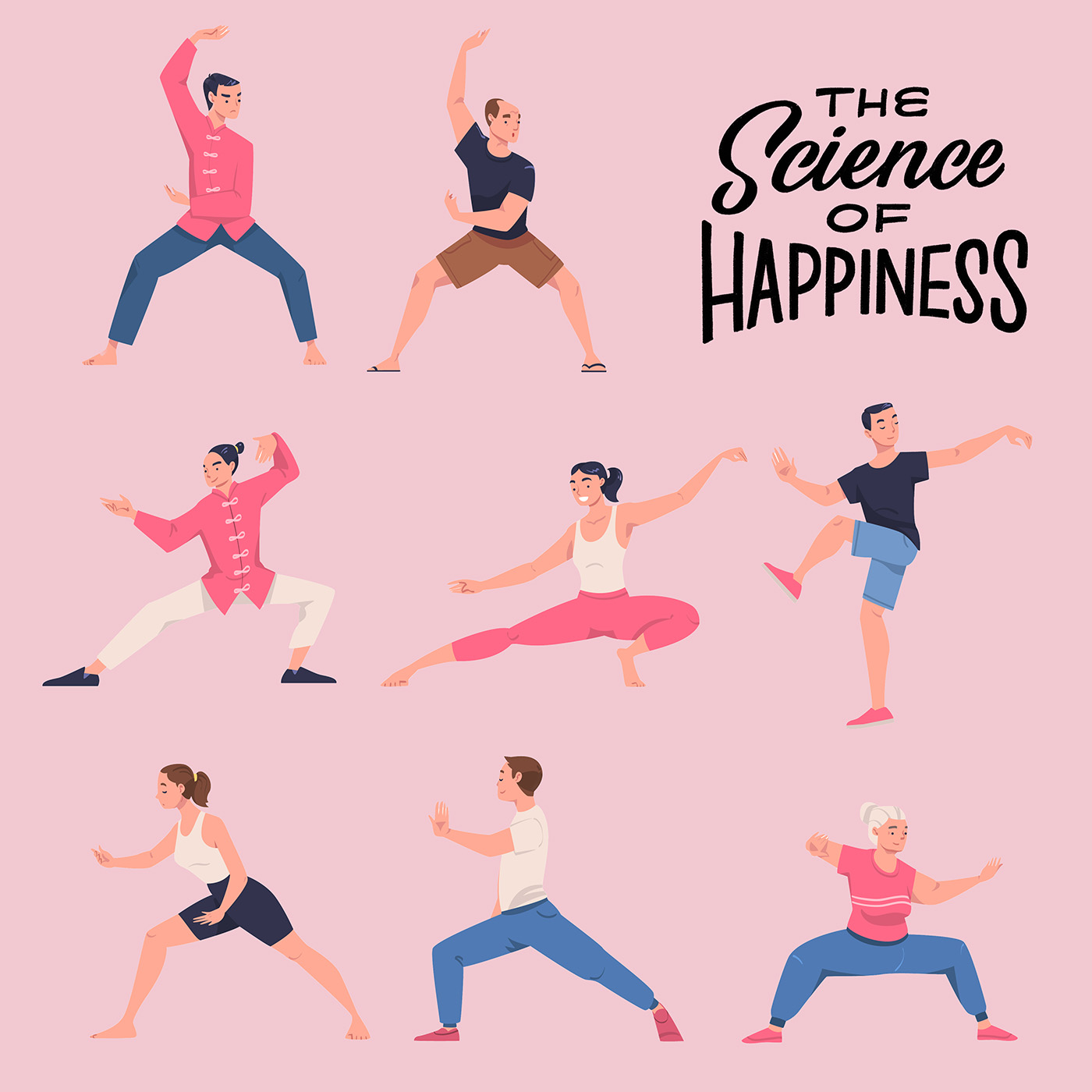
Dacher Keltner hosts a two-part episode featuring Oakland chef Ace Borrell, who practiced Qigong for several weeks after experiencing burnout, diabetes, and 50 pounds of weight gain following the loss of his restaurant to a fire. Ace describes how just 10 minutes of daily Qigong gave him mental clarity, emotional balance, and a sense of peace he had not found through years of seated meditation alone. He notes improved body awareness, better performance at the gym, and the ability to separate himself emotionally from stressful situations. The second half features Harvard psychologist Peter Wayne, who has spent 40 years practicing and researching Qigong. Wayne discusses clinical evidence showing Qigong is one of the best tools for preventing falls in aging populations, reducing chronic pain, and improving mood. He frames Qigong as a multi-system intervention that affects mind, body, cardiovascular, breathing, muscles, and nerves simultaneously. Wayne describes his agenda to dissolve the hyphen between mind and body, explaining that the shapes we make in Qigong are encoded with information that affects our nervous and endocrine systems.
Key Points
- 10 minutes of daily Qigong practice produced noticeable improvements in mental clarity, emotional balance, and confidence within a few weeks
- Qigong serves as a more accessible alternative to seated meditation -- the movement component keeps practitioners engaged and embodied
- Harvard research shows Qigong is one of the best tools available for preventing falls in aging populations -- no pill can match it
- Clinical evidence supports Qigong for back pain, neck pain, knee osteoarthritis, and mood/depression
- Peter Wayne describes Qigong as a multi-system, non-drug intervention that affects mind, body, cardiovascular, breathing, muscles, and nerves simultaneously
- Studies from Sweden show children who practice Qigong for a couple months report less stress, better self-concept, and feeling calm yet alert
- 12 weeks of Qigong training helped graduate students on the edge of burnout develop tools to manage stress
- Research shows Qigong increases telomerase activity, supporting DNA health and cellular aging
Key Moments
Qigong as a multi-system non-drug intervention
Harvard psychologist Peter Wayne explains that Qigong prevents falls better than any available drug, reduces chronic pain, and works as a multi-system intervention hitting mind, body, cardiovascular, breathing, muscles, and nerves simultaneously.
"It seems to be one of the best, if not the best, tool we have out there for preventing falls. There's no pill you can take to prevent falls. This seems to be like a multi-non-drug intervention that hits multiple systems and affects the whole systems and their interactions. Mind, body, cardiovascular breathing, muscles, nerves."
Personal experience of Qigong calming the nervous system
Chef Ace Borrell describes how daily Qigong practice gave him full-body energy awareness, mental peace, and the ability to separate himself from stressful situations after years of health struggles.
"In the simplest terms I could put it is I could feel the qi or energy really moving throughout my body. Like a full body, kind of just like awareness. And that's so hard to get nowadays. We just have a screen in our hands and we're just staring at it, hunched over. It's just so disembodied from ourselves."
Dissolving the hyphen between mind and body
Peter Wayne discusses his research agenda to dissolve the mind-body divide, explaining that the shapes we make in Qigong are encoded with information that affects our nervous and endocrine systems, rooted in pre-verbal evolutionary communication.
"One of my agendas is to sort of dissolve the hyphen between mind and body. We know that how we move deeply affects how we feel emotionally, cognitively. You can't have an emotion without a body. I think programmed into these practices are shapes that make you feel better."
10 minutes of Qigong before a tough meeting
Ace describes rearranging his schedule to squeeze in 10 minutes of Qigong before stressful meetings, noting it calms his nervous system and feels like a superpower.
"And I think a lot of people feel that way about a lot of tools that they have. I've definitely moved my schedules around a little bit for it in the sense that I know I got a tough meeting in a couple hours and let me just try to figure out a way to squeeze some cheats."