
Qigong
Ancient Chinese practice combining gentle movement, breathing techniques, and meditation to cultivate vital energy (qi) for health, stress reduction, and longevity
Bottom Line
Qigong (pronounced "chee-gong") is a 4,000-year-old Chinese practice that's gaining scientific attention. While research is less extensive than Tai Chi or Yoga, growing evidence supports benefits for stress, chronic pain, and quality of life.
What the evidence shows:
- Stress/anxiety: Consistent reductions across multiple studies
- Chronic fatigue: Improvements in energy and quality of life
- Blood pressure: Modest reductions similar to other gentle exercise
- Chronic pain: Particularly fibromyalgia and low back pain
- Cancer support: Quality of life during treatment
What makes Qigong unique:
- Even gentler than Tai Chi, accessible to nearly everyone
- Strong emphasis on breath and internal awareness
- Can be practiced seated or lying down
- Meditative focus may exceed physical movement focus
- Foundation of Traditional Chinese Medicine
B-level evidence with promising results for stress and chronic conditions. Extremely safe and accessible. Best for those wanting gentle, meditative movement or as complement to more vigorous exercise.
Science
Traditional Framework:
- Qi = vital energy/life force
- Gong = cultivation/practice
- Goal: Harmonize and enhance qi flow
- Based on meridian theory of Traditional Chinese Medicine
Modern Scientific Understanding:
Nervous System:
- Activates parasympathetic response
- Reduces cortisol and stress hormones
- Improves heart rate variability
- Enhances interoceptive awareness
Respiratory:
- Diaphragmatic breathing patterns
- Improved respiratory efficiency
- CO2 tolerance enhancement
- Vagal nerve stimulation through breath
Musculoskeletal:
- Gentle joint mobilization
- Postural awareness
- Muscle relaxation response
- Improved balance (less than Tai Chi)
Cardiovascular:
- Blood pressure reduction (5-8 mmHg)
- Improved circulation
- Reduced arterial stiffness
- Heart rate regulation
Key Research:
Systematic Review (2019):
- 23 RCTs analyzed
- Consistent benefits for psychological outcomes
- Improvements in fatigue and quality of life
- Mixed results for physical measures
- Low risk of bias in most studies
Fibromyalgia RCT (2020):
- 12-week qigong program
- Significant pain reduction
- Improved sleep quality
- Better physical function
- Benefits maintained at follow-up
Cancer Support (2018):
- Improved quality of life during treatment
- Reduced fatigue
- Better mood and wellbeing
- No adverse effects
Supporting Studies
8 peer-reviewed studies
View all studies & compare research →Practical Protocol
Getting Started:
| Week | Focus | Duration |
|---|---|---|
| 1-2 | Basic breathing and standing | 10-15 min daily |
| 3-4 | Simple movement sequences | 15-20 min daily |
| 5-8 | Building practice depth | 20-30 min daily |
| 9+ | Maintenance and exploration | 20-45 min daily |
Types of Qigong:
| Type | Focus | Best For |
|---|---|---|
| Medical Qigong | Health and healing | Chronic conditions |
| Martial Qigong | Power and strength | Martial artists |
| Spiritual Qigong | Meditation, enlightenment | Spiritual seekers |
| Eight Brocades | General health routine | Everyone |
| Five Animals | Different organ systems | Variety and fun |
Basic Practice Structure:
- Standing meditation (5-10 min): Wuji or Zhan Zhuang
- Gentle warm-up (3-5 min): Joint rotations
- Movement practice (10-20 min): Form or exercises
- Seated or lying meditation (5-10 min): Energy cultivation
- Closing (2-3 min): Gathering qi, gentle movements
The Eight Brocades (Ba Duan Jin):
Most common beginner routine: 1. Two Hands Hold Up the Heavens 2. Drawing the Bow 3. Separate Heaven and Earth 4. Wise Owl Gazes Backward 5. Sway the Head and Shake the Tail 6. Two Hands Hold the Feet 7. Clench Fists and Glare 8. Bouncing on the Toes
Key Principles:
- Relaxation is primary (song)
- Breath is slow, deep, natural
- Mind leads the qi
- Less is more, subtle movements
- Consistency over intensity
Risks & Side Effects
Generally Very Safe:
- One of the safest movement practices
- Suitable for nearly all ages and conditions
- Can be modified extensively
- Rarely causes injury
Potential Issues:
- Dizziness with certain breathing patterns
- Light-headedness in standing meditation
- Emotional release (crying, etc.) during practice
- "Qi sensations" may be unfamiliar
Precautions:
- Sit or lie down if dizzy
- Don't force breath patterns
- Practice in safe environment
- Stop if uncomfortable
- Find qualified instructor for medical conditions
Who Should Be Cautious:
- Psychotic disorders (some practices not recommended)
- Severe cardiovascular disease (consult doctor)
- Recent surgery (wait until cleared)
- Acute infections (rest instead)
Note on "Qi Reactions":
Some practitioners experience unusual sensations (warmth, tingling, emotional release). These are generally considered normal but should be discussed with an instructor.
Risk Level: Very low, one of the safest practices available
Who It's For
Ideal Candidates:
- Those seeking gentle, meditative movement
- People with chronic fatigue
- Anyone wanting stress reduction
- Those with chronic pain conditions
- Older adults wanting low-impact exercise
- People recovering from illness
- Cancer patients (during/after treatment)
Also Benefits:
- Those interested in energy work
- People exploring Traditional Chinese Medicine
- Meditators wanting movement practice
- Athletes seeking recovery/balance
- Anyone wanting mind-body connection
May Not Be Ideal For:
- Those wanting vigorous workout
- People seeking significant strength/cardio gains
- Those uncomfortable with energy concepts
- People preferring faster-paced activities
How to Track Results
Subjective Metrics:
- Energy levels (1-10 scale)
- Stress/anxiety levels
- Sleep quality
- Pain levels (if applicable)
- Mood and emotional state
- Sense of calm/centeredness
Practice Metrics:
- Daily practice duration
- Consistency (days per week)
- Forms/exercises practiced
- Standing meditation duration
Physical Metrics:
- Blood pressure (if relevant)
- Resting heart rate
- Balance tests
- Flexibility measures
Progress Signs:
- Week 2-4: Feeling calmer after practice
- Month 2: More consistent energy
- Month 3: Better stress resilience
- Month 6+: Integration into daily life
Top Products
Online Resources:
- Yoqi Yoga and Qigong - Popular YouTube channel
- Holden QiGong - Lee Holden's programs
- Chi Force - Various instructors
Books:
- The Way of Qigong - Ken Cohen (comprehensive)
- The Root of Chinese Qigong - Dr. Yang Jwing-Ming
- Qigong for Health and Vitality - Michael Tse
DVDs/Videos:
- Lee Holden Qigong - Accessible programs
- Ken Cohen Qigong - Traditional instruction
Finding Instructors:
- National Qigong Association directory
- Tai Chi schools (often teach both)
- Acupuncture clinics
- Martial arts schools
- Community centers
Cost Breakdown
Classes:
- Community classes: Free-$15
- Studios: $15-25/class
- Private instruction: $50-100/hour
- Workshops: $50-200
Home Practice:
| Resource | Cost |
|---|---|
| YouTube tutorials | Free |
| Apps | Free-$10/month |
| Online courses | $30-200 |
| DVDs | $15-40 |
| Books | $15-30 |
Equipment:
- Comfortable clothing: $0
- Flat shoes or barefoot: $0
- Practice space: Any quiet area
- Optional: Meditation cushion $20-60
Best Value:
Start with free YouTube videos (search "Eight Brocades Qigong" or "Ba Duan Jin"), then consider a local class or online course for deeper instruction.
Podcasts

Episode 90 The Powerful Practices Of Tai Chi & Qigong: Interview with Tish Oakley
Tai chi instructor Tish Oakley joins the Holistic Counseling Podcast to discuss how tai chi...
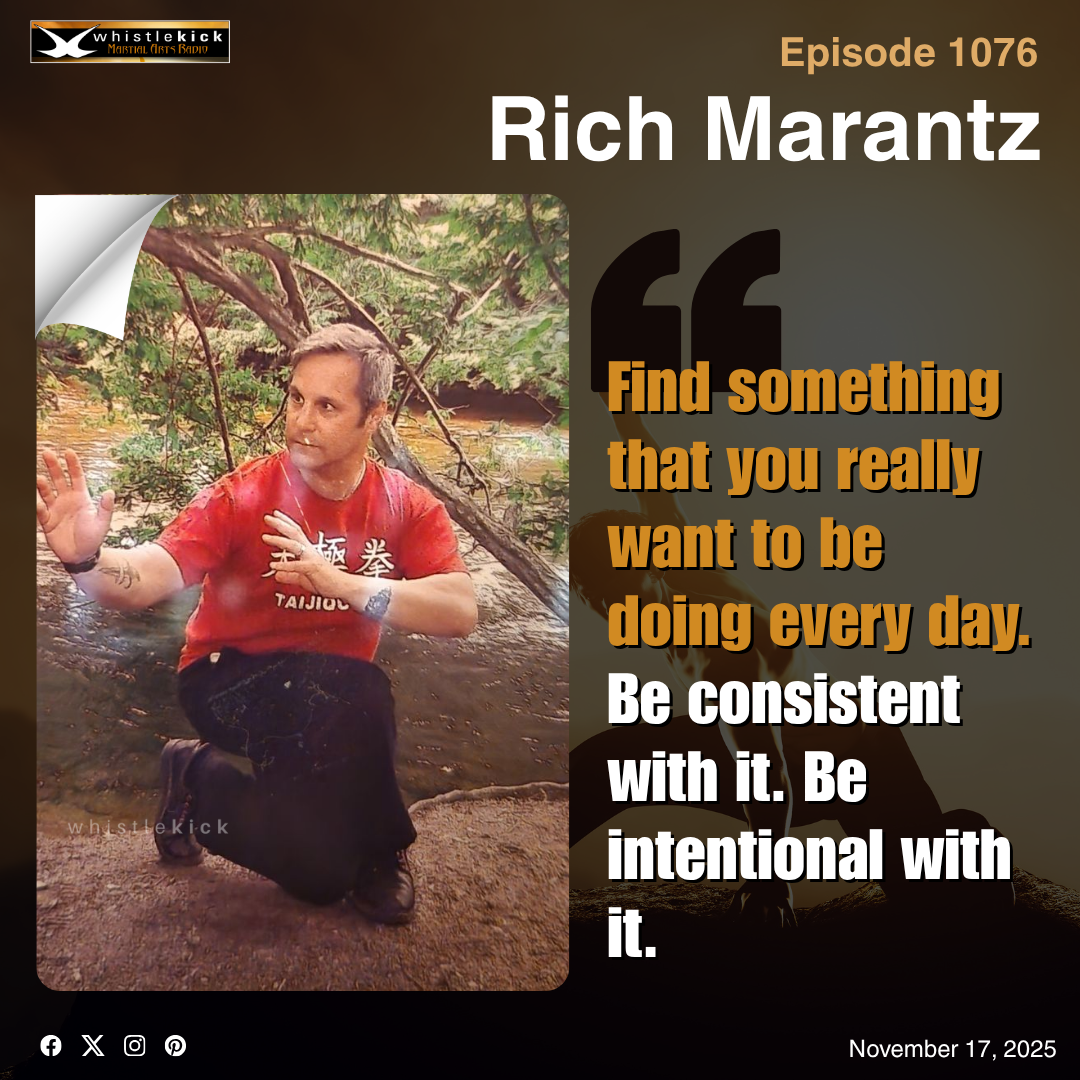
Episode 1076 - Rich Marantz
Rich Marantz, a martial artist, healer, and tai chi practitioner based in Vermont, shares his...

TMHS 020: Health Benefits Of Qigong With Sensei Tristan Truscott
Shawn Stevenson interviews Sensei Tristan Truscott, a martial arts black belt who turned to...
197 Self-Care & Empowerment Through Qigong: Interview With Jennie Delich
Licensed therapist Chris McDonald interviews Qigong instructor Jennie Delich about how Qigong...
Discussed in Podcasts
27 curated moments from top health podcasts. Click any timestamp to play.
Qigong as a multi-system non-drug intervention
Harvard psychologist Peter Wayne explains that Qigong prevents falls better than any available drug, reduces chronic pain, and works as a multi-system intervention hitting mind, body, cardiovascular, breathing, muscles, and nerves simultaneously.
"It seems to be one of the best, if not the best, tool we have out there for preventing falls. There's no pill you can take to prevent falls. This seems to be like a multi-non-drug intervention that hits multiple systems and affects the whole systems and their interactions. Mind, body, cardiovascular breathing, muscles, nerves."
Personal experience of Qigong calming the nervous system
Chef Ace Borrell describes how daily Qigong practice gave him full-body energy awareness, mental peace, and the ability to separate himself from stressful situations after years of health struggles.
"In the simplest terms I could put it is I could feel the qi or energy really moving throughout my body. Like a full body, kind of just like awareness. And that's so hard to get nowadays. We just have a screen in our hands and we're just staring at it, hunched over. It's just so disembodied from ourselves."
Dissolving the hyphen between mind and body
Peter Wayne discusses his research agenda to dissolve the mind-body divide, explaining that the shapes we make in Qigong are encoded with information that affects our nervous and endocrine systems, rooted in pre-verbal evolutionary communication.
"One of my agendas is to sort of dissolve the hyphen between mind and body. We know that how we move deeply affects how we feel emotionally, cognitively. You can't have an emotion without a body. I think programmed into these practices are shapes that make you feel better."
10 minutes of Qigong before a tough meeting
Ace describes rearranging his schedule to squeeze in 10 minutes of Qigong before stressful meetings, noting it calms his nervous system and feels like a superpower.
"And I think a lot of people feel that way about a lot of tools that they have. I've definitely moved my schedules around a little bit for it in the sense that I know I got a tough meeting in a couple hours and let me just try to figure out a way to squeeze some cheats."
Training under a legendary Qigong master in China
Robert Peng describes being taken under the wing of legendary Qigong master Xiao Yao at age 15 and undergoing intense training that included being sealed in a dark room for over 100 days of continuous Qigong practice.
"Robert is an internationally renowned Qigong master, capable of generating healing energy through his hands with power equal to a potent electrical charge. He studied in China with a legendary Qigong master, Xiao Yao, and became proficient in both the martial arts and the healing arts."
The three Dan Tien energy centers
Robert explains the three Dan Tien energy centers fundamental to Qigong: the lower abdomen for physical vitality, the heart center for emotional balance, and the third eye for spiritual insight and clarity.
"The third eye in Achigon's concept is a very big center of energies. They hold tremendous, powerful potential power. A lot, a lot. So when Your own healing power will be rimpled out. So, they begin to have better self-healing power triggered out. So, after days or even weeks or months, it's still rimpling out. So, people feel that the healing is keep on going. That is the reason. Yeah. And you remember, I also put my And that's through the meridians, because we want to start with the end of the branches of energy. So all the organs, they have connections with the fingers. Like the middle finger is connected with the heart, and the in the indexing is connected with the liver."
From small death to big life
Robert explains the concept of "small death to big life" -- dissolving the limited ego-self through intensive practice to access expanded states of being and profound vitality.
"And I want to tell everyone just briefly what happened, which is we spent just a little under an hour together, and you worked for a while on my head, and it was kind of like a deep scalp massage, if you will. But then you made like a pointer out of your fingers and pointed your fingers onto different points on the front of my body, beginning with the eyebrows and then on the throat. And while you were out, That's what I felt coming from your fingers. I could even hear the sound of a zapping kind of sound. And it felt like getting a slight electrical shock, like when you put your hands accidentally into like where the toaster plugs in or something like that. It felt like receiving a slight jolt like that. Can you explain what you were doing actually and Okay, so actually, just I mentioned zapping. Actually, my students or my patients give a nickname of this special energy zapping."
Origins and definition of Qigong
Jennie explains that the term Qigong was coined in the 1800s as an umbrella for diverse ancient Chinese energy practices, and that Tai Chi is actually a form of Qigong with a more martial presentation.
"One of my favorite trick questions is, is Qigong an ancient practice or is it a modern practice? It's a trick question because the term Qigong actually didn't come into popular use until the 1900s. It was coined in the 1800s basically to create an umbrella to codify these disparate energy practices."
How Qigong differs from yoga
Jennie contrasts Qigong's rounder, softer shapes with yoga's angular stretches, and draws parallels between the three Dan Tien energy centers in Qigong and the chakra system in yoga.
"expansive stretching. And I feel like even overstretching sometimes with yoga where you're reaching to edges a lot and kind of lengthening things. Whereas with Qigong, the shapes you make are a lot more round."
Qigong for nervous system regulation and anxiety
Jennie discusses how Qigong helps shift the sympathetic nervous system response during anxiety, with wood element practices being particularly beneficial for nervous system health.
"If you find your sympathetic nervous system is getting overactivated by anxiety, by an acute situation, you're getting triggered. Turning into the breath if you can is step one. And if you find a little intentional movement to contribute to that, that can take it up to the next level."
The Wuji standing posture explained
Jennie walks through the foundational Wuji posture -- feet shoulder-width apart, bones stacked, pelvis slightly tucked -- and explains the principle of using skeletal alignment to reduce muscular effort.
"You've got this notion in Qigong of stacking your bones. This idea that if your alignment is well aligned between earth and sky, kind of take the pressure off your muscles by having your bones support you."
No scientific evidence for qi itself, but clear evidence for Qigong benefits
Tom Rogers explains that despite decades of research, no one has found scientific evidence for qi as a measurable force, but the health benefits of Qigong practice are well-documented. Peter Wayne at Harvard frames qi as information exchange rather than a measurable frequency.
"He spent years with his own research on qi because he saw what the benefits were. But he found absolutely no scientific evidence for qi. And in fact, nobody has found any scientific evidence for qi, including scientists in China."
Who to Follow
Western Teachers:
- Ken Cohen - Author, leading Western authority
- Lee Holden - Popular online instructor
- Roger Jahnke - Institute of Integral Qigong
Traditional Masters:
- Dr. Yang Jwing-Ming - YMAA founder, prolific author
- Mantak Chia - Universal Healing Tao system
Research Advocates:
- Dr. Kevin Chen - University of Maryland researcher
- Growing academic interest in integrative medicine
Health Advocates:
- Integrative medicine practitioners
- Traditional Chinese Medicine doctors
- Functional medicine community
Synergies & Conflicts
Mind-Body Stack:
- Tai Chi - Movement-focused complement
- Yoga - Different tradition, similar benefits
- Mindfulness Meditation - Seated practice
- Breathwork - Breath integration
Recovery Stack:
- NSDR - Deep rest complement
- Sleep Environment - Evening practice aids sleep
- Sauna - Heat + relaxation
Energy Stack:
- Morning Sunlight - Outdoor morning qigong
- Grounding - Barefoot practice
- Cold Exposure - Contrast practices
Best Combinations:
- Morning: Energizing qigong outdoors
- Midday: Short standing meditation
- Evening: Calming practices before bed
- As warm-up: Before Tai Chi or martial arts
What People Say
Growing Adoption:
Clinical Use:
Research Growth:
User Feedback: