
Key Takeaway
Qigong improves quality of life, reduces fatigue, and enhances mood in cancer patients during and after treatment.
Summary
This systematic review and meta-analysis examined qigong for cancer patients across 22 studies.
Key findings:
- Quality of life: Significant improvement (SMD 0.48)
- Fatigue: Reduced cancer-related fatigue (SMD -0.52)
- Depression: Improved mood (SMD -0.44)
- Anxiety: Reduced symptoms (SMD -0.36)
- Sleep: Improvements reported
Cancer types studied:
- Breast cancer (most common)
- Lung cancer
- Mixed cancer populations
- Various treatment stages
Timing of intervention:
- During active treatment
- Post-treatment recovery
- Survivorship phase
- All phases showed benefit
Safety:
- No serious adverse events
- Well-tolerated during chemotherapy
- Can be modified for physical limitations
- Supervised and home practice both safe
Program characteristics:
- Duration: 6-12 weeks typical
- Frequency: 2-5 sessions/week
- Session length: 30-60 minutes
- Various qigong styles
Clinical significance:
Supports qigong as a safe complementary therapy for improving quality of life in cancer patients, with potential for integration into oncology supportive care.
Figures
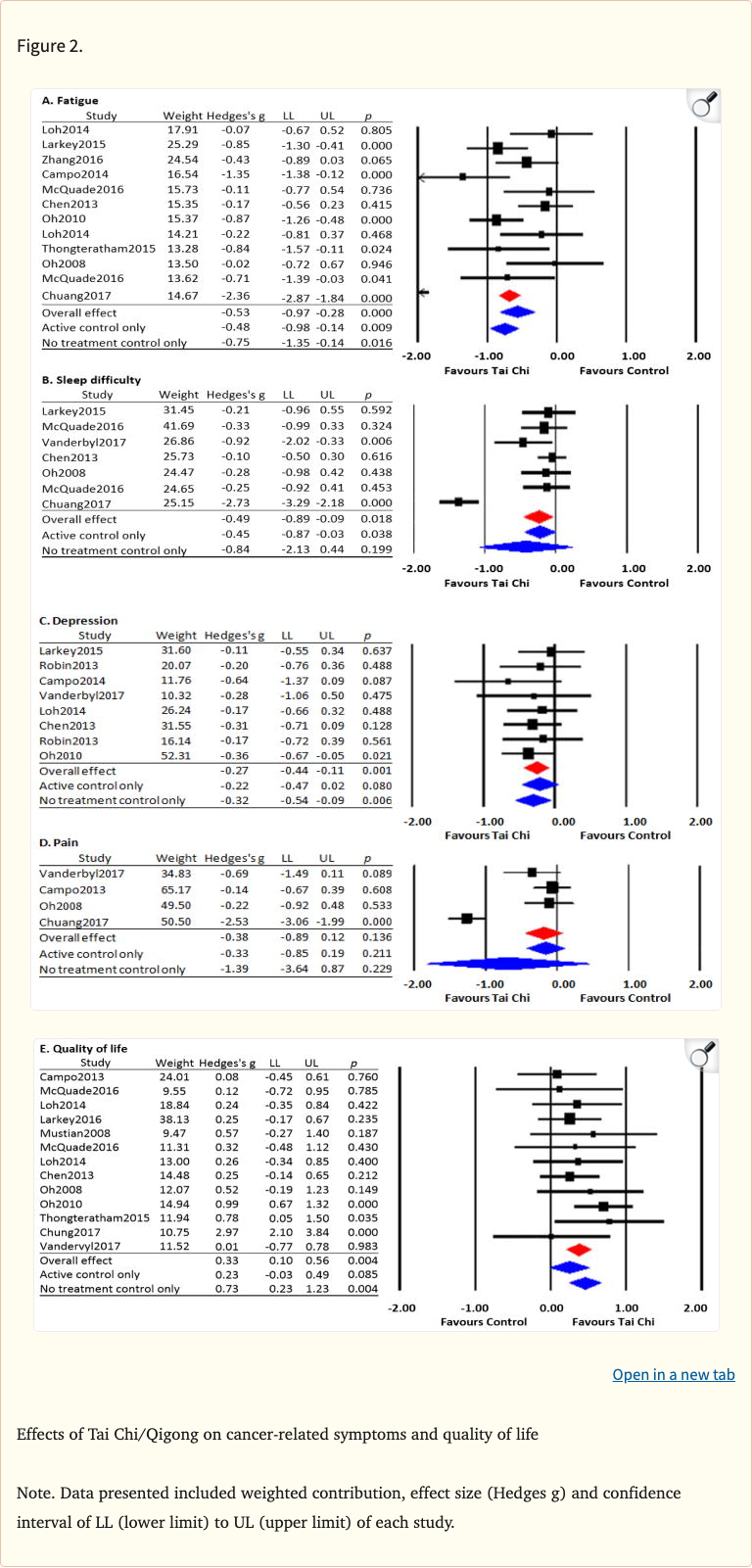 Figure 1