
Key Takeaway
Internal qigong practice significantly reduces chronic pain (SMD = -1.23) compared to controls, with the strongest effects for self-practiced qigong rather than externally applied therapy.
Summary
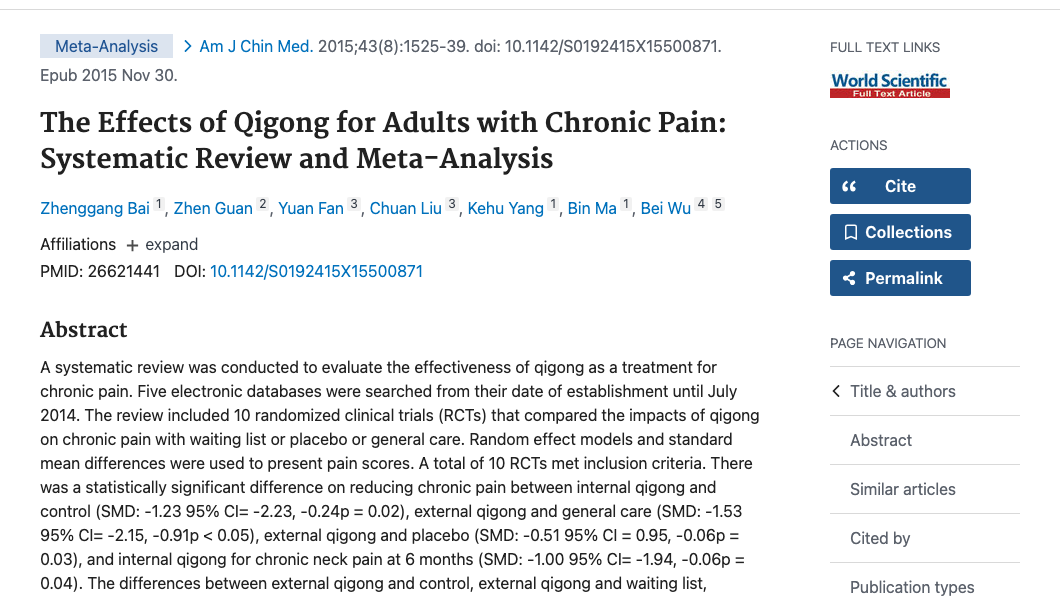
This systematic review and meta-analysis evaluated the effectiveness of qigong as a treatment for chronic pain in adults. Five electronic databases were searched from their inception through July 2014, identifying 10 randomized clinical trials that compared qigong to waiting list, placebo, or general care.
The key finding was a clear distinction between internal qigong (self-practiced) and external qigong (administered by a practitioner). Internal qigong showed a statistically significant and large effect on chronic pain reduction compared to controls (SMD = -1.23, 95% CI -2.23 to -0.24, p = 0.02). External qigong applied by a practitioner showed nonsignificant differences compared to placebo (SMD = -0.51) and general care (SMD = -1.53, though confidence intervals were wide).
The results suggest that the self-practice component of qigong is critical for pain management. Conditions studied included fibromyalgia, chronic neck pain, chronic fatigue syndrome, and musculoskeletal pain. Intervention durations ranged from 4 to 12 weeks, with most programs involving daily practice.
The large effect size for internal qigong is encouraging and supports its use as a complementary approach for chronic pain. However, the authors note that higher quality RCTs with scientific rigor are needed to confirm these findings.
Methods
- Systematic search across five electronic databases through July 2014
- Ten RCTs included comparing qigong to control conditions
- Separate analyses for internal qigong (self-practiced) and external qigong (practitioner-applied)
- Standardized mean differences (SMD) calculated
- Random-effects model for meta-analysis
- Quality assessment of included studies
Key Results
- Internal qigong vs control: SMD = -1.23 (95% CI -2.23 to -0.24, p = 0.02)
- External qigong vs placebo: SMD = -0.51 (nonsignificant)
- External qigong vs general care: SMD = -1.53 (wide confidence intervals)
- Chronic pain conditions studied: fibromyalgia, neck pain, chronic fatigue, musculoskeletal pain
- Intervention durations: 4-12 weeks
Limitations
- Small number of eligible RCTs (10 total)
- High heterogeneity across studies
- Variable qigong styles and intervention protocols
- Small sample sizes in most included studies
- Many studies from China with potential cultural bias
- Limited blinding in internal qigong studies
- No long-term follow-up assessment