
Key Takeaway
Yoga provides small-to-moderate improvements in back pain and function at 3-6 months compared to non-exercise controls.
Summary
This Cochrane review examined yoga for chronic non-specific low back pain across 12 randomized controlled trials with 1,080 participants.
Key findings:
- Pain: Small to moderate improvement (low certainty evidence)
- Function: Small to moderate improvement (moderate certainty)
- Benefits at 3-6 months post-intervention
- Effects similar to other exercise interventions
Clinical outcomes:
- Pain reduction: Standardized mean difference -0.64 (95% CI -1.1 to -0.18)
- Functional improvement: SMD -0.56 (95% CI -0.87 to -0.25)
- Quality of life: Modest improvements
Yoga styles studied:
- Iyengar yoga
- Viniyoga
- Hatha yoga
- Various mixed styles
Safety:
- Adverse events: Increased back pain in some participants
- No serious adverse events reported
- Generally safe with proper instruction
Clinical significance:
Evidence supports yoga as an option for chronic low back pain, now recommended by American College of Physicians as first-line non-pharmacological treatment.
Figures
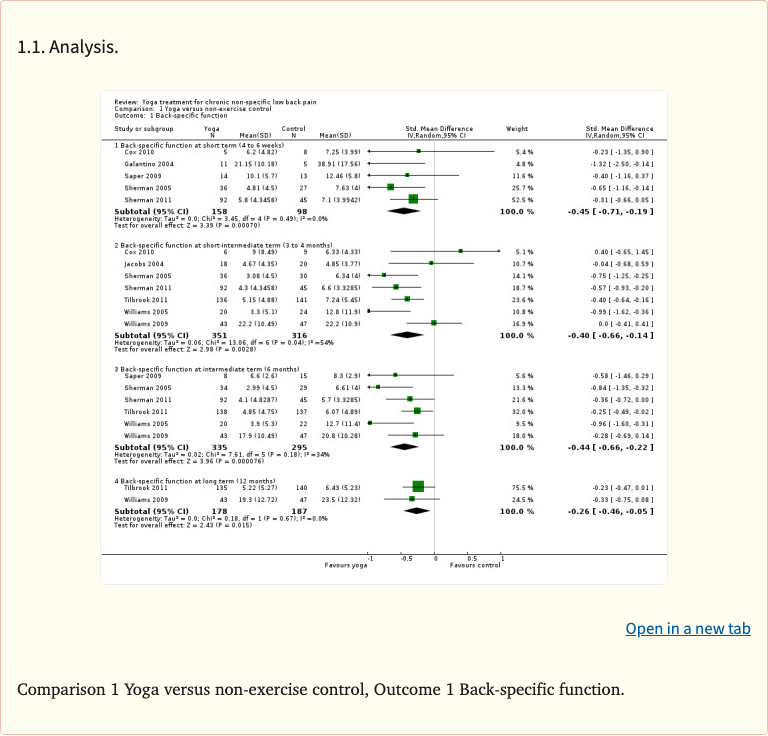 Figure 1
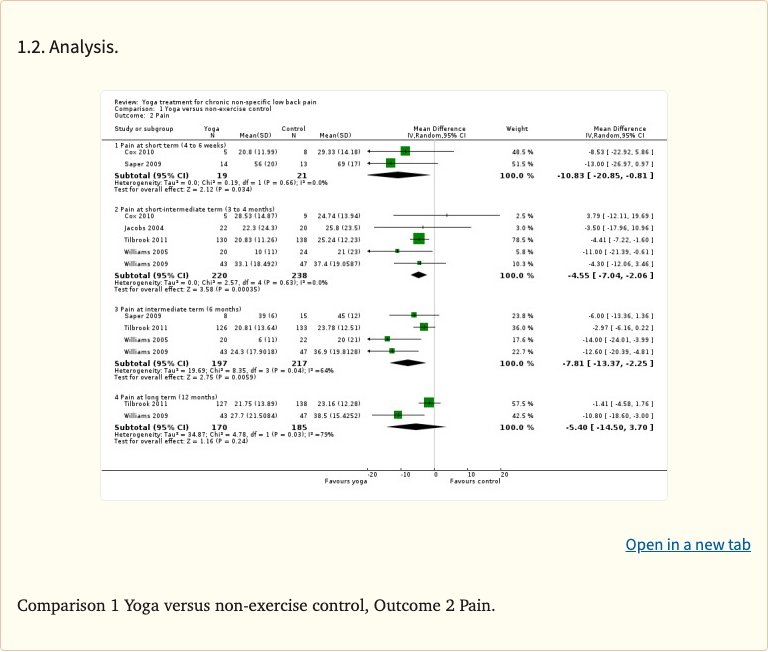 Figure 2
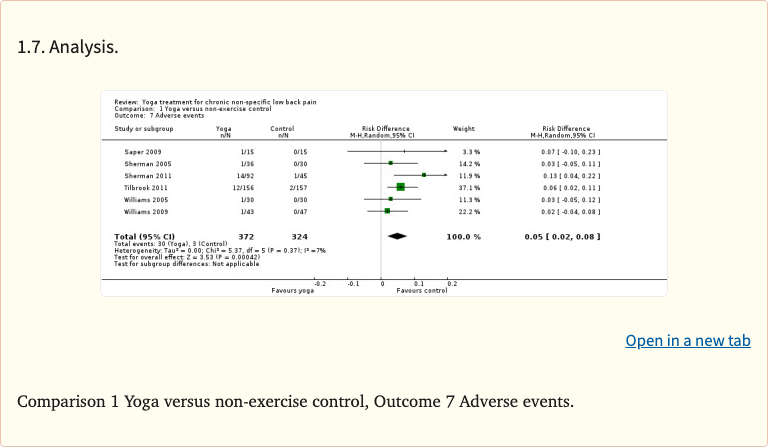 Figure 3
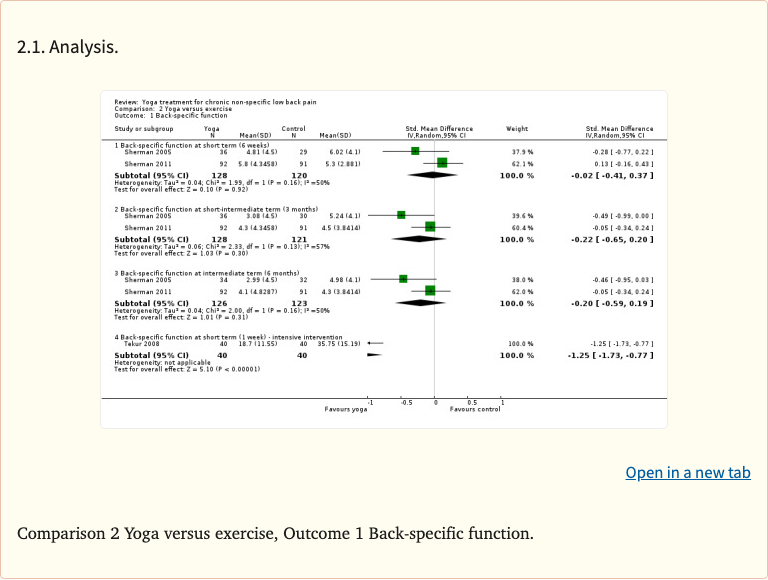 Figure 4
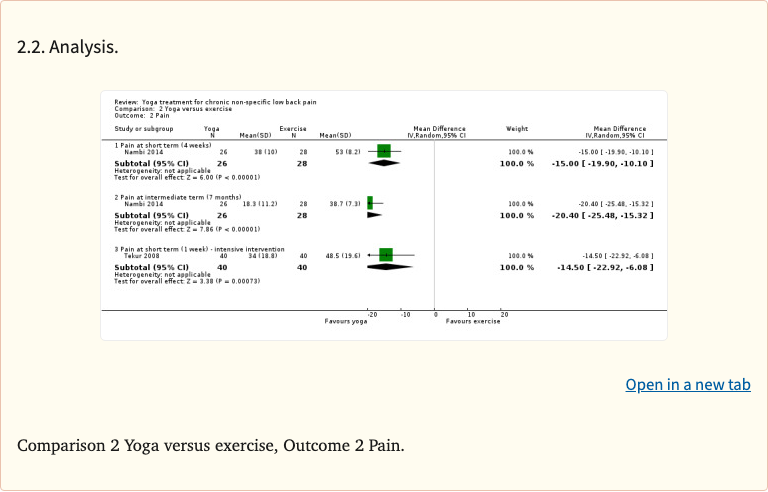 Figure 5
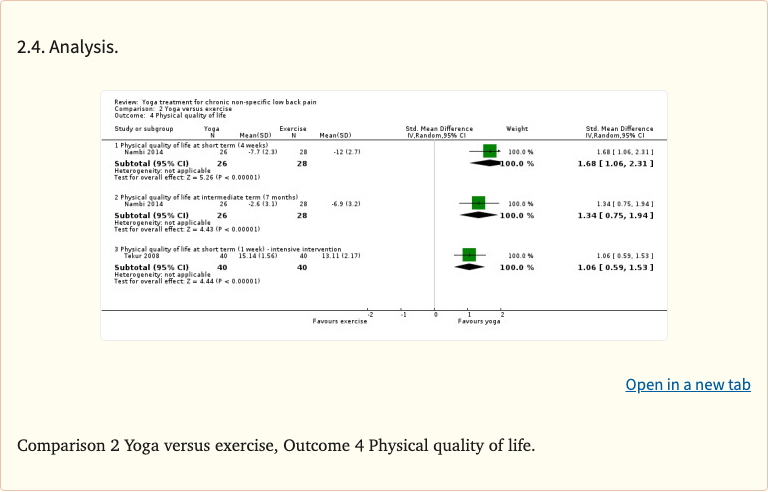 Figure 6