
Key Takeaway
Meta-analysis of 8 trials (482 participants) found Yoga Nidra significantly reduced systolic blood pressure by 12.03 mmHg and diastolic blood pressure by 6.32 mmHg compared to controls.
Summary
This systematic review and meta-analysis evaluated the efficacy of Yoga Nidra for managing hypertension. The authors searched PubMed, Cochrane Library, SCOPUS, and EBSCO for clinical trials published through September 2022, identifying five randomized controlled trials and three non-randomized controlled trials involving 482 total participants (239 Yoga Nidra, 243 controls).
The meta-analysis found that Yoga Nidra significantly reduced both systolic blood pressure (weighted mean difference = 12.03 mmHg, 95% CI [7.12, 16.93], p < 0.00001) and diastolic blood pressure (WMD = 6.32 mmHg, 95% CI [3.53, 9.12], p < 0.00001) compared to control groups. These clinically meaningful reductions suggest Yoga Nidra could serve as a viable complementary therapy for hypertension management.
The authors propose that Yoga Nidra's blood pressure-lowering effects operate through interoception and deep relaxation, helping reduce stress, vascular inflammation, and peripheral vascular resistance. However, the overall risk of bias was high across most included studies, and the authors call for larger trials with longer follow-up periods and standardized Yoga Nidra protocols.
Methods
Systematic review and meta-analysis of RCTs and non-RCTs. Four databases searched (PubMed, Cochrane, SCOPUS, EBSCO) through September 2022. Eight studies with 482 participants included. Primary outcomes were changes in systolic and diastolic blood pressure, analyzed as weighted mean difference using random-effects models. Risk of bias assessed using Cochrane RoB-2 (RCTs) and ROBINS-I (non-RCTs).
Key Results
Systolic blood pressure reduced by 12.03 mmHg (95% CI [7.12, 16.93], Z = 4.80, p < 0.00001). Diastolic blood pressure reduced by 6.32 mmHg (95% CI [3.53, 9.12], Z = 4.43, p < 0.00001). Both outcomes reached high statistical significance compared to control groups.
Figures
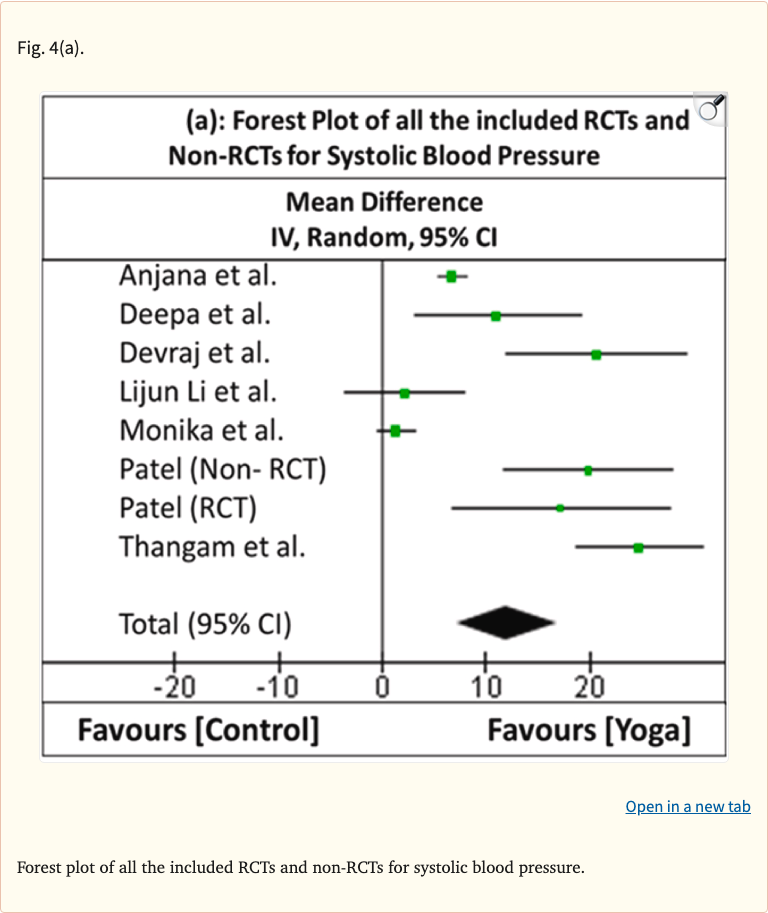 Figure 1
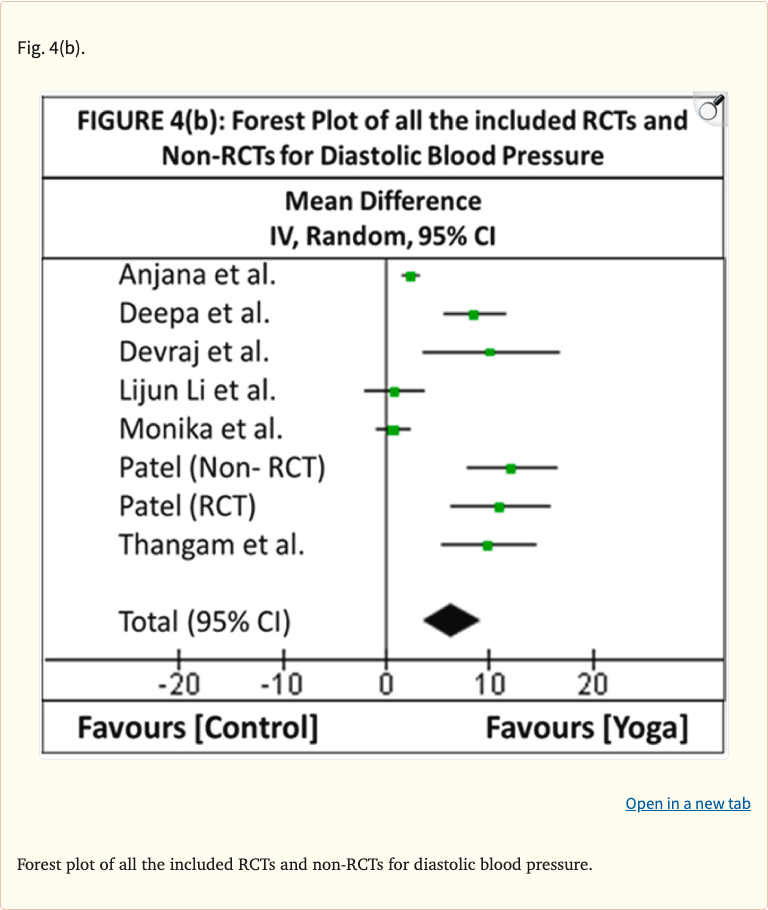 Figure 2
Limitations
High risk of bias in most included studies. Small total sample size (482 participants across 8 studies). Mix of RCTs and non-RCTs. Heterogeneous Yoga Nidra protocols across studies. Limited follow-up periods. No standardization of intervention duration or frequency. Geographic concentration of studies may limit generalizability.