
Key Takeaway
Ramadan fasting is generally safe for healthy individuals and may improve lipid profiles and other metabolic markers.
Summary
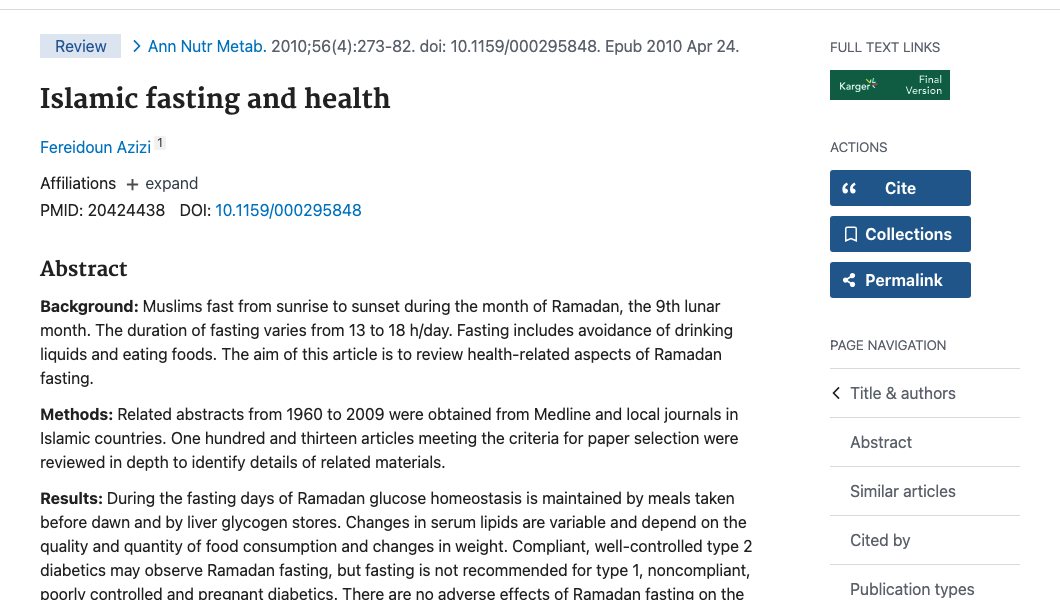
This comprehensive review by Fereidoun Azizi examines the health effects of Islamic fasting during Ramadan, which involves daily dry fasting (no food or water) for approximately 12-16 hours.
The review synthesizes decades of research, finding that Ramadan fasting is safe for healthy adults and may produce beneficial metabolic changes. Improvements in lipid profiles, glucose metabolism, and body composition have been observed. However, effects are often transient and return to baseline after Ramadan ends.
Methods
- Literature review of Ramadan fasting studies
- Analysis of metabolic, cardiovascular, and health outcomes
- Examination of safety in healthy vs clinical populations
- Integration of studies from multiple countries
Key Results
- Generally safe for healthy adults
- Improved lipid profiles in many studies
- Some weight loss typically occurs
- No lasting kidney damage in healthy individuals
- Variable effects on glucose metabolism
- Most changes reverse after Ramadan
Limitations
- Review of heterogeneous studies
- Confounded by dietary changes and sleep disruption
- Cultural factors vary by country
- Cannot isolate dry fasting from other Ramadan practices