Key Takeaway
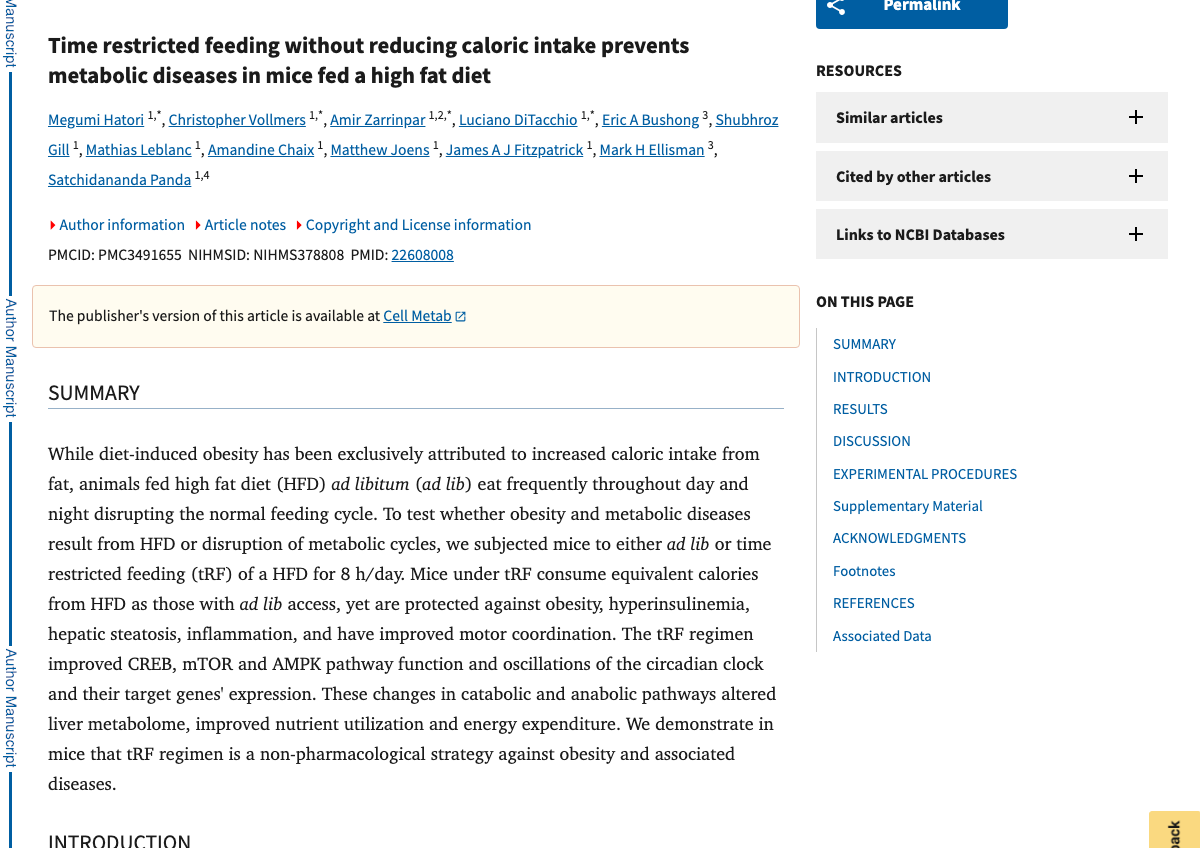
Mice eating within an 8-hour window were protected from obesity and metabolic disease despite consuming the same calories as mice eating around the clock.
Summary
This landmark study from Satchin Panda's lab demonstrated that when mice eat matters as much as what they eat. Mice given unrestricted access to a high-fat diet became obese and developed metabolic disease. However, mice eating the same high-fat diet but restricted to an 8-hour window remained lean and healthy.
The time-restricted mice consumed the same total calories but showed dramatically better metabolic outcomes: less body fat, lower cholesterol, reduced inflammation, and better glucose tolerance.
This foundational research established the biological basis for time-restricted eating in humans.
Methods
- Mice on high-fat diet
- Two groups: ad libitum vs 8-hour feeding window
- Same total calories consumed
- Measured weight, body composition, metabolic markers
Key Results
- TRE mice: 28% less body weight
- TRE mice: improved glucose tolerance
- TRE mice: reduced liver fat
- TRE mice: lower inflammation
- Benefits without calorie reduction
Figures
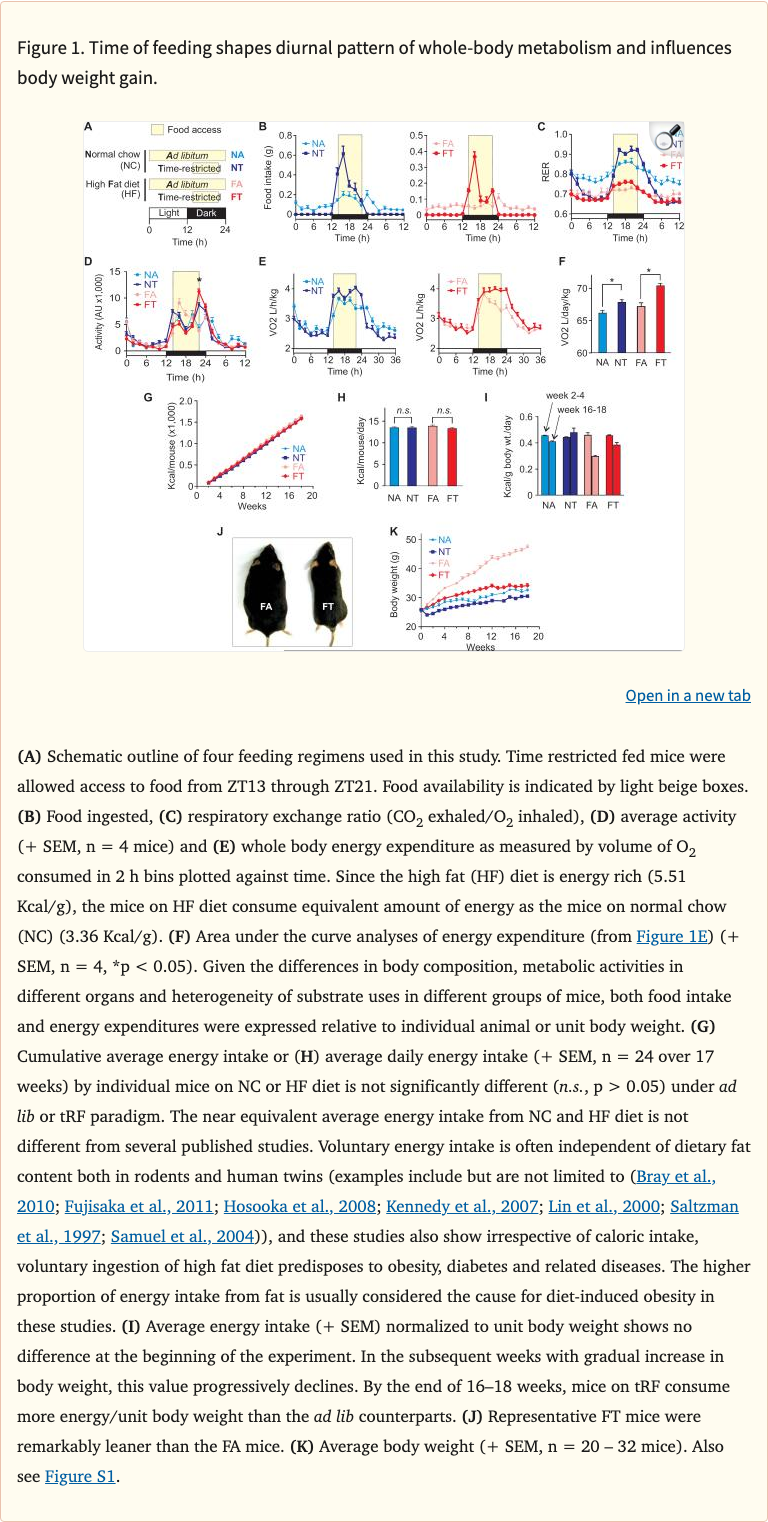 Figure 1
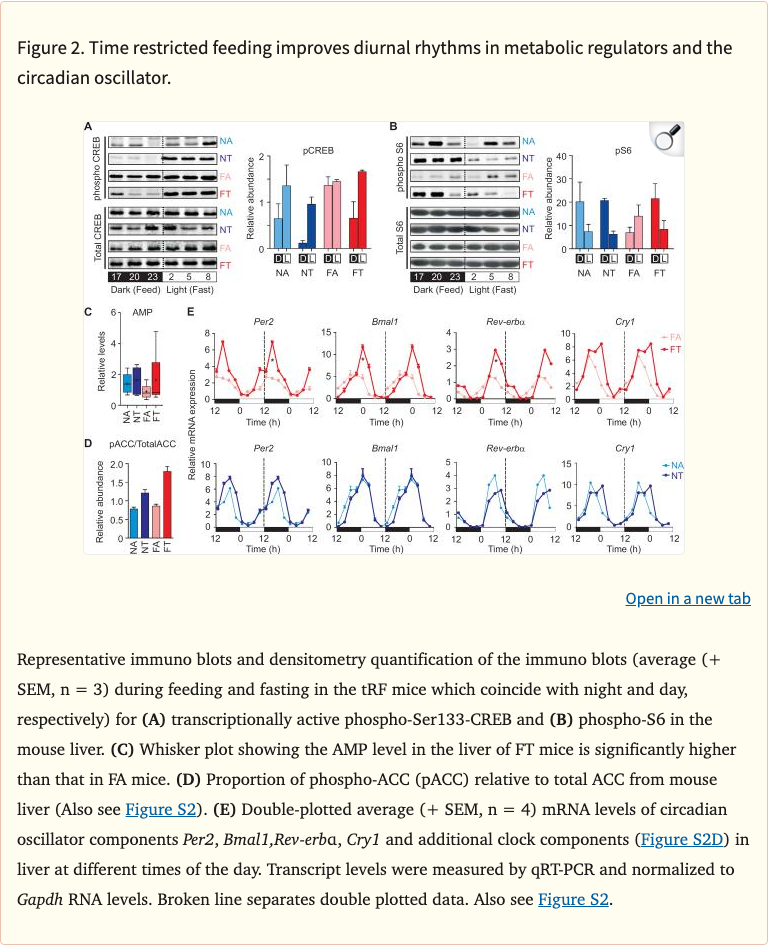 Figure 2
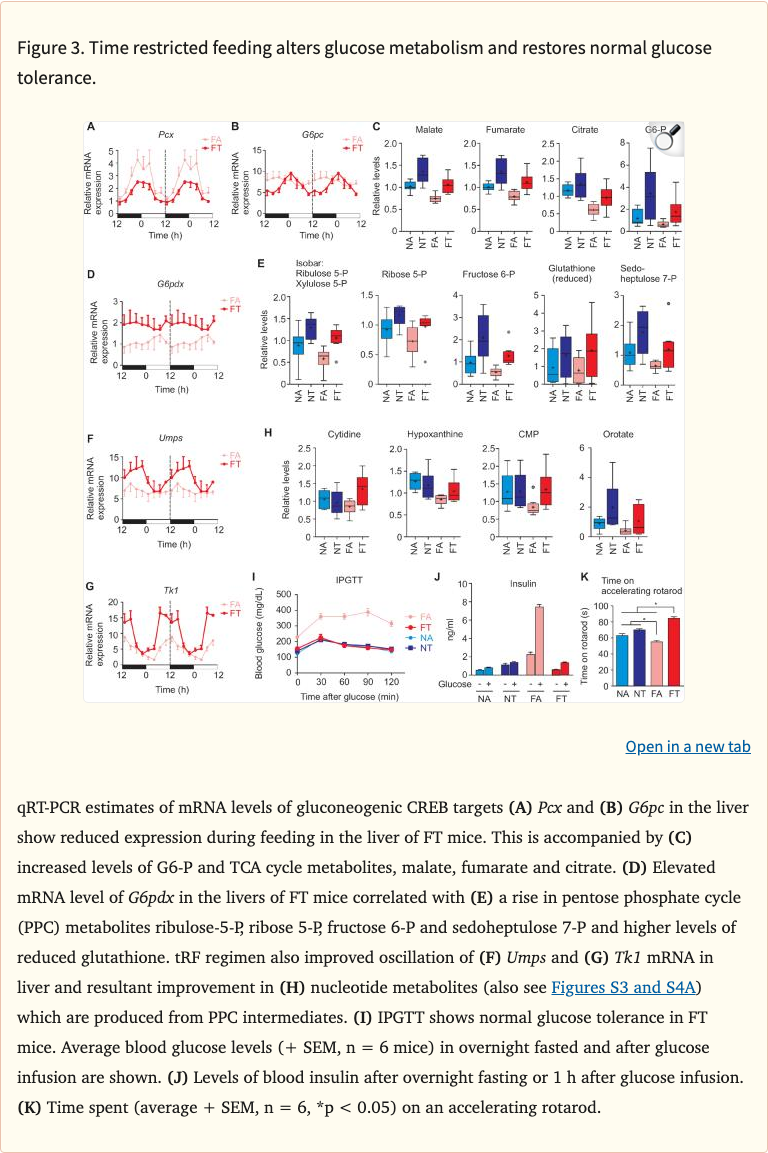 Figure 3
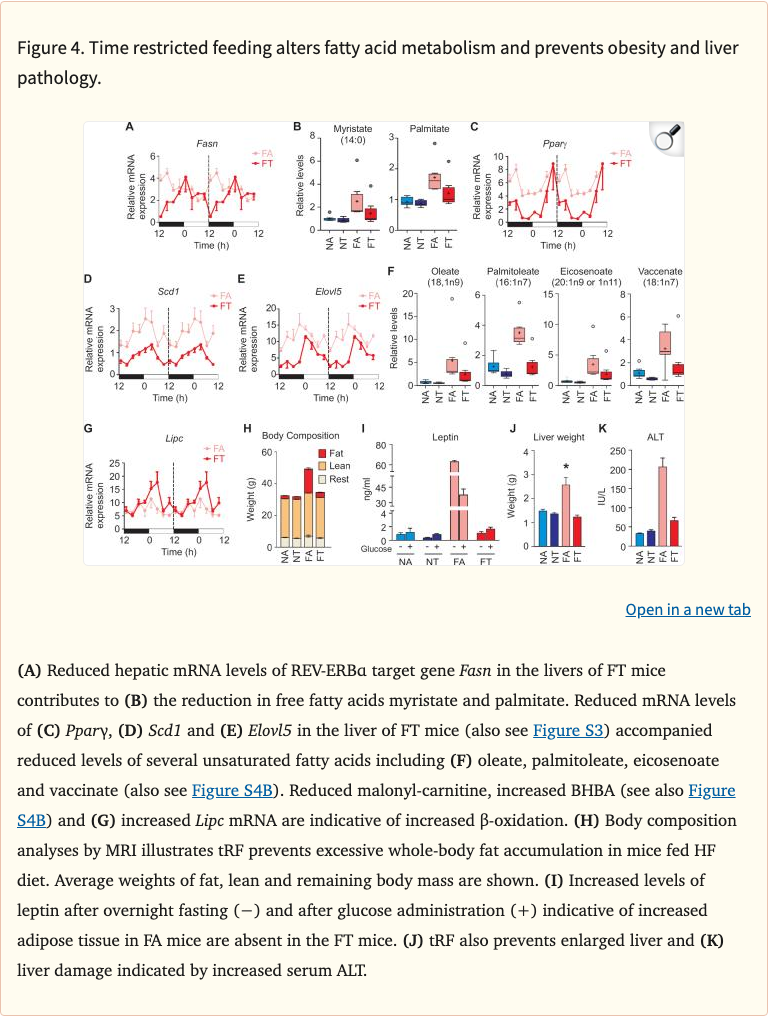 Figure 4
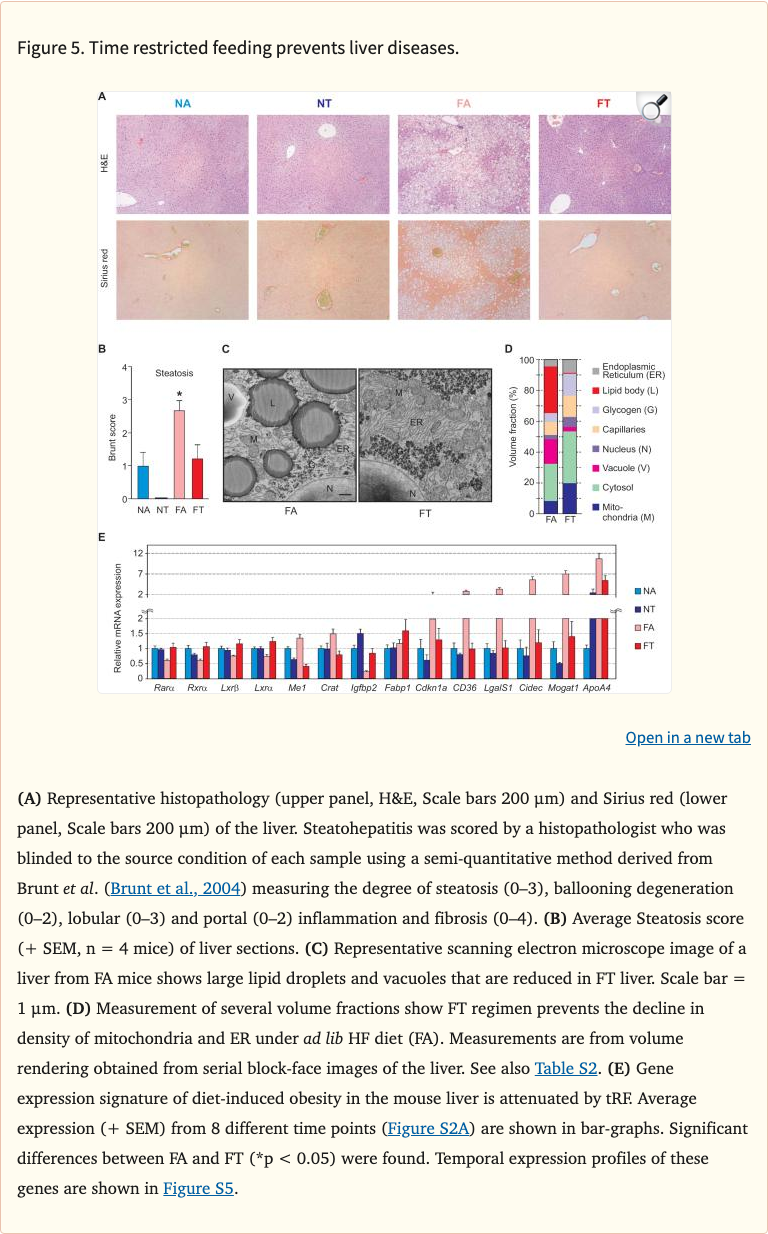 Figure 5
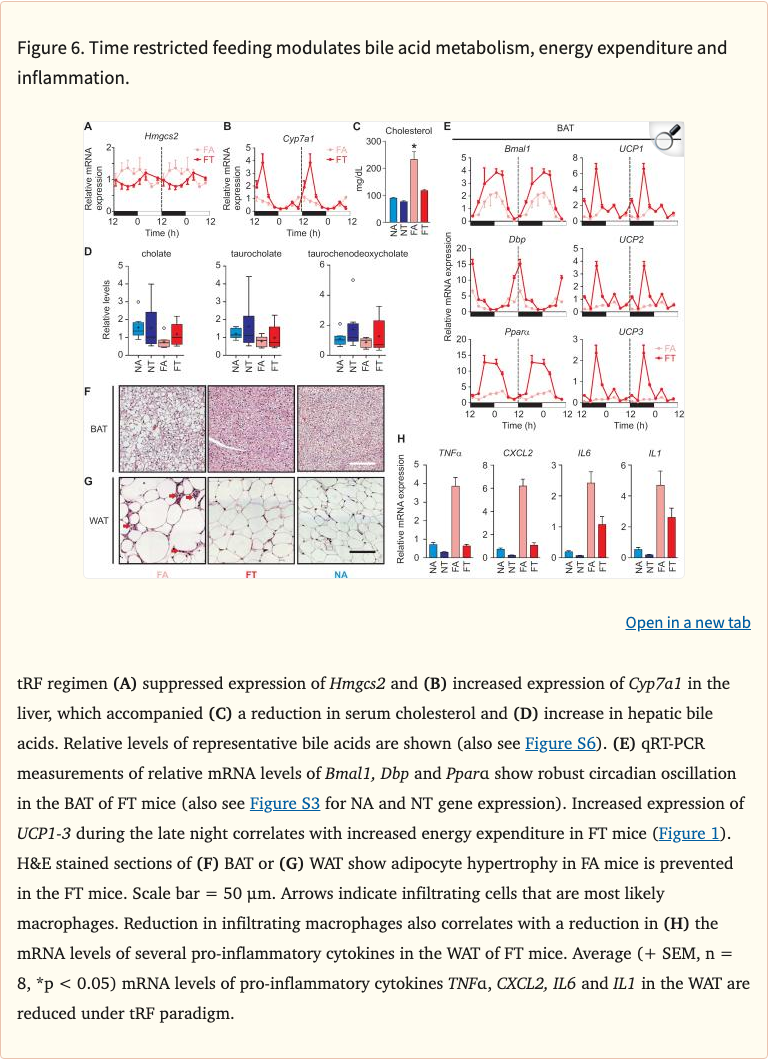 Figure 6
Limitations
- Mouse study - may not fully translate to humans
- Nocturnal mice (different circadian patterns)
- Controlled laboratory conditions
Related Interventions
Related Studies
Discussed In