
Key Takeaway
Comprehensive review establishing that circadian clocks in metabolic organs regulate nutrient processing, and disrupting these rhythms contributes to metabolic disease.
Summary
This landmark review by Satchin Panda synthesizes the evidence for circadian regulation of metabolism and provides the scientific foundation for time-restricted eating.
Key Concepts:
Peripheral Clocks:
- Every metabolic organ (liver, pancreas, gut, adipose tissue, muscle) has its own circadian clock
- These clocks regulate thousands of genes in tissue-specific patterns
- 10-15% of all transcripts in any given organ follow circadian rhythms
Light and Food as Zeitgebers:
- The master clock in the brain (SCN) is synchronized by light
- Peripheral clocks are synchronized by both the master clock AND food timing
- Eating at "wrong" times can desynchronize peripheral from central clocks
Metabolic Consequences:
- Insulin sensitivity follows a circadian pattern (highest in morning)
- Hepatic glucose production is rhythmic
- Nutrient absorption and gut motility are time-dependent
- Fat storage vs. oxidation is circadian-regulated
Time-Restricted Feeding in Animal Models:
- Mice eating within an 8-12 hour window are protected from obesity
- This occurs even when consuming the same calories as ad libitum feeders
- TRF restores circadian gene expression disrupted by high-fat diets
- Benefits include improved glucose tolerance, reduced inflammation, better endurance
Implications for Human Health:
- Modern eating patterns (15+ hour eating windows) disrupt circadian rhythms
- Shift workers have higher rates of metabolic syndrome, diabetes, and obesity
- TRE may help restore circadian alignment and metabolic health
Conclusions:
This review establishes that metabolism is fundamentally a circadian process. Aligning food intake with our biological clocks, rather than fighting against them, may be a key strategy for metabolic health.
Figures
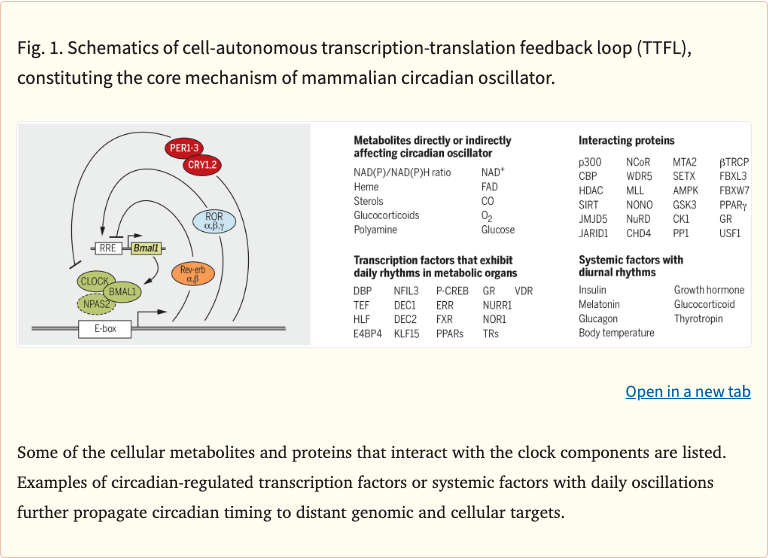 Figure 1
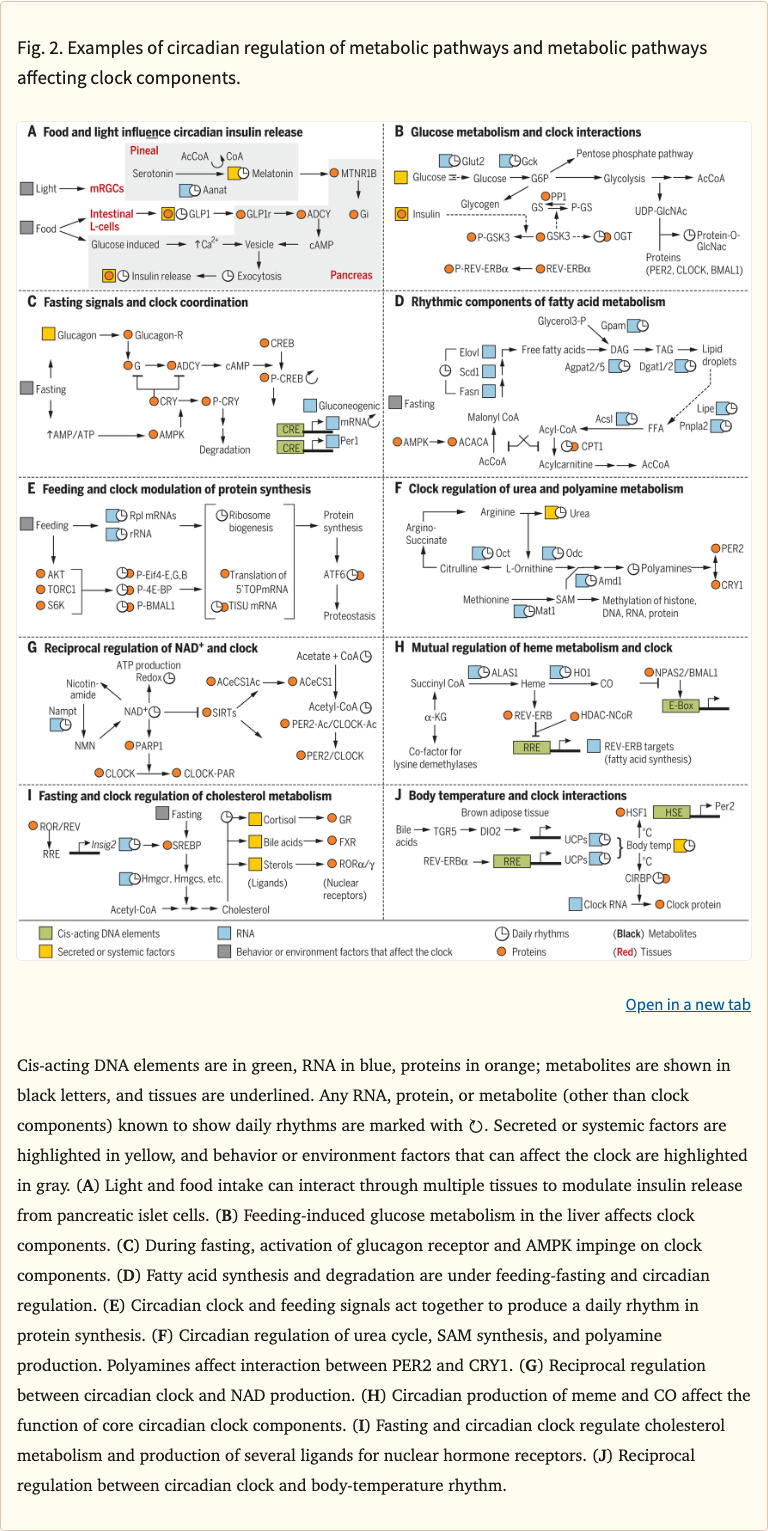 Figure 2
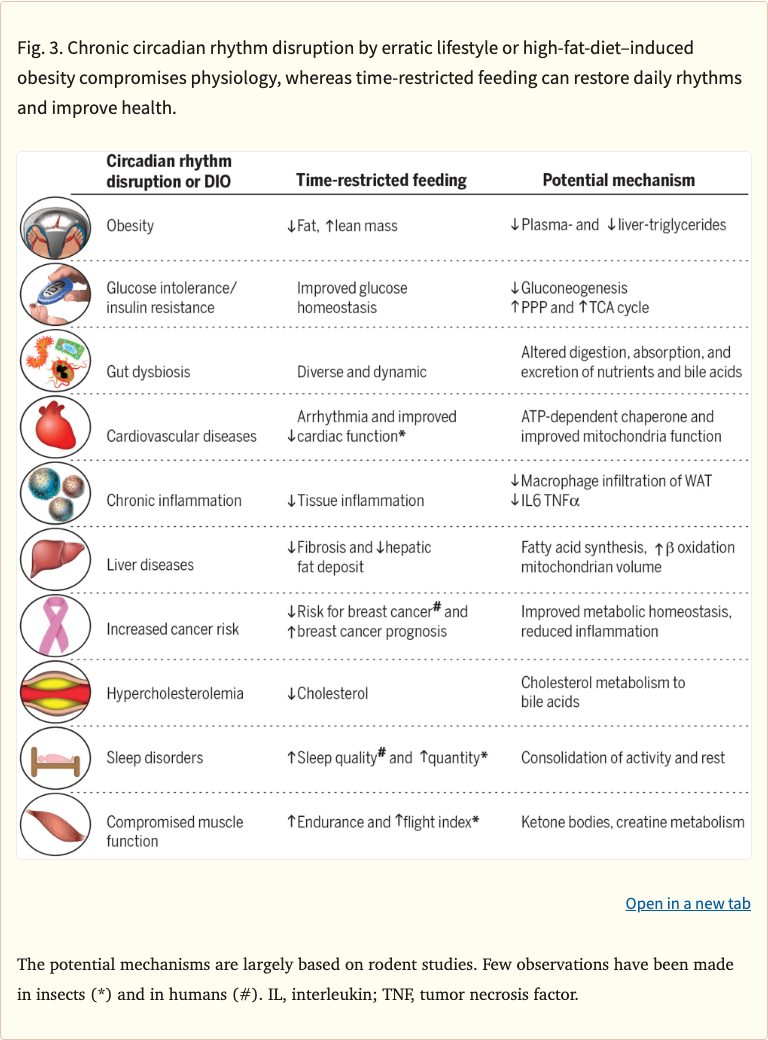 Figure 3
Related Studies
Discussed In

Effects of Fasting and Time-Restricted Eating
Huberman Lab
#096 How to Improve Metabolic Health with HIIT, Circadian-Timed Eating, & Sleep
FoundMyFitness
#070 Dr. Eran Elinav on Microbiome Insights into Personalized Response to Diet, Obesity, and Leaky Gut
FoundMyFitness
#065 Dr. Satchin Panda on Circadian Insights into Exercise Timing, Melatonin Biology, and Peak Cognition
FoundMyFitness
Essentials: Healthy Eating & Eating Disorders - Anorexia, Bulimia, Binging
Huberman Lab
#044 Fasting Q&A with Dr. Rhonda Patrick and Mike Maser
FoundMyFitness
#039 Dr. Satchin Panda on Practical Implementation of Time-Restricted Eating & Shift Work Strategies
FoundMyFitness