
Key Takeaway
Early time-restricted eating (eating window ending by 3pm) improved glucose levels, insulin sensitivity, and markers of autophagy.
Summary
This randomized crossover trial compared early time-restricted feeding (eTRF) to a typical American eating schedule to test whether eating earlier in the day provides additional benefits.
Study Design:
- 11 overweight adults
- Crossover design: each participant did both conditions
- eTRF: 6-hour eating window (8am-2pm)
- Control: 12-hour eating window (8am-8pm)
- 4 days per condition
- Identical meals provided in both conditions
Key Findings:
Glucose Metabolism:
- eTRF reduced mean 24-hour glucose levels
- Morning fasting glucose improved
- Glycemic variability decreased
- Insulin levels were lower in eTRF condition
Circadian and Aging Markers:
- Increased expression of SIRT1 and LC3A (autophagy markers)
- Altered circadian clock gene expression
- Decreased cortisol levels in the evening
Hunger and Appetite:
- Surprisingly, hunger was not significantly higher in eTRF
- Desire to eat in the evening was reduced after adaptation
- Morning hunger increased (considered beneficial for circadian alignment)
Implications:
This study suggests that when you place your eating window matters, eating earlier aligns better with circadian biology. The same calories consumed earlier produced better metabolic outcomes than when consumed later.
Figures
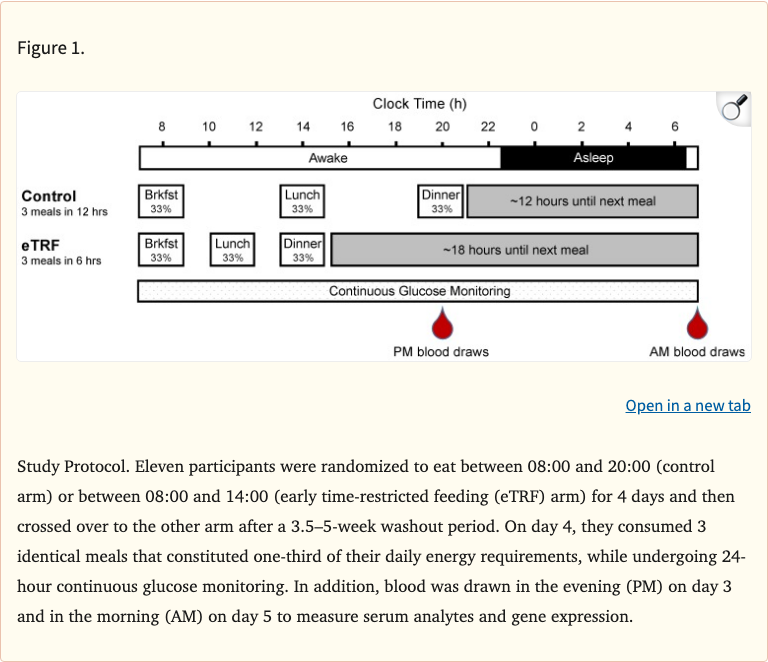 Figure 1
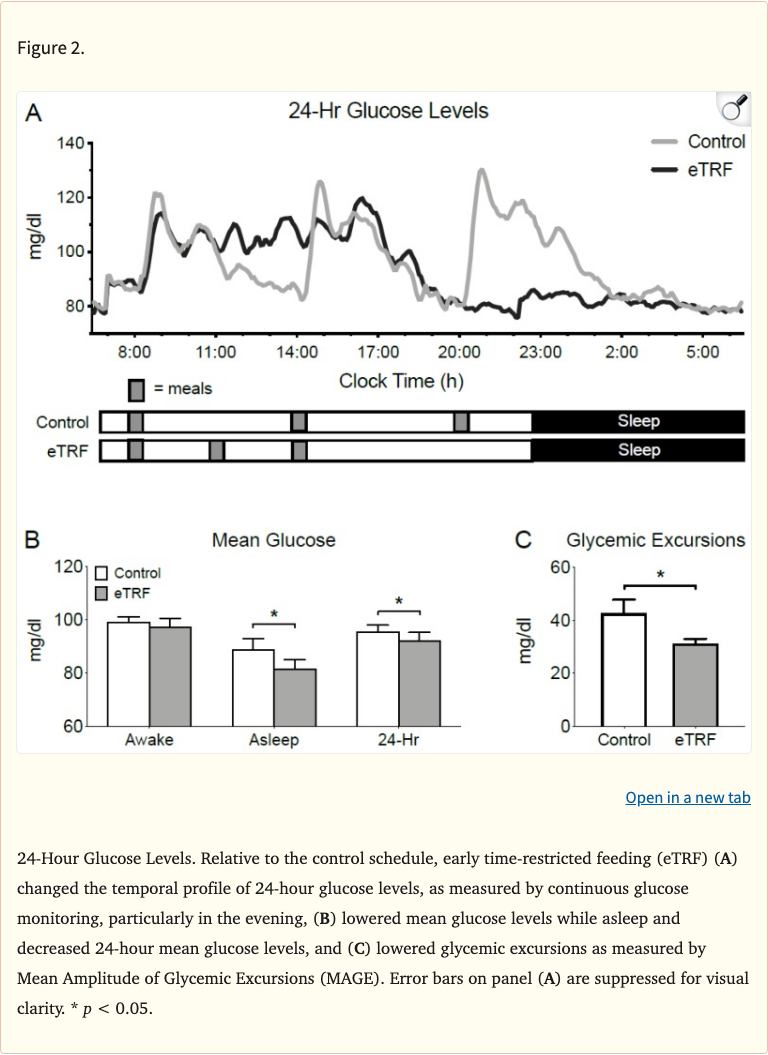 Figure 2
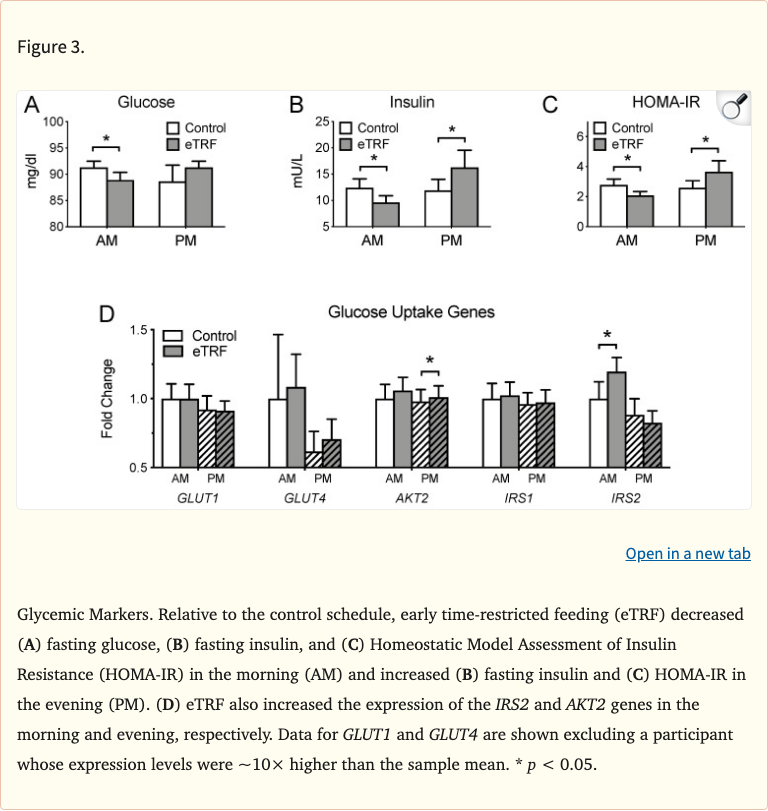 Figure 3
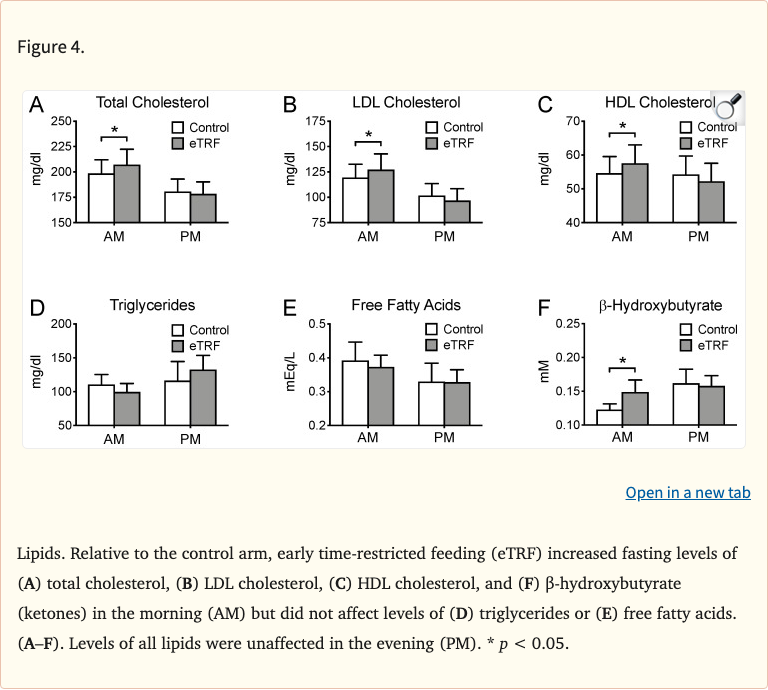 Figure 4
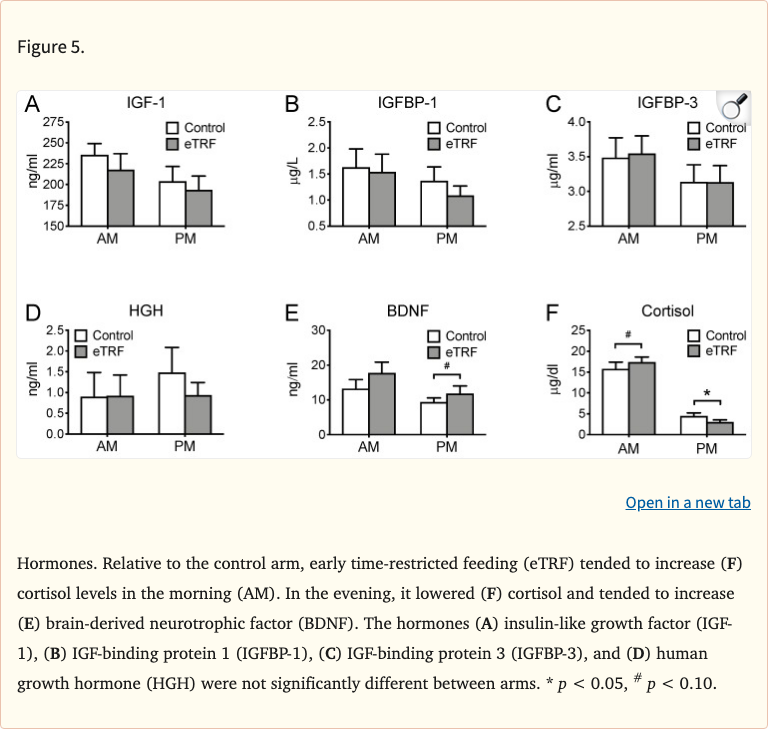 Figure 5
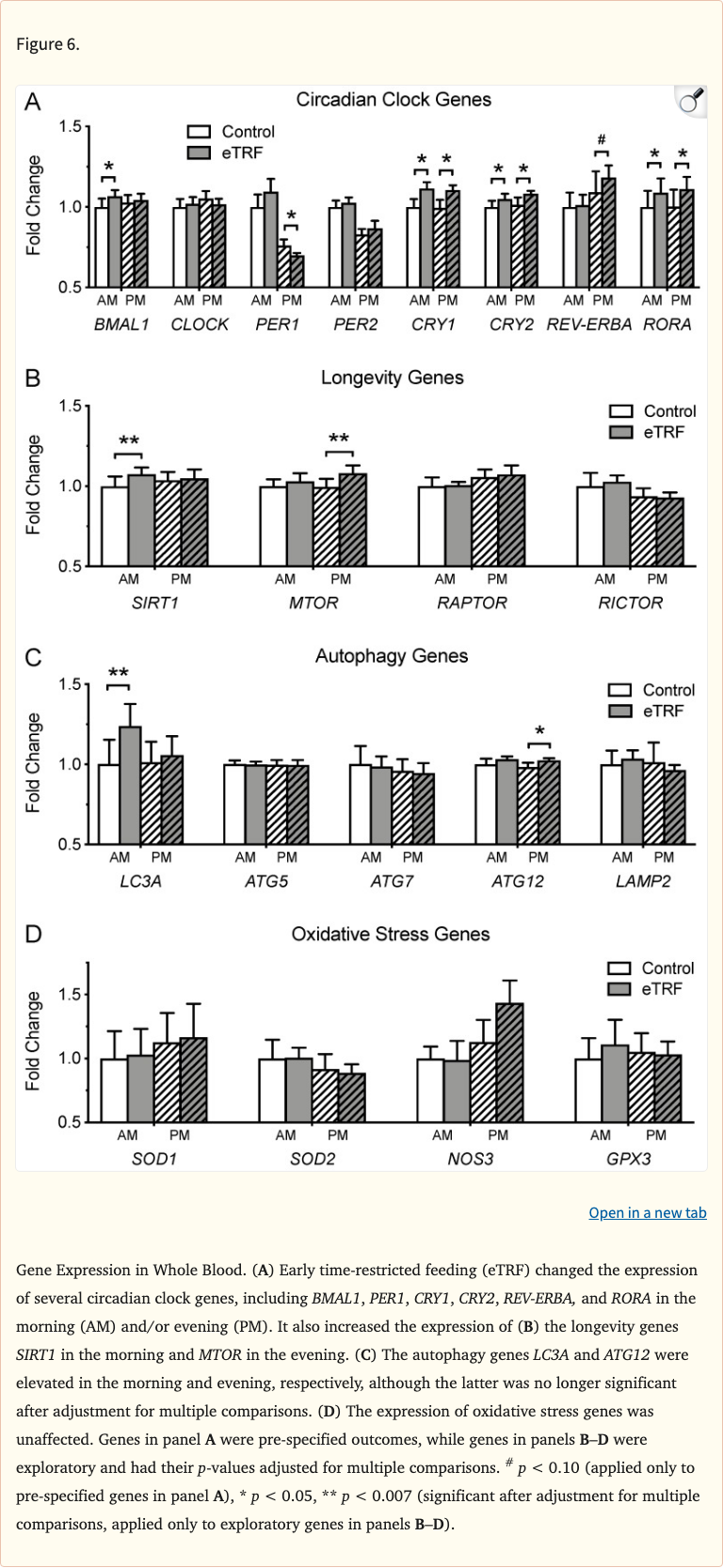 Figure 6
Related Interventions
Related Studies
Discussed In

Effects of Fasting and Time-Restricted Eating
Huberman Lab

#096 How to Improve Metabolic Health with HIIT, Circadian-Timed Eating, & Sleep
FoundMyFitness
#065 Dr. Satchin Panda on Circadian Insights into Exercise Timing, Melatonin Biology, and Peak Cognition
FoundMyFitness
Essentials: Healthy Eating & Eating Disorders - Anorexia, Bulimia, Binging
Huberman Lab
#039 Dr. Satchin Panda on Practical Implementation of Time-Restricted Eating & Shift Work Strategies
FoundMyFitness