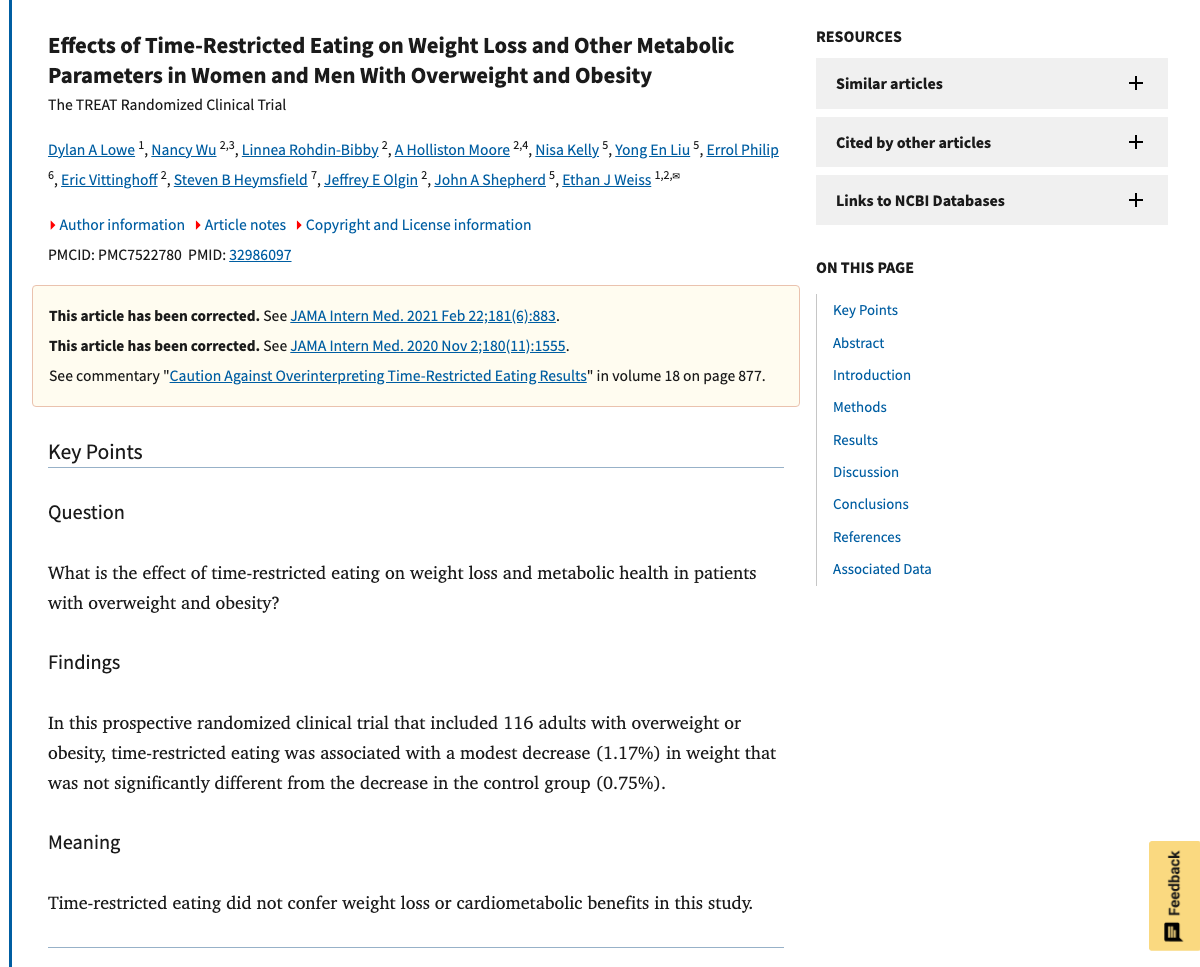
Key Takeaway
16:8 TRE without other guidance produced modest weight loss but no significant improvements in metabolic markers compared to consistent meal timing alone.
Summary
The TREAT trial was a rigorous RCT testing 16:8 time-restricted eating in overweight adults, with some unexpected results that tempered enthusiasm for TRE as a weight loss intervention.
Study Design:
- 116 overweight/obese adults
- Randomized to 16:8 TRE (eating 12pm-8pm) vs. 3 structured meals
- 12-week intervention
- No specific dietary guidance beyond timing
- Subset had DXA body composition and metabolic testing
Results:
Weight Loss:
- TRE group: -0.94 kg
- Control group: -0.68 kg
- Difference not statistically significant
Body Composition (concerning finding):
- TRE group lost more lean mass (appendicular lean mass decreased)
- This suggests protein timing/distribution may matter
- Potential issue with skipping breakfast and front-loading calories late
Metabolic Markers:
- No significant differences in fasting glucose, insulin, HbA1c
- No significant differences in lipids
- No differences in blood pressure
Important Context:
This study used a late eating window (12pm-8pm) without protein guidance. The loss of lean mass suggests that how TRE is implemented matters, simply restricting time without attention to protein distribution may not be optimal.
Conclusions:
TRE is not a "magic bullet" for weight loss. Benefits may depend on window timing (earlier may be better), protein distribution, and overall diet quality. This study highlights the importance of combining TRE with adequate protein and possibly earlier eating windows.
Methods
- Randomized controlled trial
- 116 overweight/obese adults
- TRE group: eat only noon-8pm
- Control: eat at normal times
- 12-week intervention
Key Results
- TRE weight loss: -0.94 kg (vs -0.68 kg control)
- Difference not statistically significant
- TRE lost more lean mass (appendicular lean mass decreased)
- No difference in metabolic markers (glucose, insulin, HbA1c, lipids)
Figures
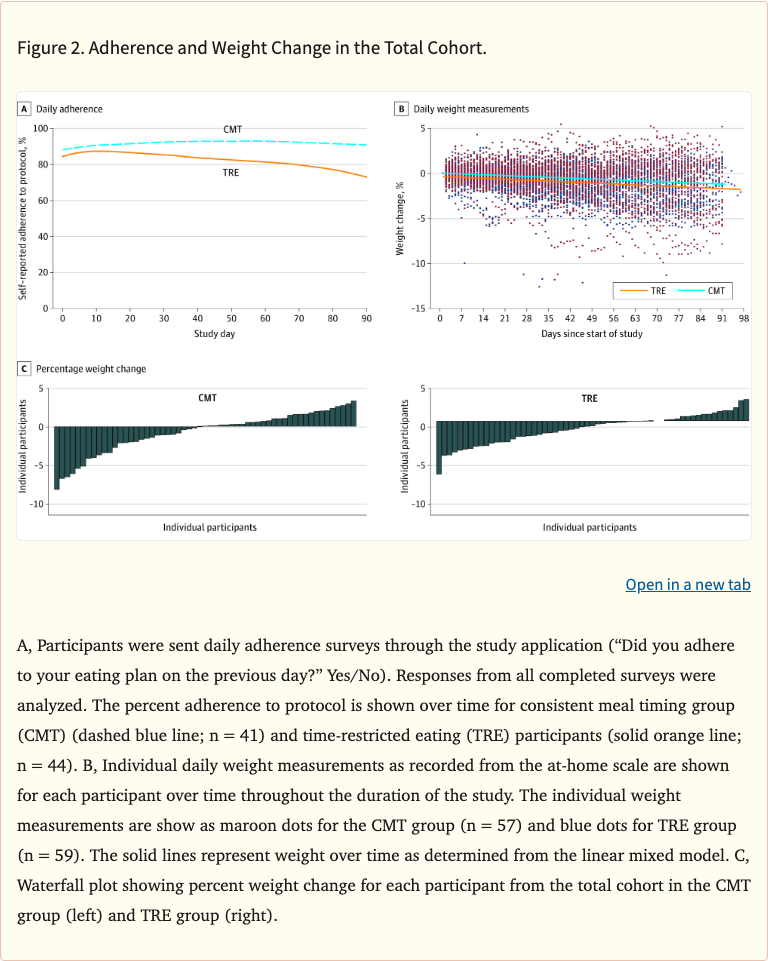 Figure 1
Limitations
- Modest compliance in TRE group
- No control over what was eaten
- Lean mass loss concerning
- Short duration (12 weeks)
- Late eating window (12pm-8pm) may not be optimal