
Key Takeaway
Cold-water immersion effectively reduces muscle soreness across all temperature levels and protocols, with short-to-medium immersion durations (under ~15 minutes) proving most effective.
Summary
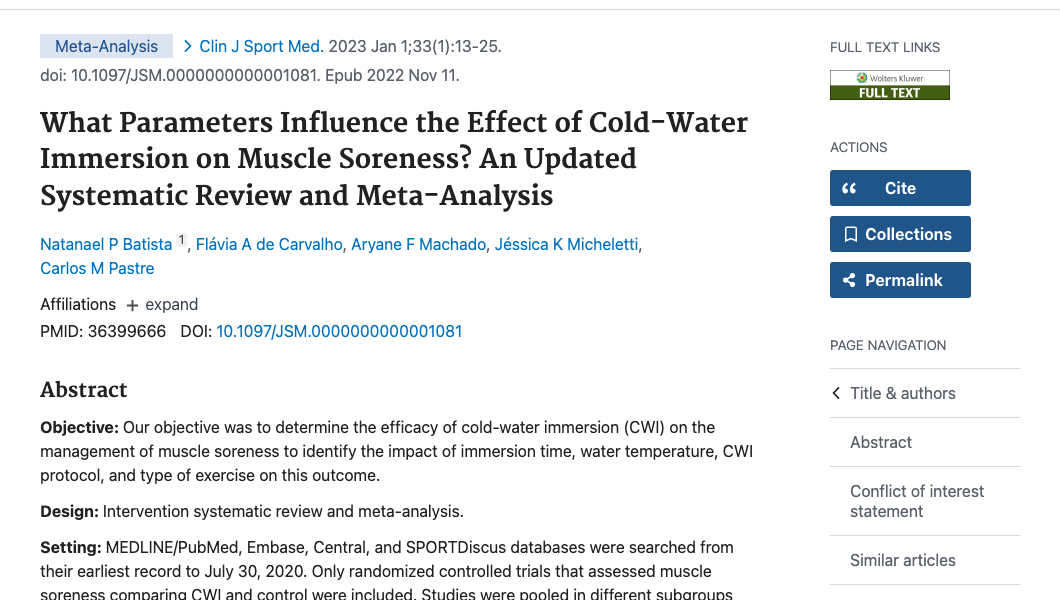
This updated systematic review and meta-analysis of 44 RCTs examined how specific CWI parameters influence effectiveness for managing muscle soreness. Databases were searched through July 2020, including both athletes and non-athletes.
CWI outperformed control conditions across all temperature levels and application protocols (continuous and intermittent). The benefits appeared strongest with short-to-medium immersion times, particularly following endurance exercise. Notably, longer immersion periods showed reduced effectiveness.
Water temperature severity and application type (intermittent vs continuous) did not significantly affect outcomes, suggesting the cold stimulus itself is the primary driver. The practical implication is that shorter, more tolerable CWI sessions are at least as effective as prolonged immersion.
Methods
- Systematic review and meta-analysis of 44 RCTs
- Searched MEDLINE/PubMed, Embase, Central, SPORTDiscus through July 2020
- Subgroup analyses by: temperature severity, immersion duration (short/medium/long), application type (intermittent/continuous), exercise type (endurance/resistance)
- Weighted mean difference with 95% confidence intervals
Key Results
- CWI superior to control for muscle soreness across all temperature levels
- Short-to-medium immersion durations most effective
- Longer immersion durations showed reduced effectiveness
- Benefits strongest following endurance exercise
- Water temperature and protocol type (intermittent vs continuous) did not significantly affect outcomes
Limitations
- Search limited through July 2020 — newer studies not included
- Heterogeneous control conditions across studies
- Muscle soreness as primary outcome is subjective
- Unable to determine precise optimal duration thresholds