
Key Takeaway
Post-exercise CWI significantly reduced delayed-onset muscle soreness and perceived exertion immediately, lowered creatine kinase at 24h, and reduced lactate at 24-48h, supporting its use for accelerating fatigue recovery.
Summary
This meta-analysis examined the effects of cold-water immersion (CWI) on fatigue recovery and exercise performance after high-intensity exercise. Twenty studies published between 2002 and 2022 were retrieved from PubMed, PEDro, and Elsevier databases, including both randomized controlled trials and crossover designs.
The analysis evaluated both subjective measures (delayed-onset muscle soreness, ratings of perceived exertion) and objective biomarkers (countermovement jump, creatine kinase, lactate/LDH, C-reactive protein, and IL-6). Results showed CWI was effective at reducing subjective fatigue indicators immediately after immersion and lowering key muscle damage markers over the following 24-48 hours.
Subgroup analysis found that different CWI body sites and water temperatures did not meaningfully alter the recovery outcomes, suggesting the overall cooling stimulus matters more than specific protocol details. The authors recommend athletes immerse in cold water immediately after exercise for optimal fatigue recovery benefits.
Methods
Systematic review and meta-analysis of 20 studies (RCTs and crossover designs) from PubMed, PEDro, and Elsevier databases. Studies published 2002-2022. Analyzed subjective indicators (DOMS, RPE) and objective biomarkers (CMJ, CK, lactate/LDH, CRP, IL-6) at multiple time points (0h, 24h, 48h). Subgroup analyses examined effects of CWI site and water temperature.
Key Results
- Significant reduction in delayed-onset muscle soreness (DOMS) and ratings of perceived exertion (RPE) at 0 hours post-CWI
- Significant reduction in countermovement jump (CMJ) at 0 hours
- Creatine kinase (CK) significantly lowered at 24 hours post-CWI
- Lactate significantly reduced at both 24 and 48 hours post-CWI
- No significant effect on C-reactive protein (CRP) or IL-6 during the 48-hour recovery period
- Different CWI sites and water temperatures had no differential effect on recovery outcomes
Figures
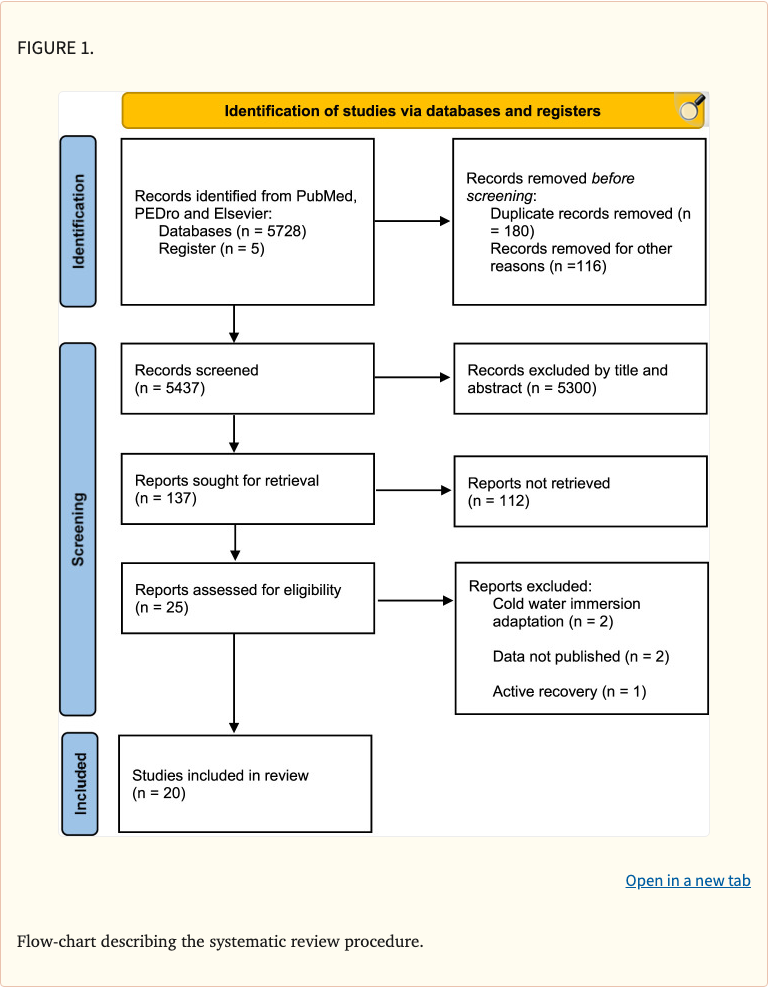 Figure 1
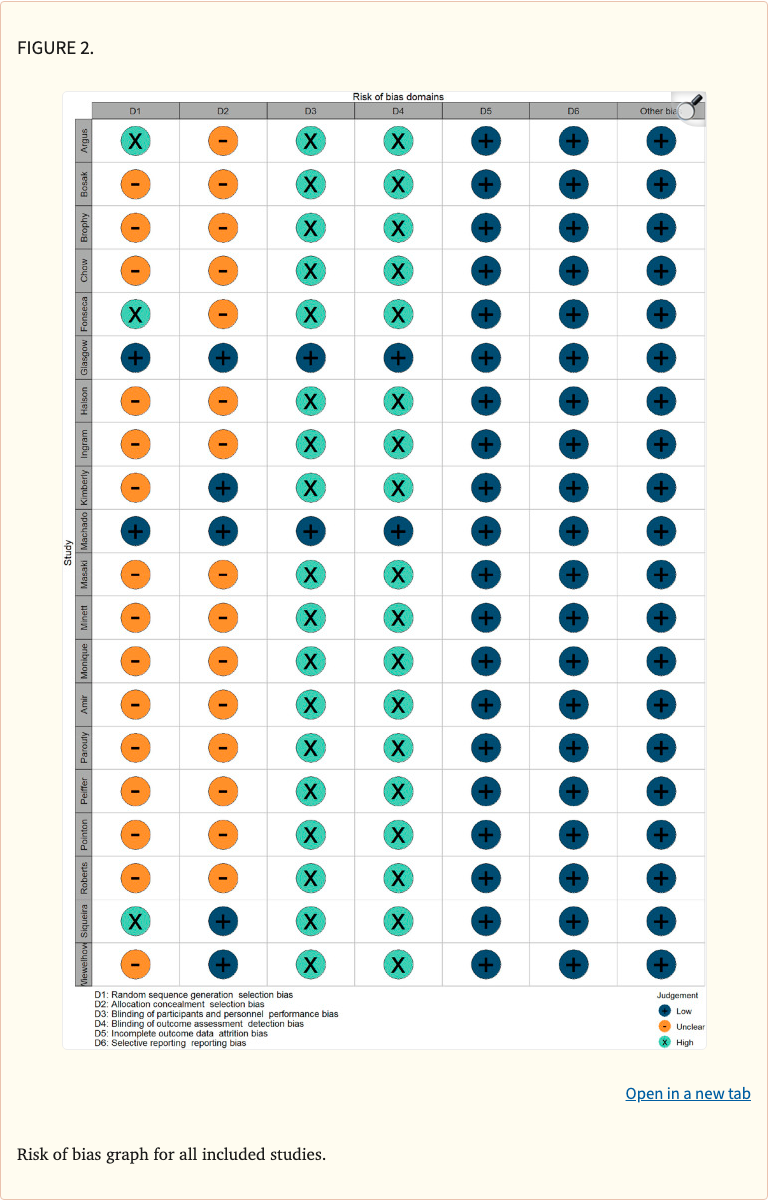 Figure 2
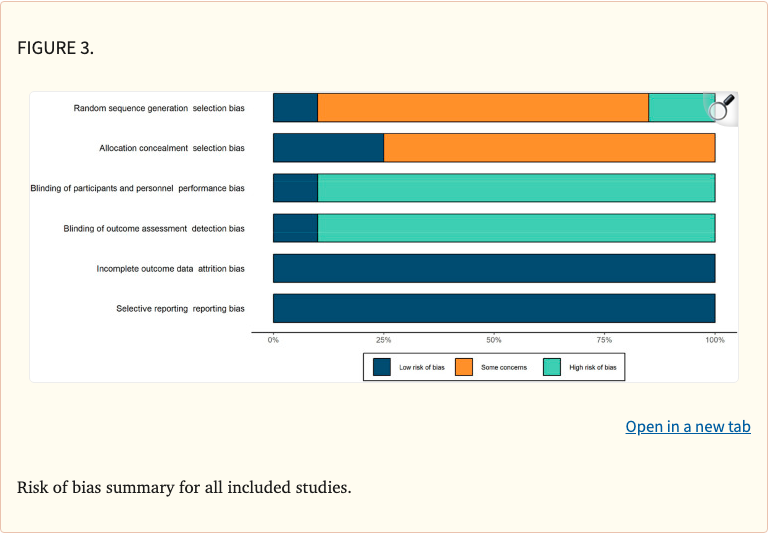 Figure 3
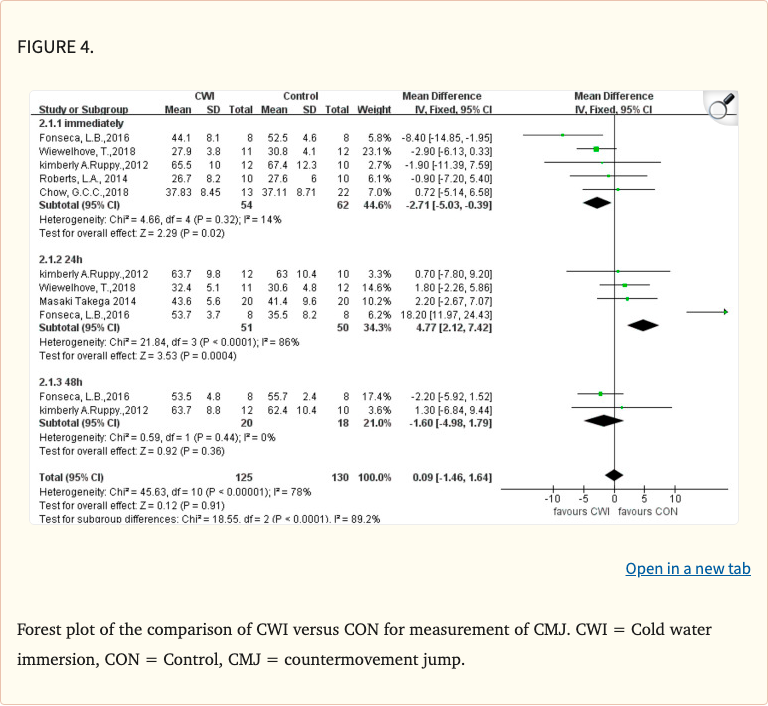 Figure 4
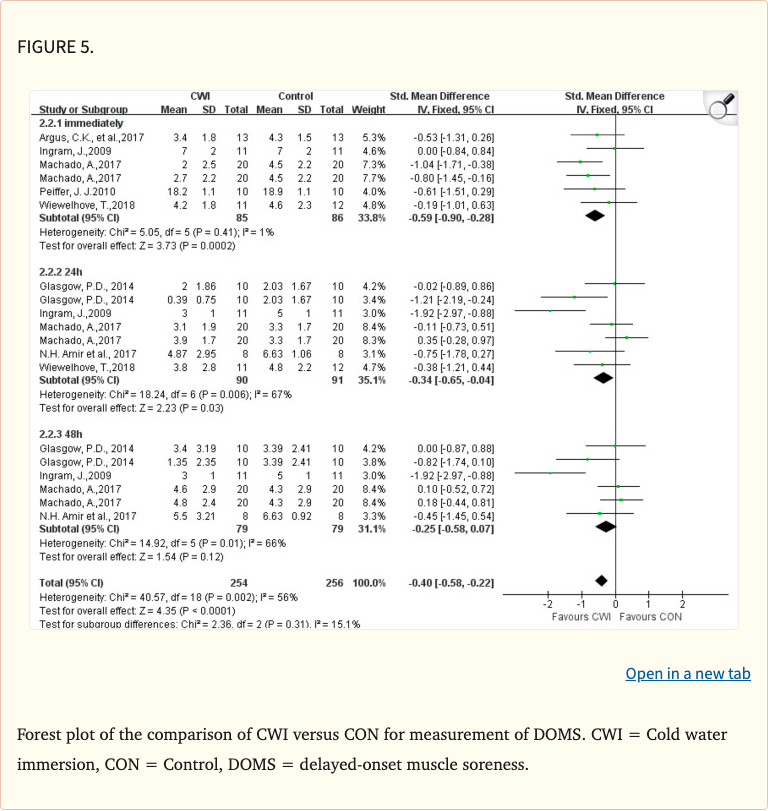 Figure 5
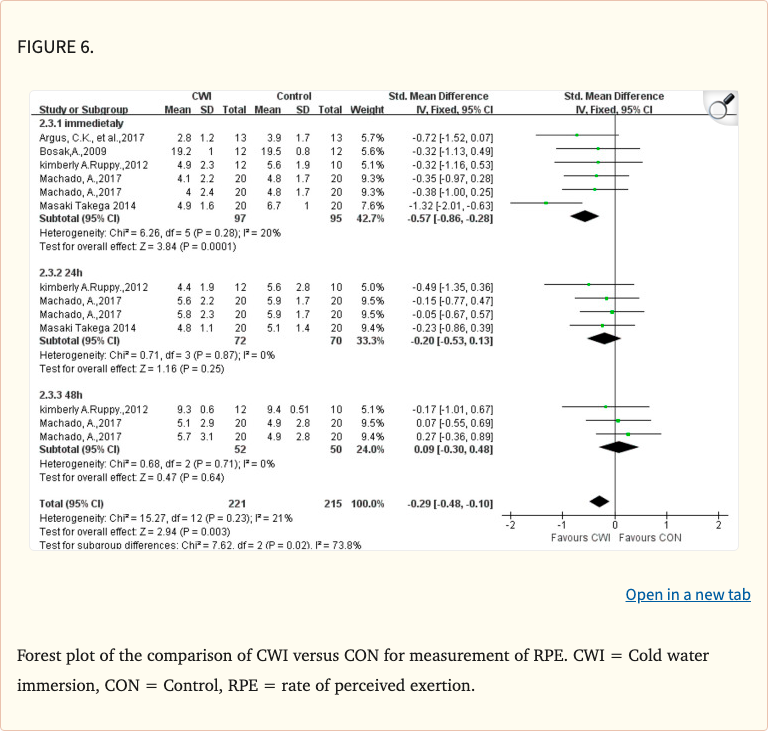 Figure 6
Limitations
Heterogeneity in CWI protocols across included studies (varying temperatures, durations, and immersion sites). Limited number of studies for some subgroup analyses. Most participants were trained athletes, limiting generalizability to general populations. Short follow-up periods (up to 48 hours) may miss longer-term effects. Potential publication bias not fully addressed.