
Key Takeaway
Repeated plasmapheresis improved lipid profiles but did not reduce epigenetic biological age; GrimAge, Hannum clock, and DunedinPACE actually showed slight aging acceleration, raising questions about the protocol's rejuvenation claims.
Summary
This randomized controlled trial from Charles University in Prague examined whether plasmapheresis alone (plasma removal without young plasma or albumin replacement) could affect epigenetic aging markers and health biomarkers in healthy blood donors. Participants were randomized to receive either 8 or 4 plasmapheresis sessions over an 18-week period using the Haemonetics PCS2 automatic plasma collection system.
The study found beneficial effects on lipid profiles, including decreased total cholesterol, non-HDL cholesterol, and triglycerides. However, epigenetic clock measurements told a different story: DNAmGrimAge, Hannum clock, and Dunedin Pace of Aging all showed increases, suggesting aging acceleration rather than reversal. Hematological changes included increased red cell distribution width and mean corpuscular hemoglobin concentration.
This is a notable negative result for the plasma dilution hypothesis, as it suggests that simple plasma removal without replacement with young factors may not be sufficient to achieve rejuvenation. The authors concluded that the selected protocol did not provide conclusive data supporting anti-aging benefits and called for more research into long-term safety.
Methods
- Randomized controlled trial with cross-over design
- Healthy blood donors randomized into two groups
- Group 1: 8 plasmapheresis sessions; Group 2: 4 sessions
- 18-week study period with minimum 2-week intervals between procedures
- Haemonetics PCS2 automatic plasma collection system
- Biochemical, hematological, and epigenetic clock analyses
Key Results
- Decreased serum lipids: total cholesterol, non-HDL cholesterol, triglycerides
- Reduced apolipoprotein A, total proteins, and albumin
- Altered serum mineral levels
- Increased red cell distribution width (RDW) and mean corpuscular hemoglobin concentration (MCHC)
- DNAmGrimAge, Hannum clock, and DunedinPACE all increased (aging acceleration)
- No evidence of epigenetic rejuvenation
Figures
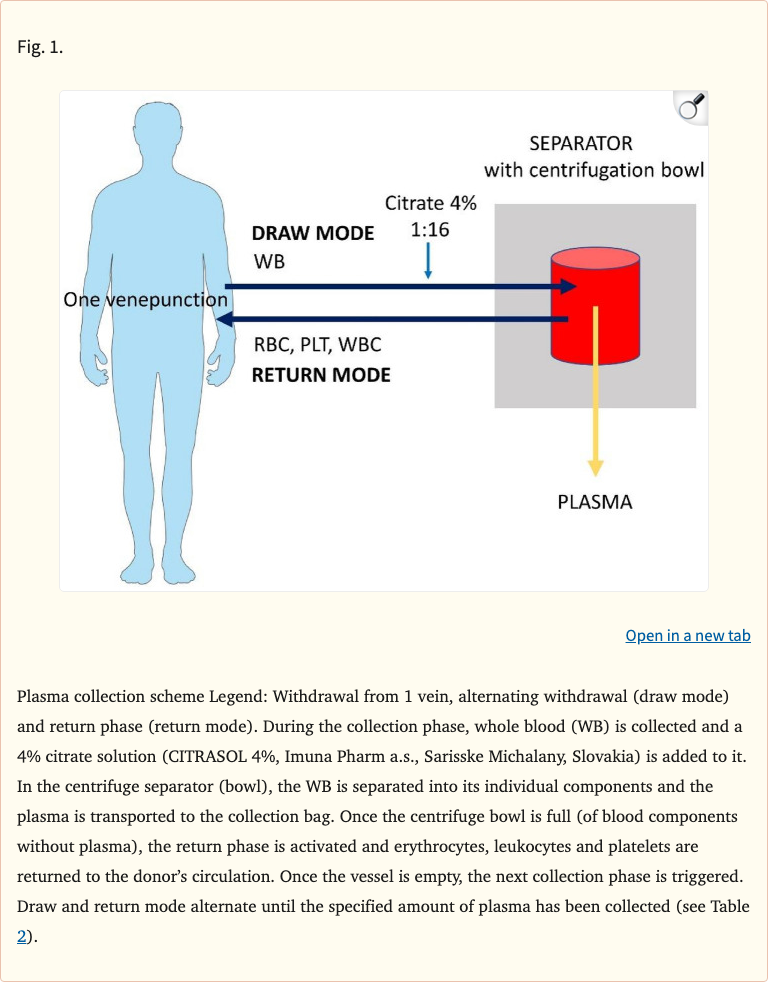 Figure 1
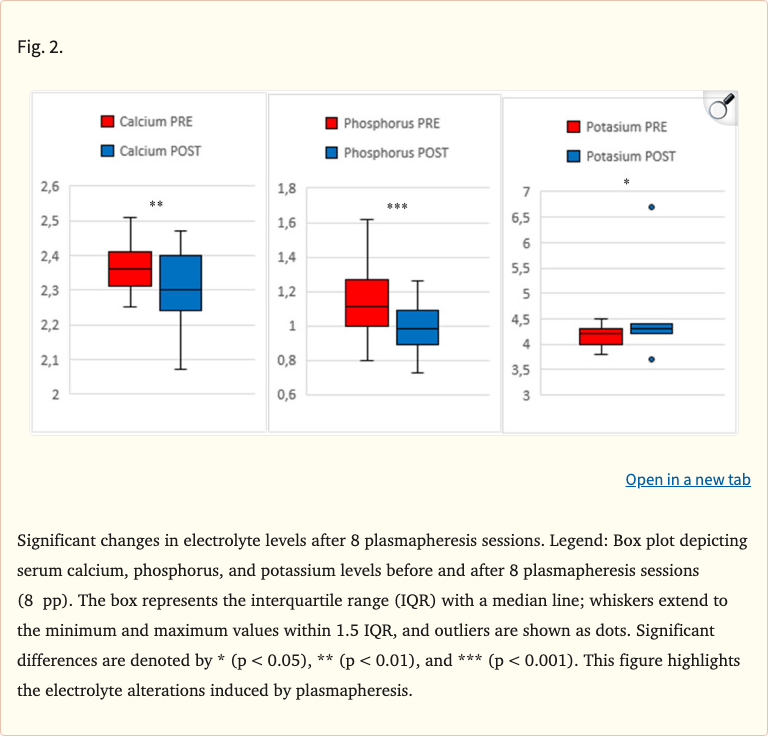 Figure 2
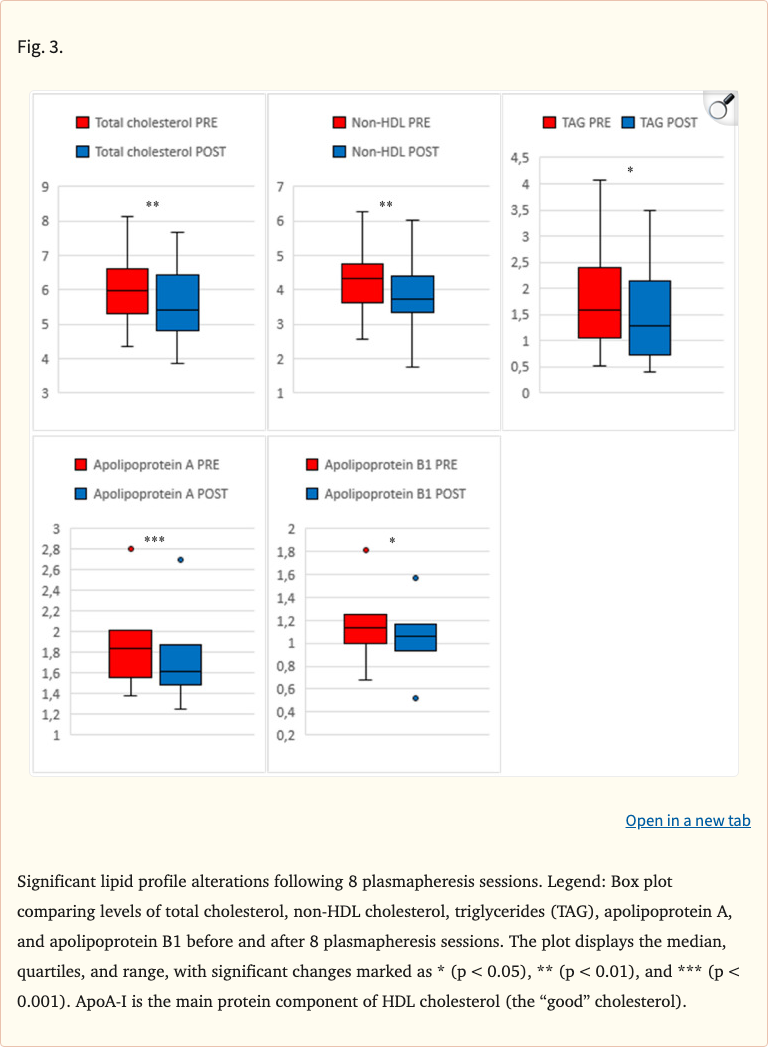 Figure 3
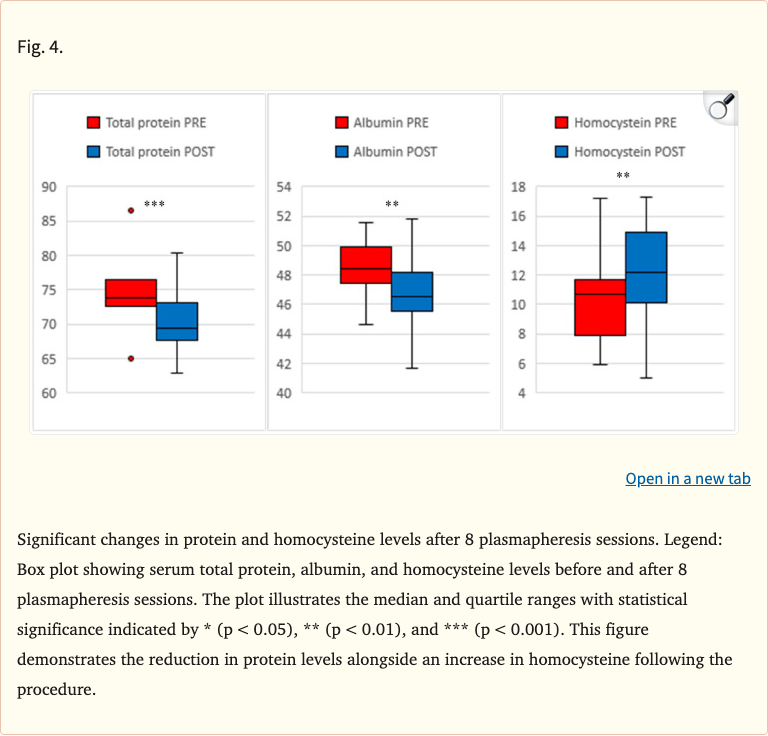 Figure 4
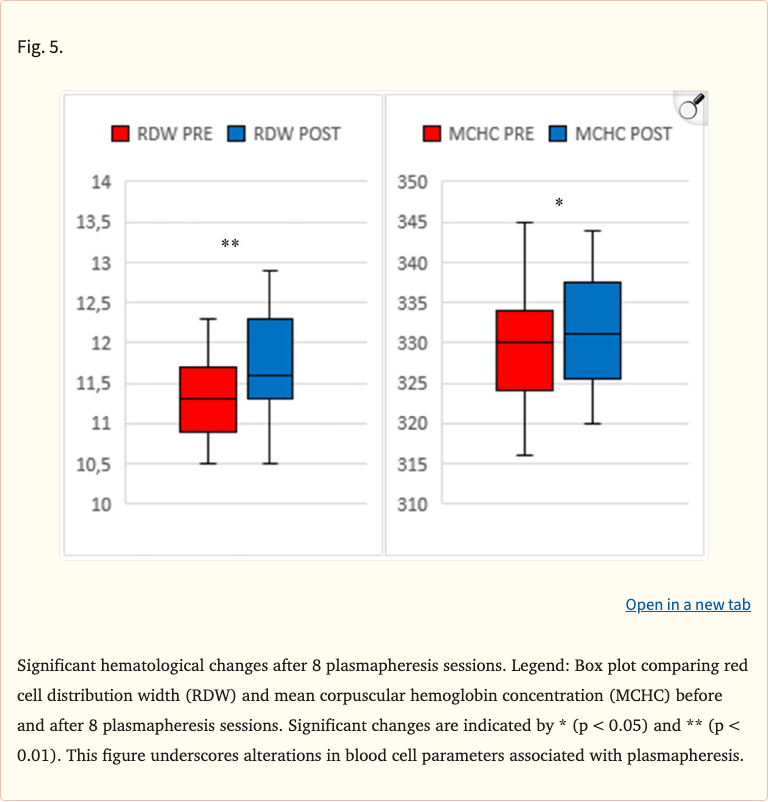 Figure 5
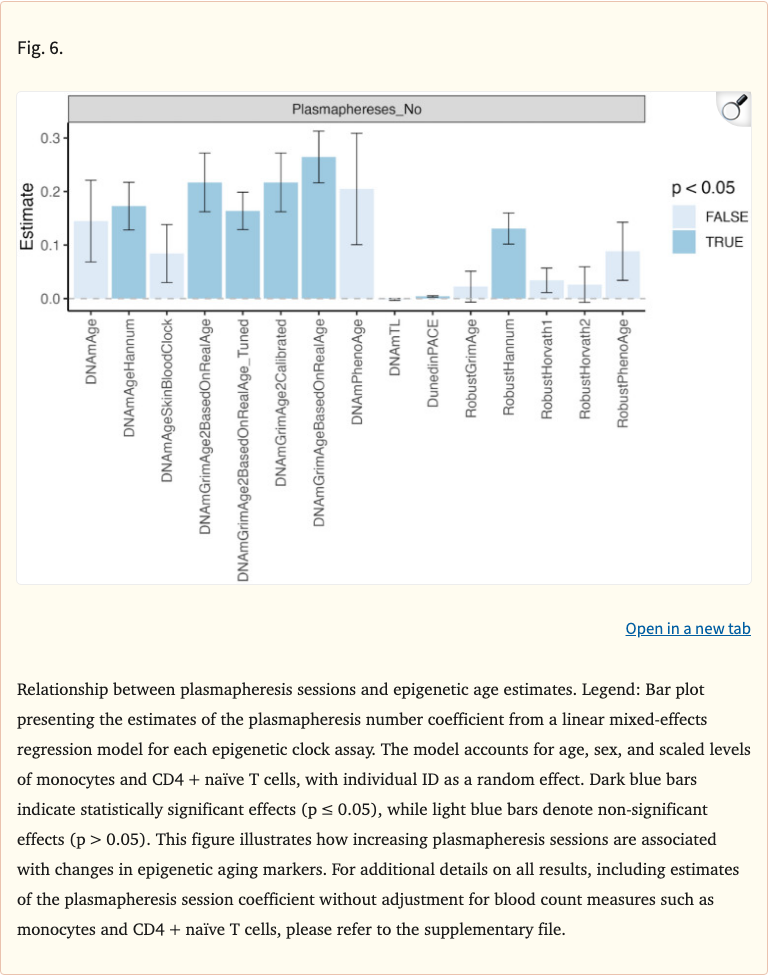 Figure 6
Limitations
- Plasmapheresis only (no replacement with young plasma or albumin)
- Protocol may not replicate conditions of studies using full plasma exchange with replacement
- Healthy donors may have less room for improvement vs. older adults
- Relatively short study duration (18 weeks)
- Sample size details not fully reported in abstract