
Key Takeaway
Therapeutic plasma exchange shifted aged human blood proteome toward youthful profiles, reducing biological age measured by a novel 10-protein biomarker panel and lowering dementia-associated TDP43 levels.
Summary
This UC Berkeley-led clinical study tested whether therapeutic plasma exchange (TPE) could reverse molecular hallmarks of aging in humans, extending prior mouse parabiosis findings. Eight older patients underwent multiple rounds of TPE while proteomic and molecular analyses compared their blood to young (n=5) and old (n=5) control cohorts.
TPE promoted shifts toward a youthful proteome, restoring regenerative factors and anticancer regulators. Inflammatory response proteins shifted from aged to youthful profiles (p = 4.10E-14), and apoptosis-related proteins showed similar rejuvenation. DNA damage marker 8-OHdG and senescence marker p16 both decreased across TPE rounds. TDP43, a dementia-associated protein, dropped significantly from elevated baseline levels and remained low for one month between rounds.
The authors identified TLR4 as a nodal regulatory point linking JAK-STAT, MAPK, TGF-beta, NF-kB, and Toll-like receptor signaling, suggesting TPE works by diluting age-elevated systemic factors that drive degeneration through multiple pathways. Biological age, calculated from standard deviation of 10 protein noise biomarkers, decreased in all patients by the final round of TPE.
Methods
- 8 older patients received multiple rounds of therapeutic plasma exchange
- Young (n=5) and old (n=5) control cohorts for comparison
- Proteomic profiling via antibody arrays
- Gene expression analysis (qRT-PCR)
- DNA damage assessment (8-OHdG ELISA)
- Cellular senescence markers (p16)
- Principal component analysis and protein-protein interaction networks
Key Results
- 72 proteins showed >1.75-fold differences between young and old cohorts
- Inflammatory response proteins shifted to youthful profiles (p = 4.10E-14)
- Apoptosis-related proteins rejuvenated (p = 3.60E-07)
- DNA damage (8-OHdG) and senescence (p16) markers decreased across TPE rounds
- TDP43 (dementia marker) dropped significantly: old baseline 12,024 vs young 7,732 pg/mL
- Lymphoid:myeloid ratio increased; myeloid:NK ratio decreased
- All patients showed decreased biological age by final TPE round
Figures
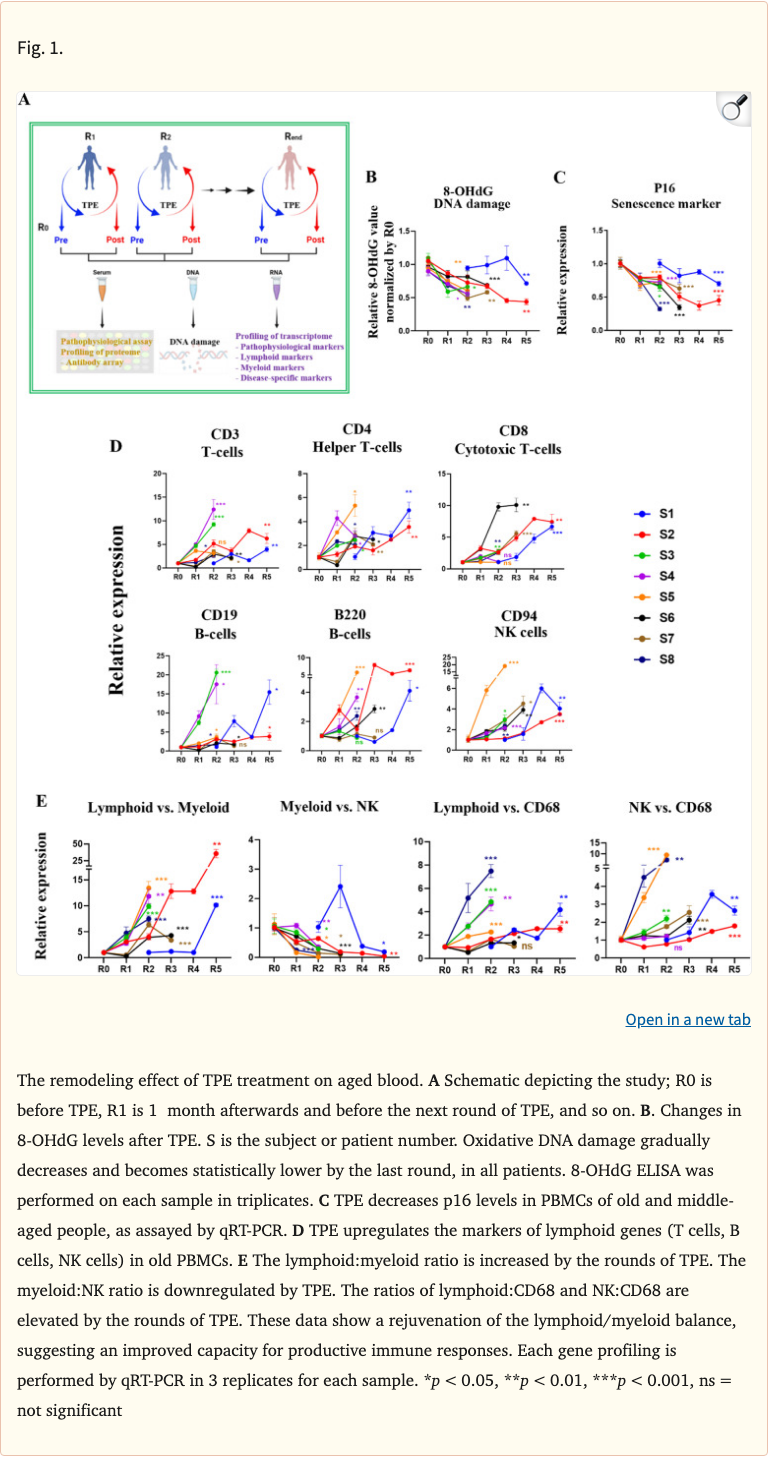 Figure 1
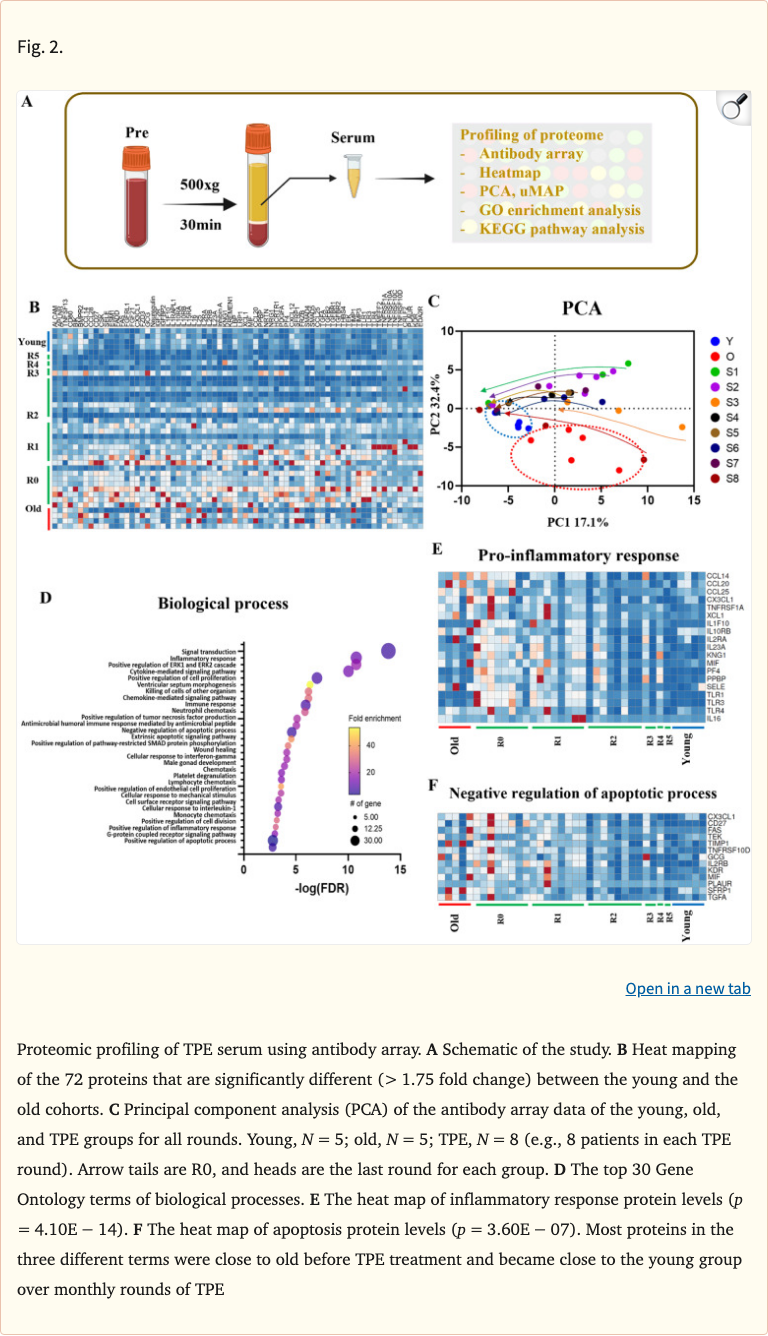 Figure 2
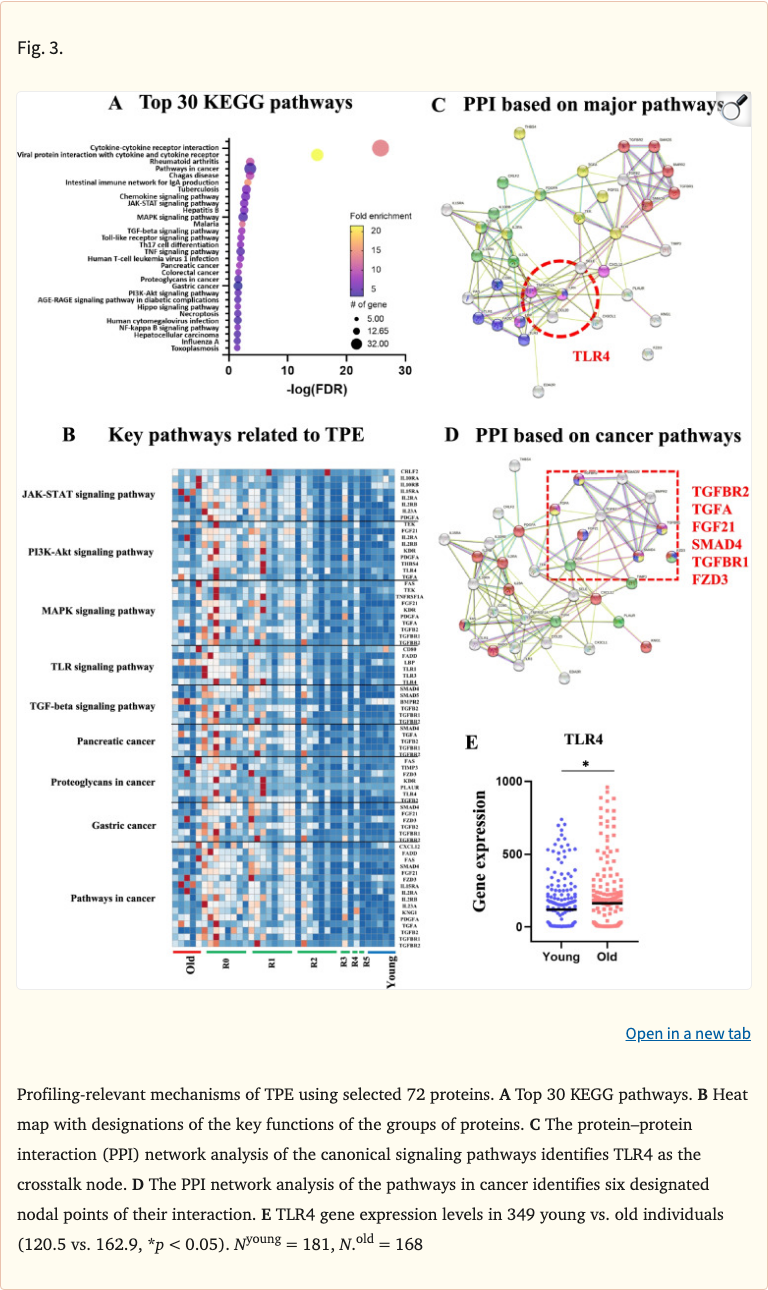 Figure 3
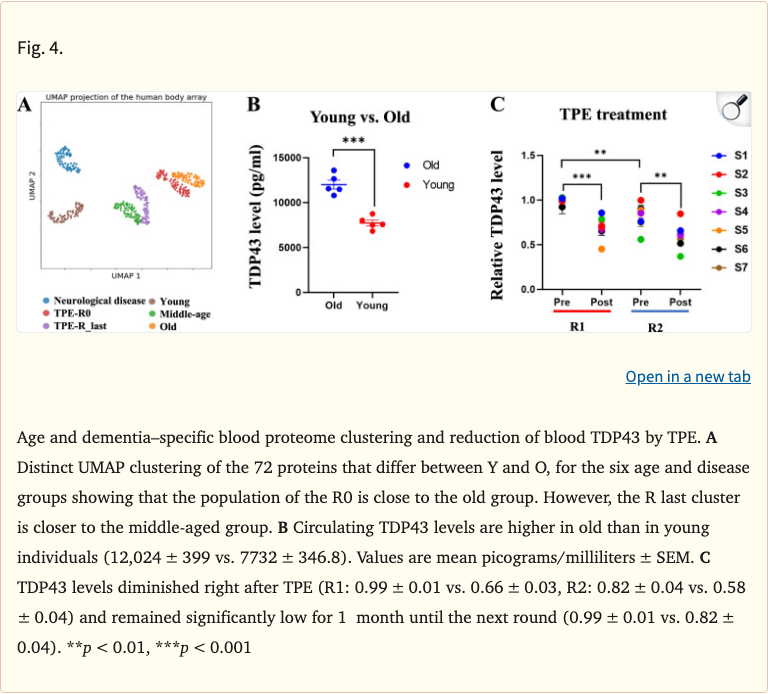 Figure 4
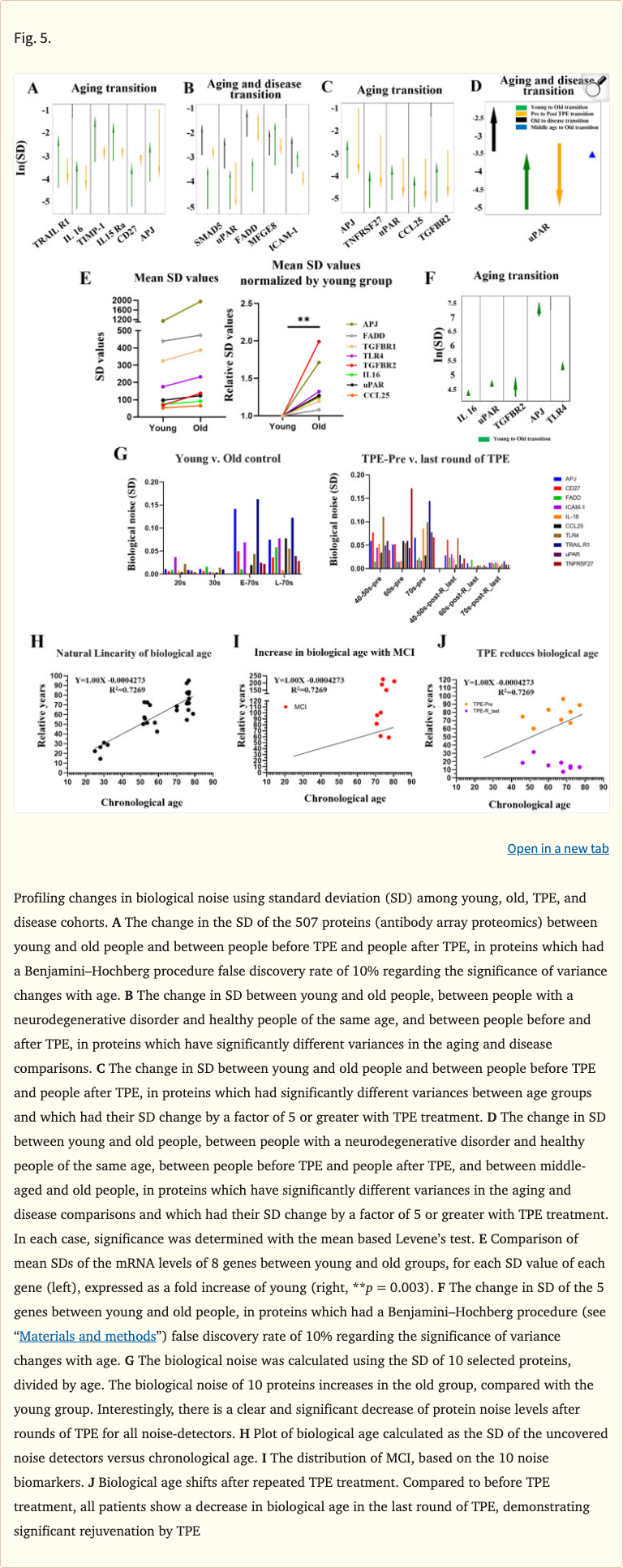 Figure 5
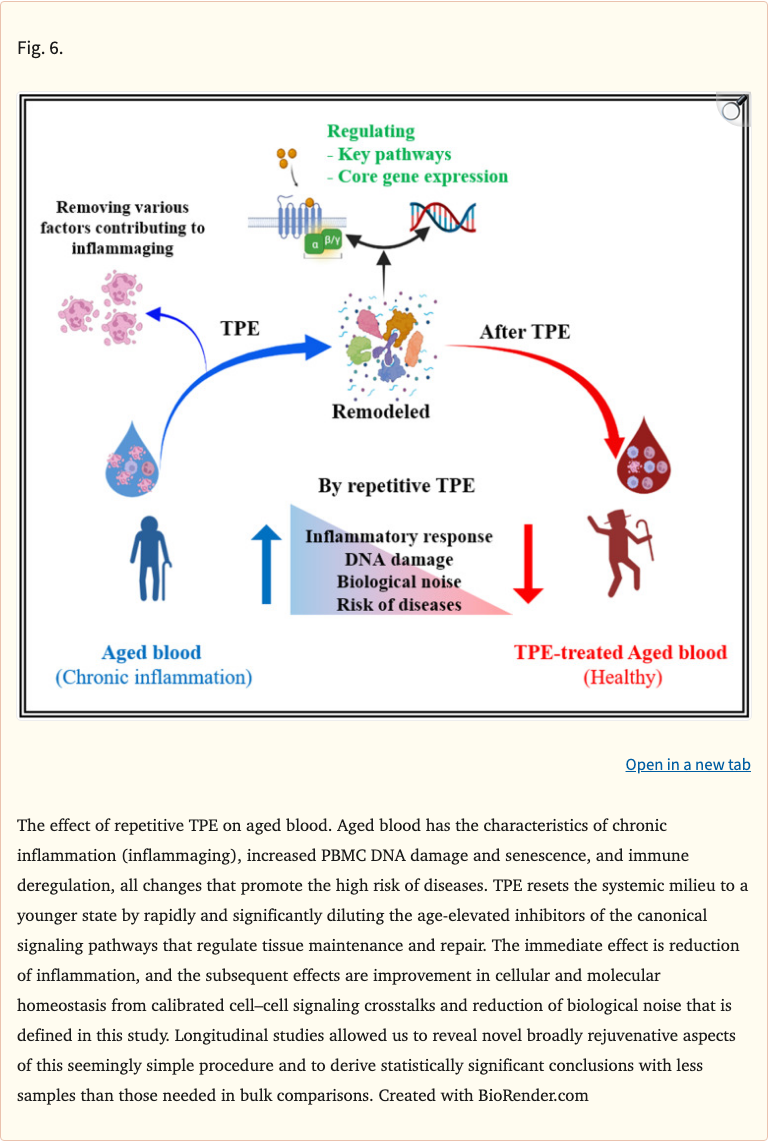 Figure 6
Limitations
- Very small sample size (n=8 treatment group)
- No randomization or placebo control
- Short follow-up (one month between rounds)
- Biological age metric based on novel, not yet widely validated biomarker panel
- Cannot distinguish TPE effects from natural variability in such a small cohort