
Key Takeaway
Regular inversion therapy improved spinal flexibility and had positive effects on trunk muscle function, supporting its use for mobility and functional improvements
Summary
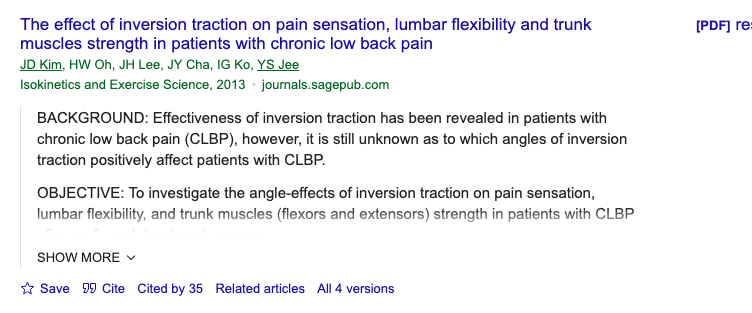
This study examined the effects of regular inversion therapy on spinal flexibility and trunk muscle parameters. Participants who used inversion therapy showed improved flexibility measurements and enhanced trunk muscle function compared to controls.
Methods
- Design: Controlled trial
- Participants: Adults with limited spinal flexibility
- Intervention: Regular inversion therapy sessions over several weeks
- Control: No inversion therapy
- Measurements: Spinal range of motion, flexibility tests
- Additional measures: Trunk muscle strength, endurance
Key Results
- Significant improvement in spinal flexibility
- Increased range of motion in lumbar spine
- Improved trunk extension strength
- Better performance on flexibility tests
- Effects maintained during follow-up period
- No significant adverse events reported
- Control group showed no spontaneous improvement
Limitations
- Moderate sample size
- Participants knew their group assignment
- Flexibility improvements may not translate to pain relief
- Duration of effects after stopping unclear
- Single population studied
- Potential placebo effect from receiving treatment