
Key Takeaway
Cochrane review of 32 RCTs found traction (including inversion) is probably not effective for low back pain, with no clinically relevant differences compared to sham, other treatments, or no treatment
Summary
This Cochrane systematic review evaluated traction for low back pain with or without sciatica. Thirty-two RCTs were included. The review found traction is probably not effective for low back pain, with no clinically relevant differences compared to sham traction, other physiotherapy treatments, or no treatment. This includes mechanical traction and gravity-assisted methods like inversion.
Methods
Cochrane systematic review searching CENTRAL, MEDLINE, EMBASE, and other databases through August 2012. Included 32 RCTs of lumbar traction for low back pain. Various traction methods included (mechanical, manual, gravity/inversion). Risk of bias and GRADE criteria applied.
Key Results
No clinically relevant differences between traction and sham, physiotherapy, or no treatment for pain or function. Results consistent for both acute and chronic low back pain. No subgroup showed clear benefit. Very low to low quality evidence overall.
Figures
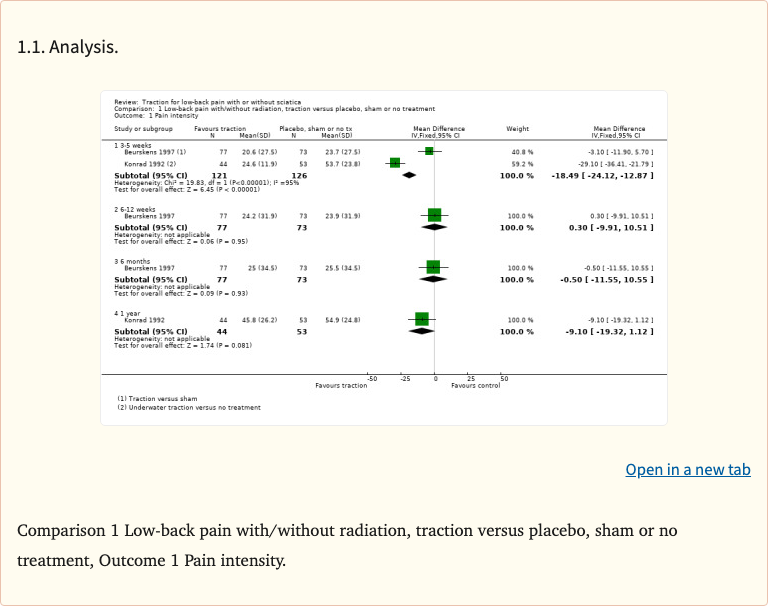 Figure 1
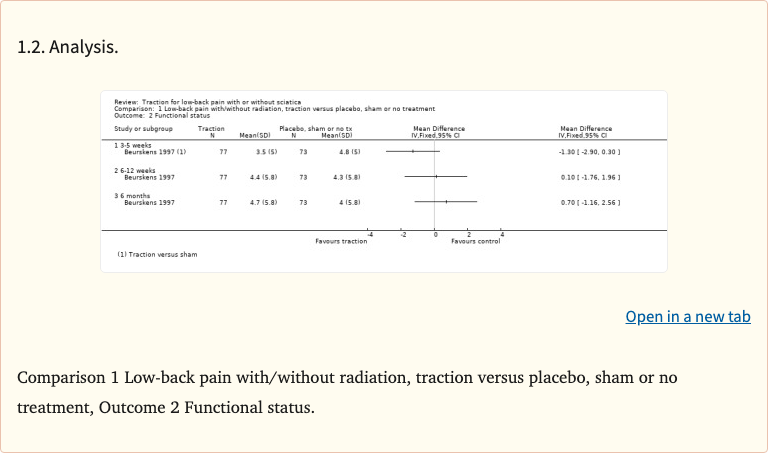 Figure 2
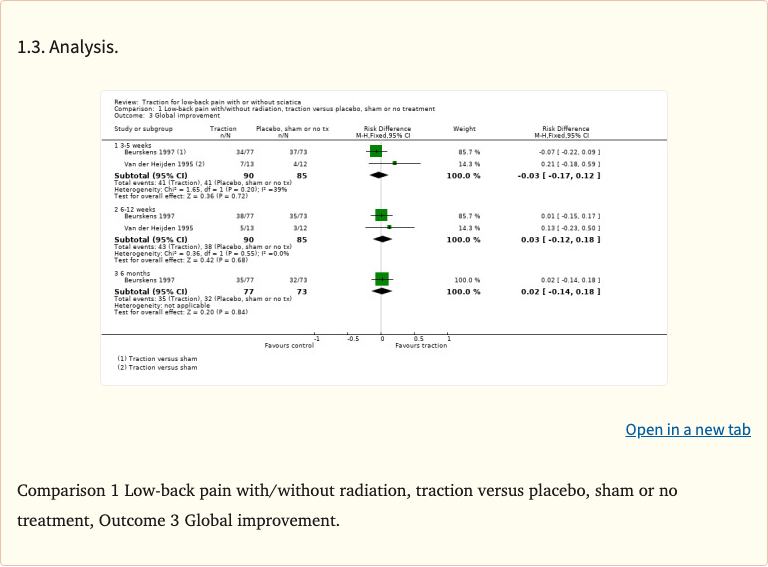 Figure 3
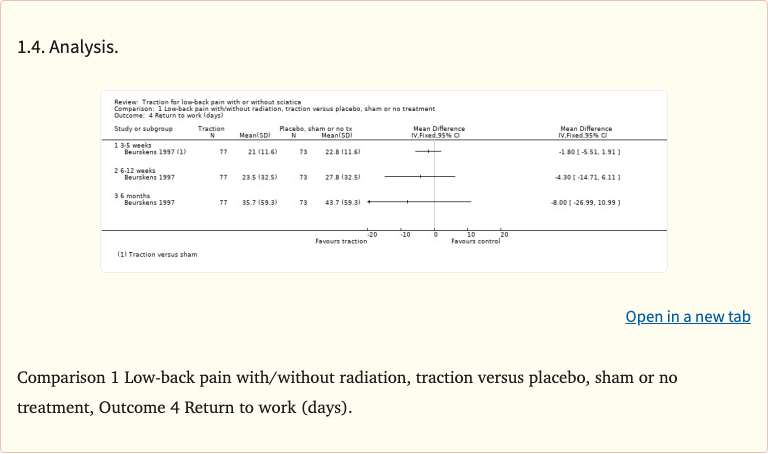 Figure 4
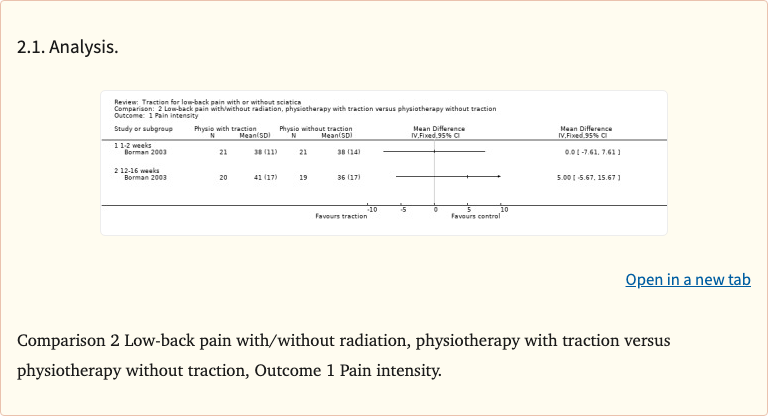 Figure 5
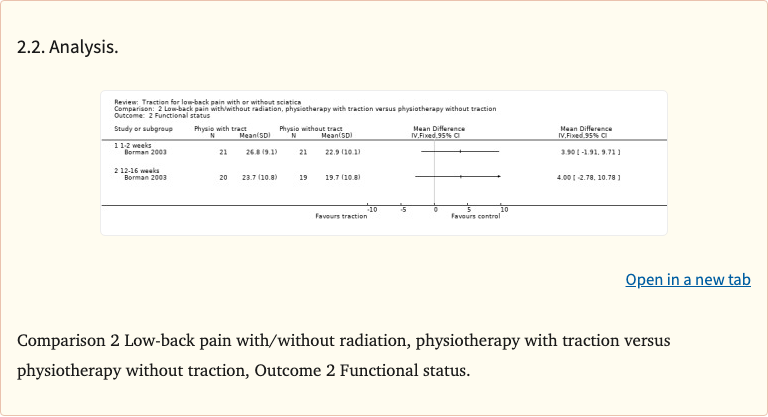 Figure 6
Limitations
Many studies at high risk of bias. Heterogeneous traction protocols (method, force, duration). Some studies had very small samples. GRADE quality very low to low. Traction protocols may not reflect optimal clinical application. Inversion-specific studies were limited within the review.