
Key Takeaway
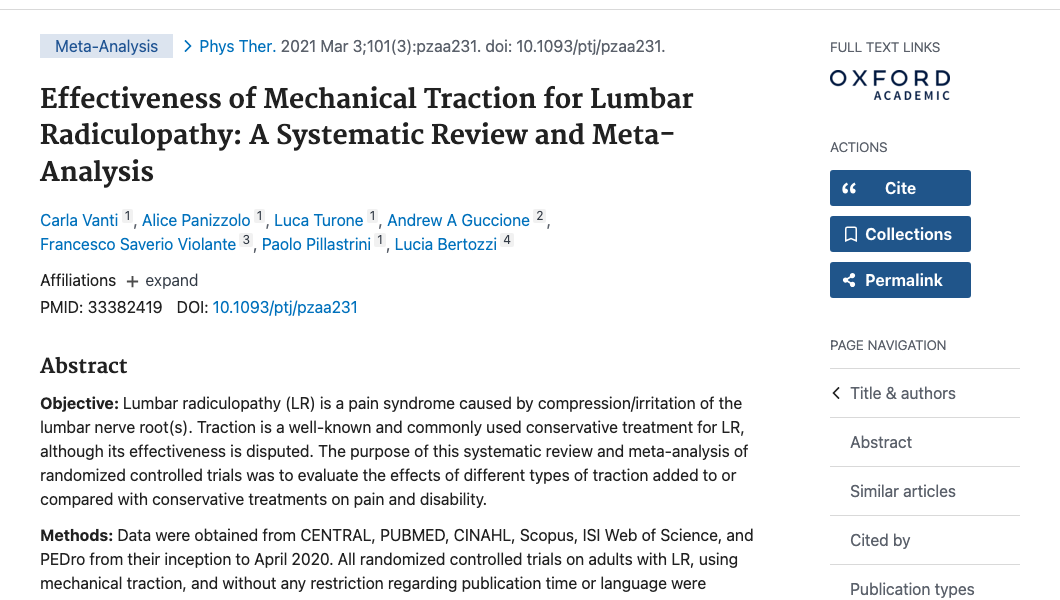
Mechanical traction provides significant short-term pain relief and functional improvement for lumbar radiculopathy, with moderate-quality evidence supporting its use alongside other treatments.
Summary
This systematic review and meta-analysis evaluated the effectiveness of mechanical traction for lumbar radiculopathy by pooling data from multiple randomized controlled trials. The review focused on key patient-centered outcomes including pain intensity, disability, and quality of life across short-term, medium-term, and long-term follow-up periods.
The meta-analysis found that mechanical traction produced statistically significant improvements in pain reduction and functional disability scores in the short term compared to control interventions. The evidence quality was rated moderate for short-term outcomes, suggesting reasonable confidence in the findings. However, long-term benefits were less clear, with fewer studies reporting sustained effects beyond 3-6 months.
The authors concluded that mechanical traction, including inversion-based approaches, can be a useful component of conservative management for lumbar radiculopathy, particularly when combined with exercise and other physical therapy modalities. The findings support traction as a viable non-invasive option for patients seeking alternatives to surgical intervention for nerve root compression symptoms.