
Key Takeaway
Inversion therapy reduced the need for surgery by 70.5% compared to standard physiotherapy alone in patients with lumbar disc protrusions causing sciatica.
Summary
This randomized controlled trial investigated whether inversion therapy could reduce the need for surgery in patients with single-level lumbar disc protrusions causing sciatica who were failing conservative management. Patients were randomized to receive either physiotherapy alone or physiotherapy combined with inversion on a Teeter inversion table at progressively increasing angles (20, 40, and 60 degrees) over 6 weeks.
The results were striking: only 22.2% of patients in the inversion group ultimately required surgery, compared to 75.6% in the physiotherapy-only control group. This represents a 70.5% relative reduction in surgical need. Additionally, inversion-treated patients showed greater improvements in the Oswestry Disability Index (ODI), a standard measure of functional disability related to low back pain.
The study provides strong clinical evidence that inversion therapy can serve as an effective non-surgical intervention for disc-related sciatica, potentially helping patients avoid invasive procedures. The progressive angle protocol used (starting at 20 degrees and advancing to 60 degrees) offers a practical framework for clinical implementation.
Figures
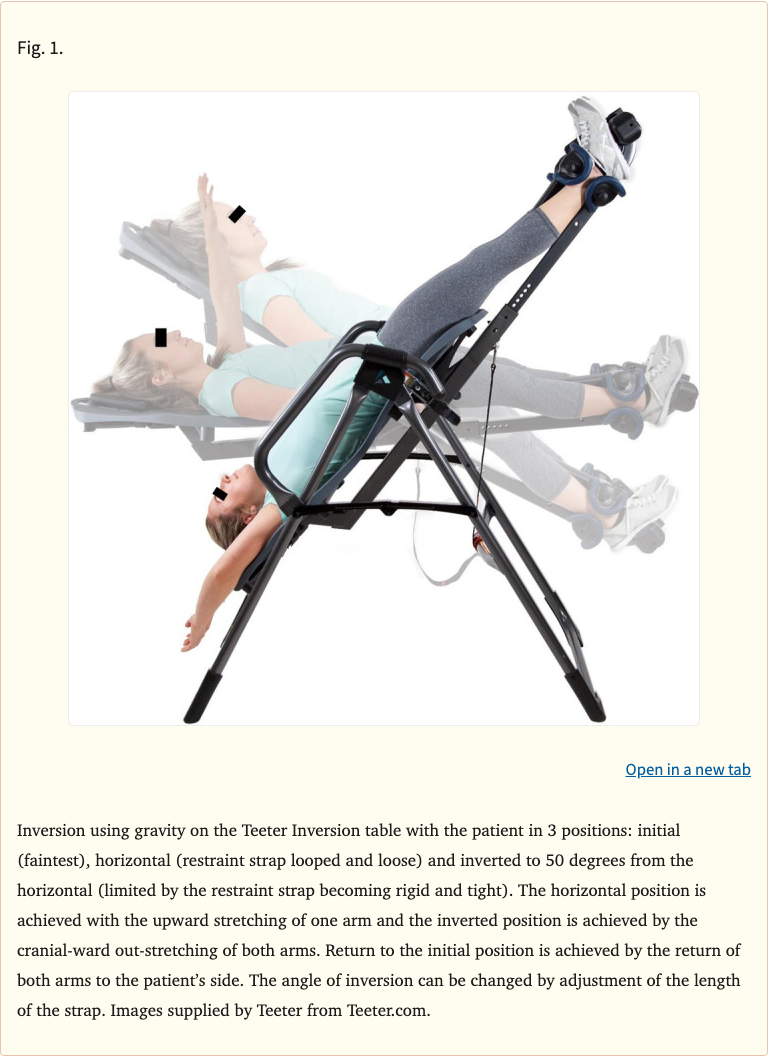 Figure 1
 Figure 2
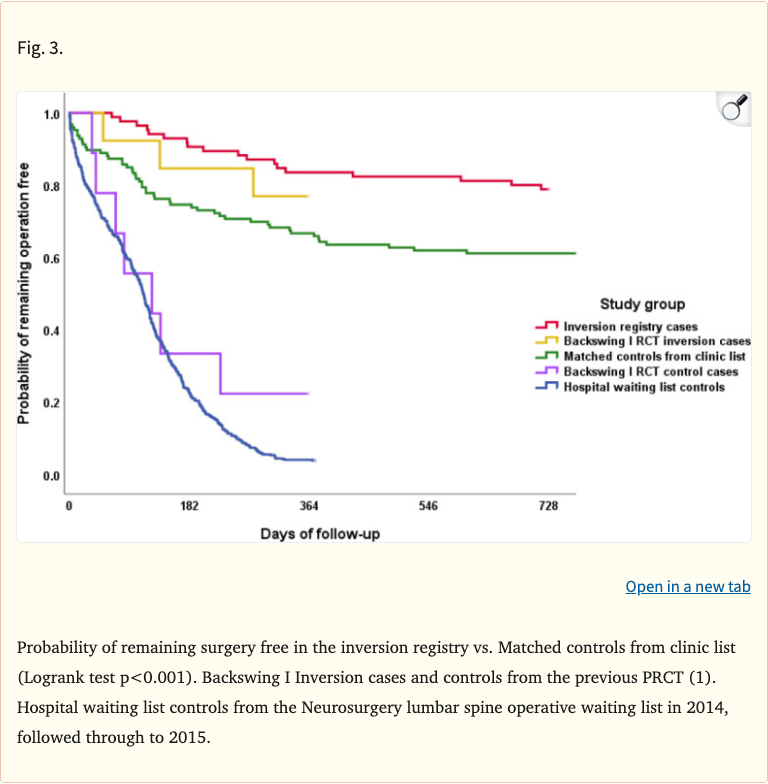 Figure 3