
Key Takeaway
Mechanical traction significantly reduces pain (VAS) and disability (ODI) scores and improves overall treatment effectiveness in patients with lumbar disc herniation compared to non-traction controls.
Summary
This meta-analysis systematically evaluated the clinical efficacy of mechanical traction as a physical therapy intervention for lumbar disc herniation (LDH). The review included multiple randomized controlled trials comparing mechanical traction combined with standard care versus standard care alone, analyzing outcomes through Visual Analogue Scale (VAS) pain scores, Oswestry Disability Index (ODI), and overall treatment effectiveness rates.
The pooled results demonstrated that mechanical traction significantly reduced VAS pain scores and ODI disability scores compared to control groups. Forest plot analyses showed consistent benefits across the included studies, with the traction groups achieving meaningfully better outcomes on both primary measures. The overall treatment effectiveness rate was also significantly higher in the traction groups.
These findings provide meta-analytic evidence that mechanical traction is an effective conservative treatment for lumbar disc herniation, supporting its use as part of a multimodal physical therapy approach. The results are particularly relevant for inversion therapy, which applies traction through gravitational decompression, as the mechanism of action -- spinal distraction and reduced intradiscal pressure -- is shared across traction modalities.
Figures
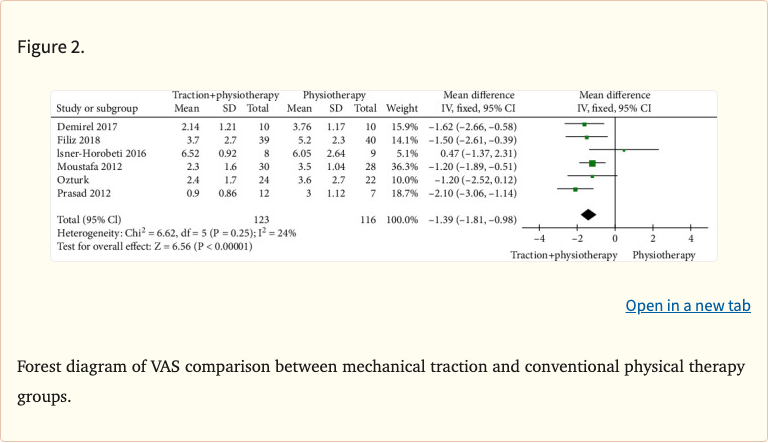 Figure 1
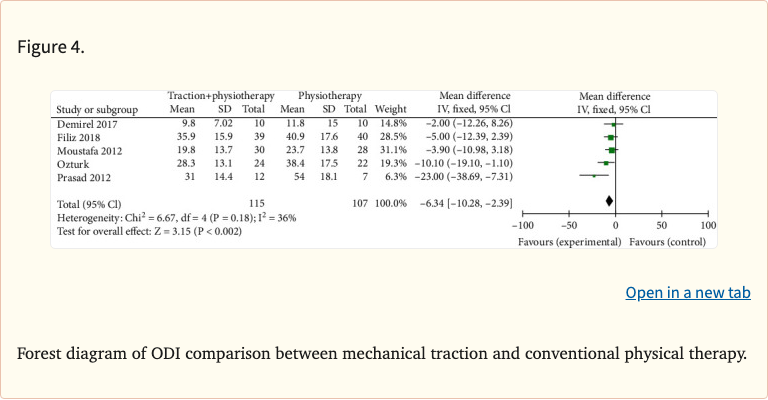 Figure 3
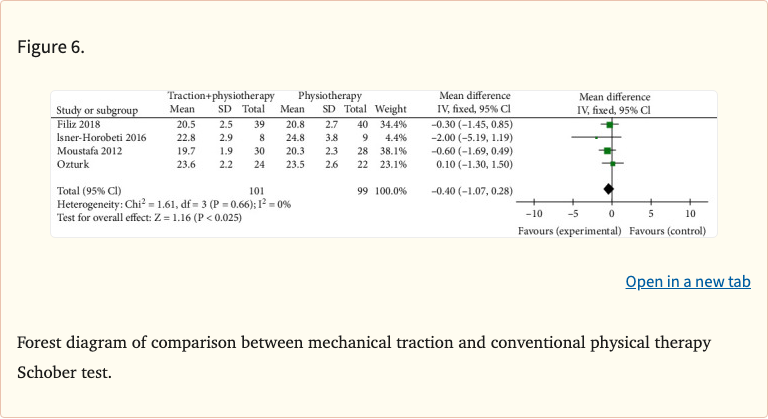 Figure 5