Key Takeaway
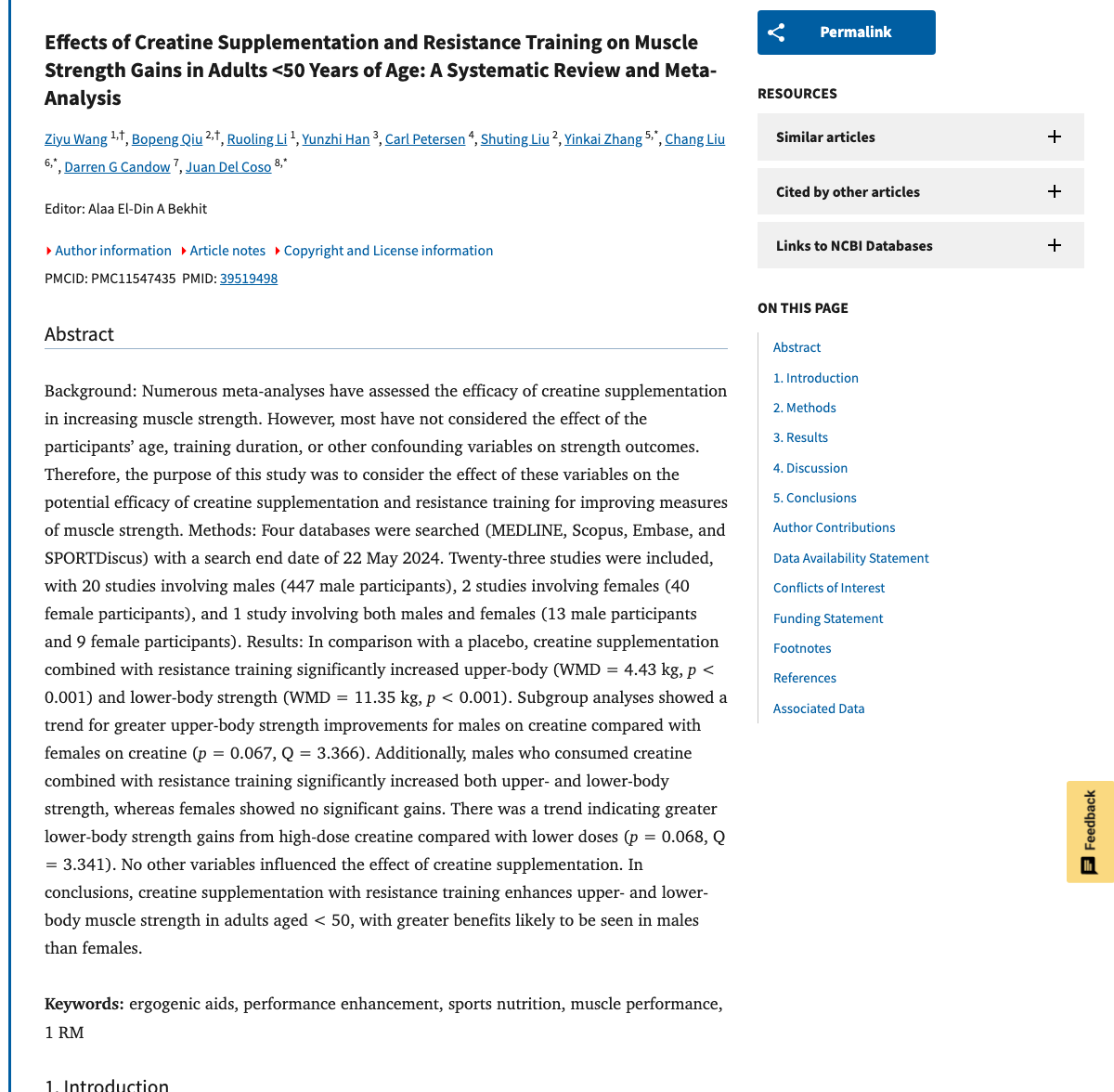
Meta-analysis of 23 studies found creatine plus resistance training significantly increased upper-body strength (+4.43 kg) and lower-body strength (+11.35 kg) in adults under 50, with greater benefits in males.
Summary
This 2024 systematic review and meta-analysis examined the combined effects of creatine supplementation and resistance training on muscle strength gains in adults under 50 years of age. The analysis included 23 studies with 447 male participants, 40 female participants, and 13 mixed-gender participants, searched across four databases through May 2024.
Creatine supplementation combined with resistance training significantly increased both upper-body strength (WMD = 4.43 kg, p < 0.001) and lower-body strength (WMD = 11.35 kg, p < 0.001) compared to resistance training alone. Males showed significant gains in both upper and lower-body strength, while females showed no significant gains.
A trend toward dose-dependent effects was observed for lower-body strength, with higher creatine doses showing greater improvements (p = 0.068). The findings confirm that creatine is an effective ergogenic aid for strength development when combined with resistance training, particularly in males under 50.
Methods
- Systematic review and meta-analysis of 23 studies
- 500 total participants (447 male, 40 female, 13 mixed-gender)
- Adults under 50 years of age
- Searched four databases through May 2024
- Used weighted mean differences (WMD) for strength outcomes
- Subgroup analyses by sex and dosage
Key Results
- Upper-body strength significantly increased (WMD = 4.43 kg, p < 0.001)
- Lower-body strength significantly increased (WMD = 11.35 kg, p < 0.001)
- Males showed significant gains in both upper and lower-body strength
- Females showed no significant strength gains
- Trend toward greater lower-body gains with higher doses (p = 0.068)
Figures
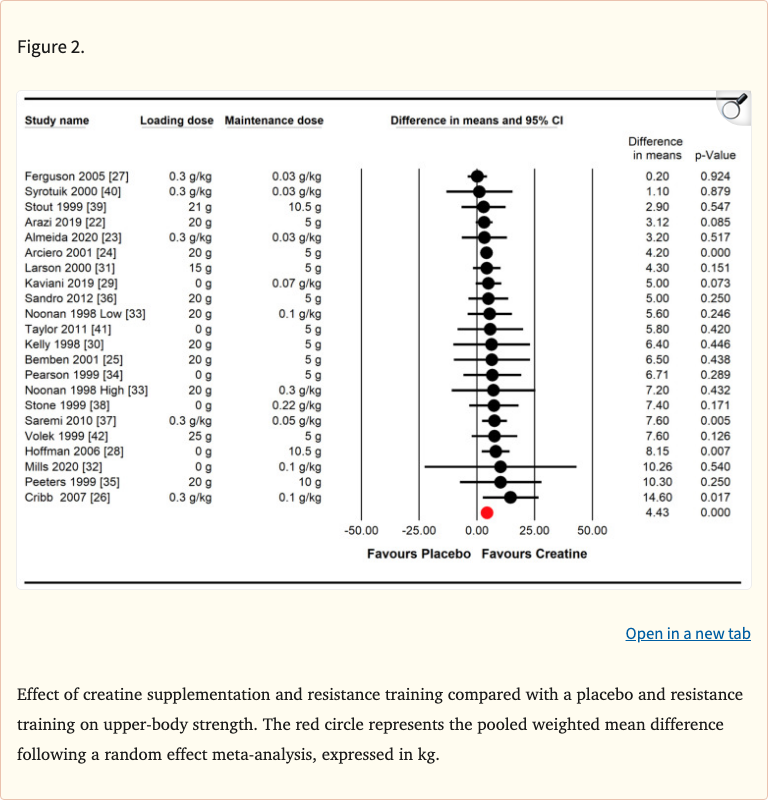 Figure 1
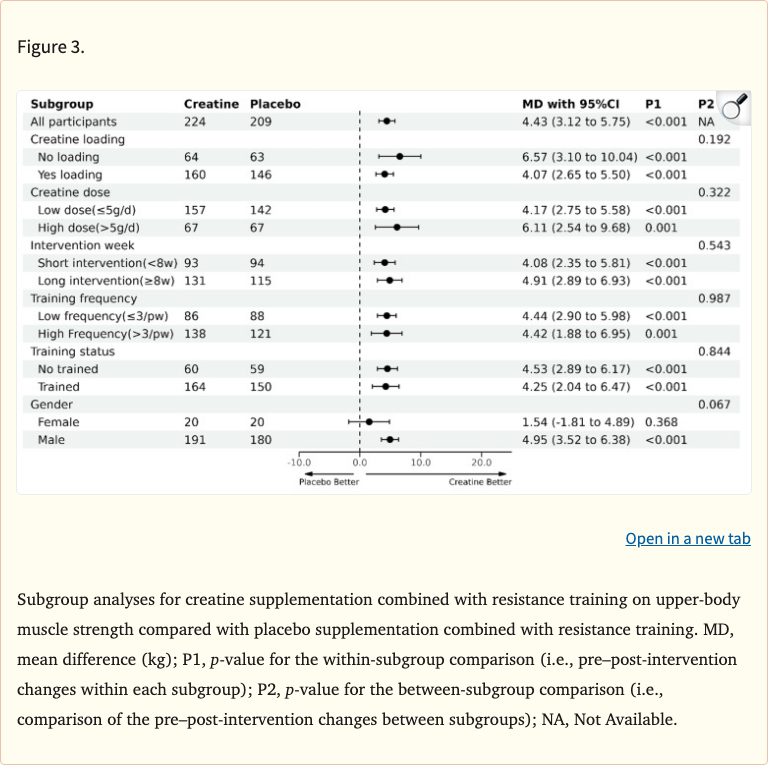 Figure 2
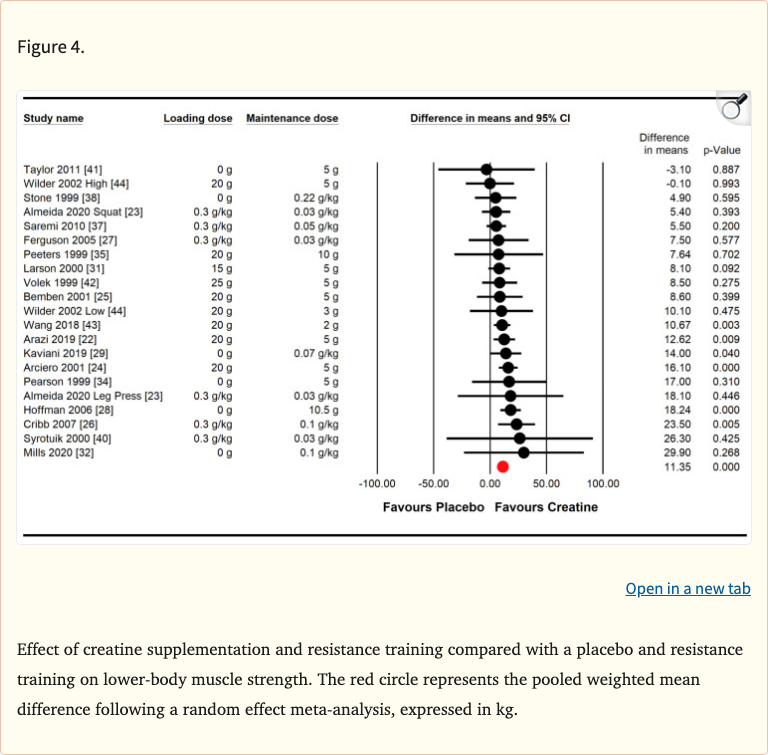 Figure 3
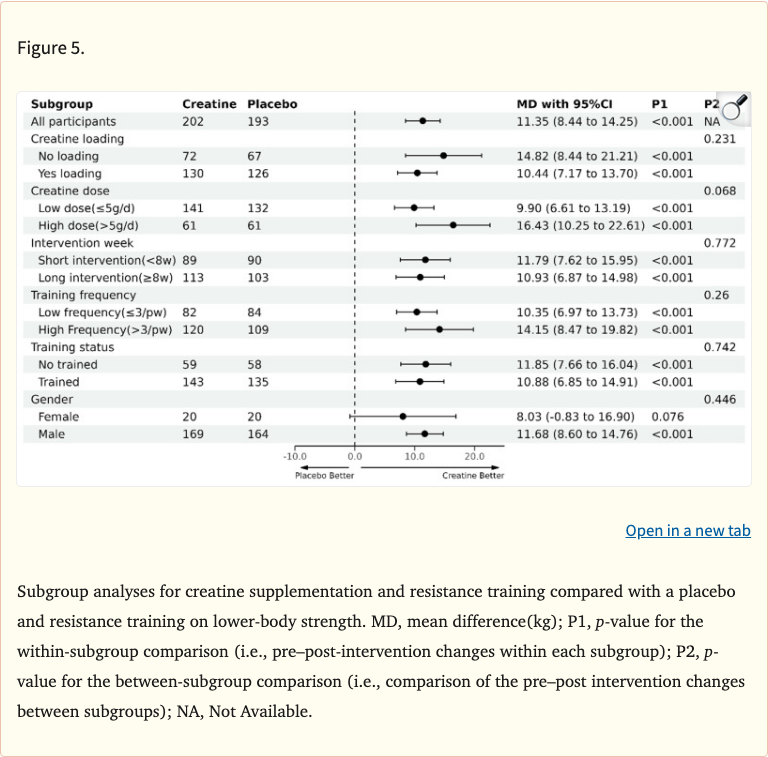 Figure 4
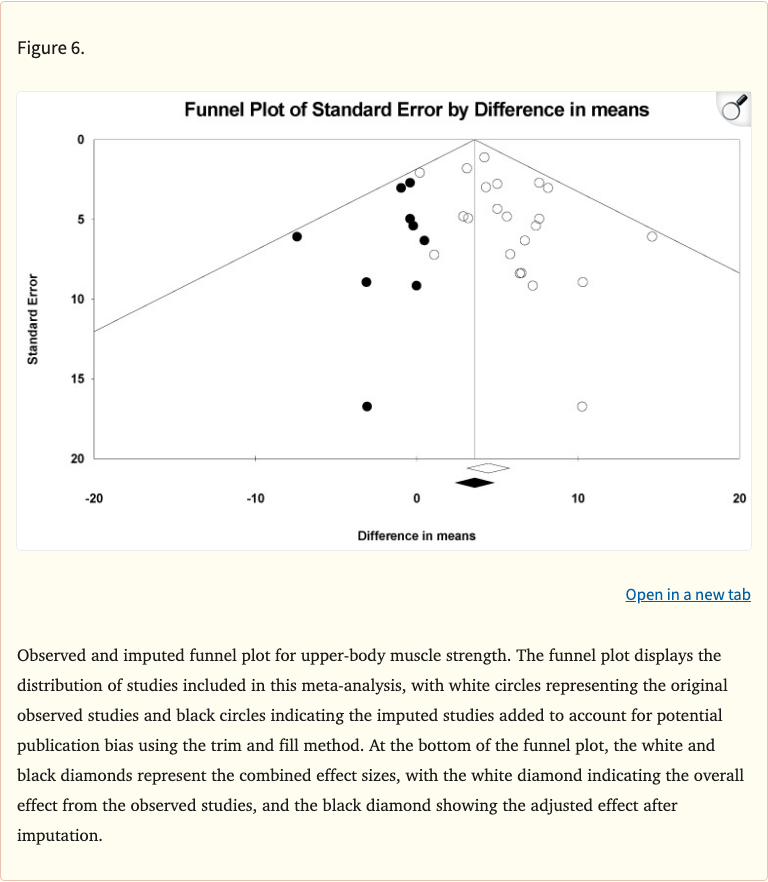 Figure 5
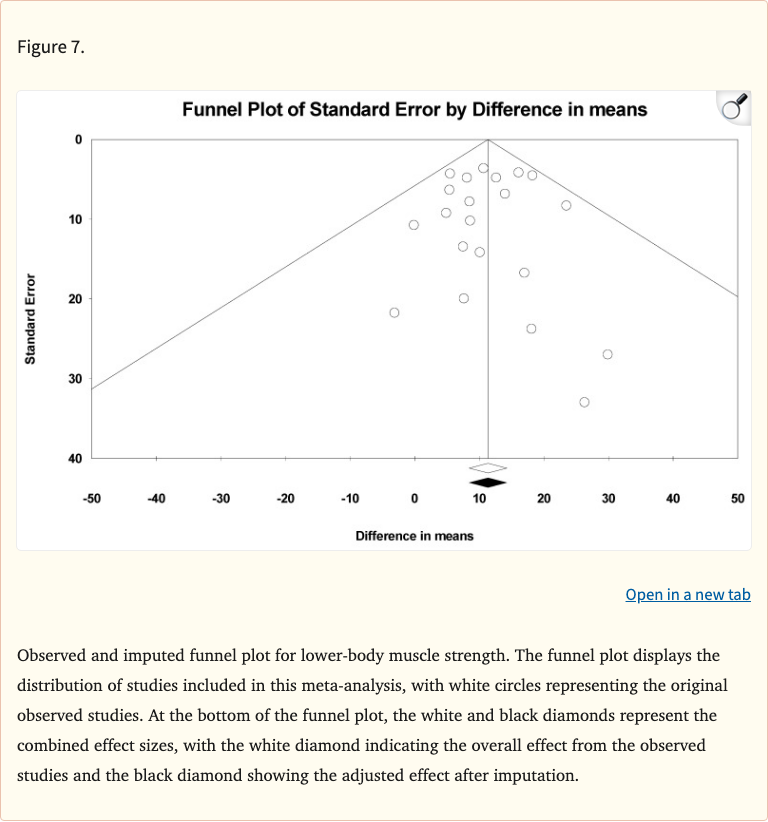 Figure 6
Limitations
- Predominantly male participants (447 vs. 40 females)
- Limited to adults under 50, excluding older populations
- Dose-response relationship only approached significance
- Heterogeneous resistance training protocols across studies
- Unable to assess long-term effects beyond training periods
Related Interventions
Related Studies
More by Wang
Discussed In