
Key Takeaway
Caffeine improves endurance running time to exhaustion (g = 0.39) and time trial performance (g = -0.10) across 21 RCTs with 254 runners.
Summary
This systematic review and meta-analysis pooled 21 randomized controlled trials examining the acute effects of caffeine intake (3-9 mg/kg) on endurance running performance. Across 254 participants (mostly male recreational and trained runners), caffeine showed meaningful ergogenic effects on both time to exhaustion and time trial outcomes.
The time to exhaustion analysis found a medium effect size (g = 0.392, p < 0.001), with recreational runners showing slightly larger benefits (g = 0.469) compared to trained runners (g = 0.344). Time trial performance also improved, though with a smaller effect size (g = -0.101, p = 0.026).
The findings reinforce caffeine as one of the most reliable and accessible ergogenic aids for endurance runners, though the authors noted a major gap in evidence for female runners and a need for more research on optimal dosing strategies.
Methods
- Systematic review across four databases through October 2022
- 21 randomized controlled trials included
- 254 participants (220 men, 19 women, 15 unspecified)
- Caffeine doses ranged from 3-9 mg/kg
- Separate analyses for time to exhaustion and time trial performance
Key Results
- Time to exhaustion: g = 0.392 (95% CI: 0.214-0.571), p < 0.001
- Recreational runners TTE: g = 0.469
- Trained runners TTE: g = 0.344
- Time trial performance: g = -0.101 (95% CI: -0.190 to -0.012), p = 0.026
Figures
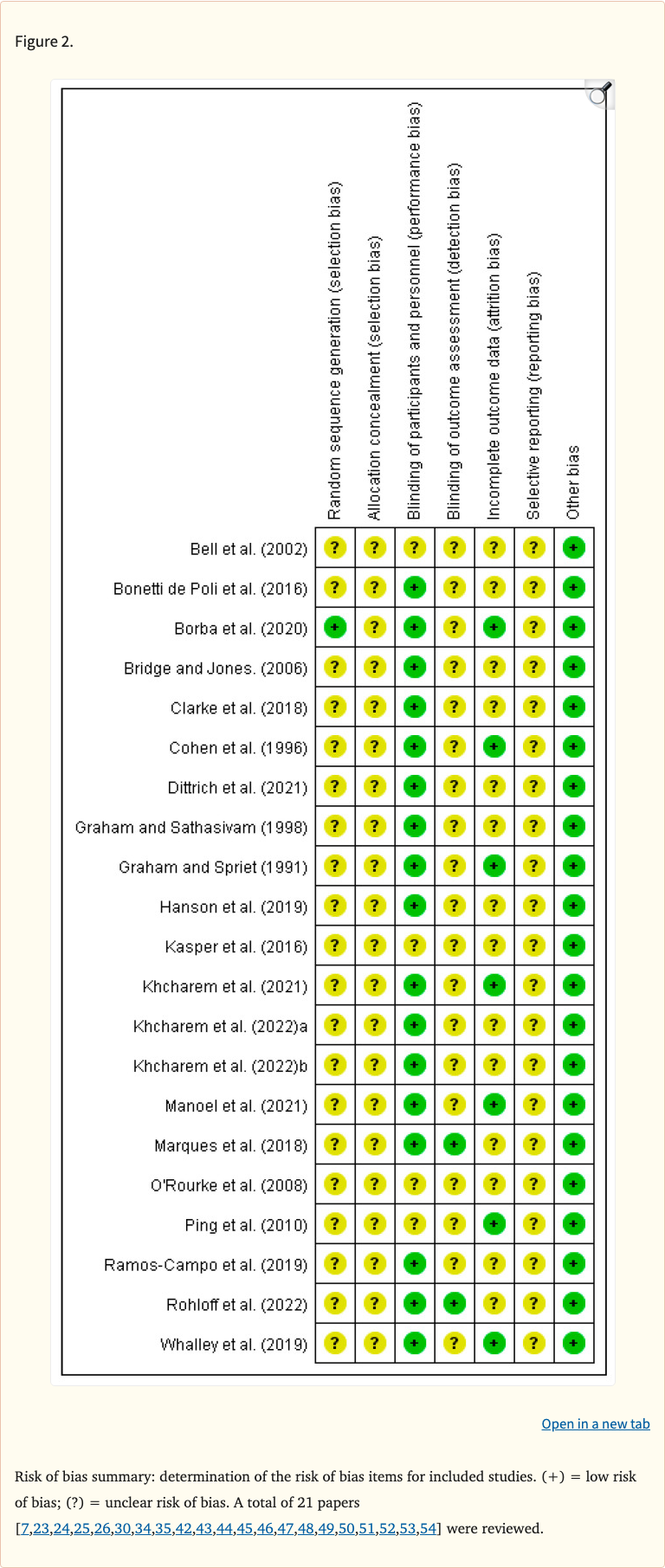 Figure 1
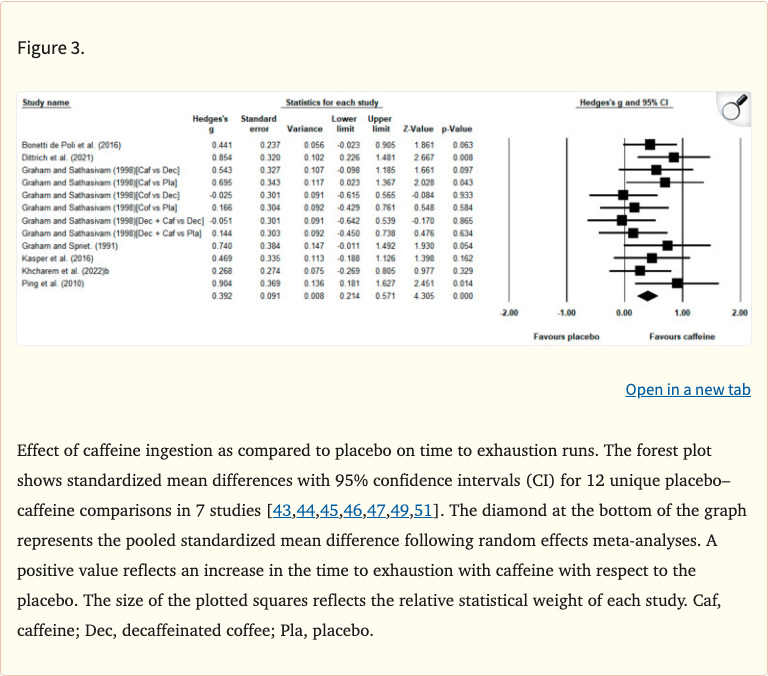 Figure 2
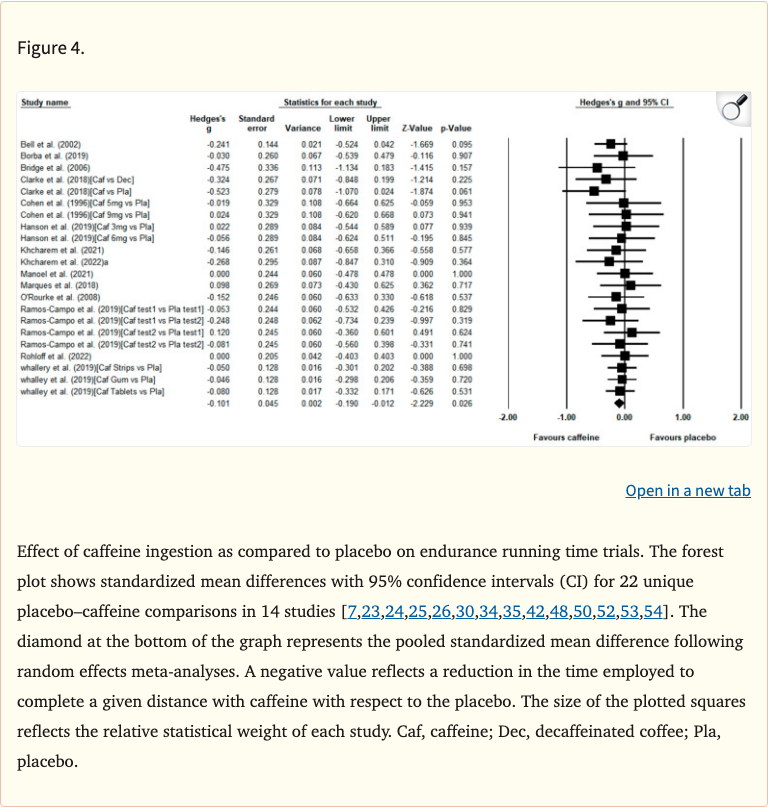 Figure 3
Limitations
- Very few female participants (19 out of 254)
- Most studies used acute single-dose protocols
- Heterogeneous caffeine doses and running protocols
- Optimal dosing for running specifically not established
