
Inversion Therapy
Hanging upside down or at an inverted angle to decompress the spine, reduce back pain, improve circulation, and potentially enhance recovery - supported by moderate research for spinal conditions
Bottom Line
Evidence-Based Take:
Inversion therapy has legitimate research support for spinal decompression and back pain relief. Unlike many alternative therapies, there are actual clinical trials showing benefits. The mechanism is straightforward: gravity-assisted traction increases intervertebral space, reduces disc pressure, and can relieve nerve compression.
What the Evidence Shows:
- Back pain: Multiple studies show short-term pain reduction
- Disc herniation: One RCT showed 77% of patients avoided surgery with inversion
- Spinal decompression: Measurable increase in intervertebral space
- Flexibility: Improved spinal mobility in some studies
- Circulation: Theoretical benefits, less studied
Honest Assessment:
Inversion therapy works for what it claims - temporarily decompressing the spine. For chronic back pain and disc issues, it can provide real relief and may reduce need for surgery in some cases. However, effects are often temporary (spine re-compresses when upright), and it's not a cure. Contraindicated for several conditions (glaucoma, high blood pressure, heart disease). Best used as part of a comprehensive approach to spinal health, not as a standalone treatment.
Science
How Inversion Works:
When you invert (go upside down or at an angle), gravity works in reverse on your spine:
Spinal Decompression:
- Normally, gravity compresses vertebrae together
- Inversion allows gravity to create traction
- Intervertebral discs can rehydrate and expand
- Pressure on spinal nerves decreases
- Space between vertebrae increases measurably
The Numbers:
- Standing: ~100% body weight compresses spine
- 60° inversion: Significant decompression begins
- 90° inversion (full): Maximum traction effect
- Measured disc space increase: 3-5mm in studies
Mechanisms of Pain Relief:
1. Disc Decompression:
- Bulging/herniated discs can retract
- Disc material rehydrates
- Pressure on nerve roots decreases
- Creates space for disc healing
2. Muscle Relaxation:
- Paraspinal muscles can release
- Trigger points may resolve
- Muscle spasms decrease
- Fascia can lengthen
3. Joint Mobilization:
- Facet joints separate slightly
- Synovial fluid can redistribute
- Joint capsules stretch
- Improved range of motion
4. Circulation Effects:
- Venous return from legs increases
- Lymphatic drainage may improve
- Blood flow to brain increases (temporarily)
- Intervertebral disc nutrition improves
Why Effects May Be Temporary:
The spine re-compresses when you return to upright. Benefits come from: - Repeated sessions creating cumulative effect - Allowing discs time to heal between compressions - Breaking pain-spasm cycles - Maintaining flexibility
Comparison to Clinical Traction:
Inversion provides similar decompression to clinical spinal traction tables, but is self-administered and more accessible. Some research suggests inversion may be equally or more effective.
Supporting Studies
7 peer-reviewed studies
View all studies & compare research →Practical Protocol
Getting Started (Week 1-2):
- Start at 20-30° angle (not full inversion)
- Duration: 1-2 minutes only
- Frequency: Once daily
- Focus on relaxation and breathing
- Return to upright slowly
Progression (Week 3-4):
- Increase angle to 45-60°
- Duration: 3-5 minutes
- Frequency: 1-2x daily
- Add gentle stretches while inverted
Maintenance (Week 5+):
- Full inversion (90°) if comfortable
- Duration: 5-15 minutes
- Frequency: 1-2x daily
- Can add oscillation (rocking) for enhanced effect
Timing Recommendations:
| When | Benefits |
|---|---|
| Morning | Decompress after night's sleep |
| After sitting | Counter compression from desk work |
| After exercise | Recovery and decompression |
| Before bed | Relax muscles, may improve sleep |
Techniques While Inverted:
Basic Relaxation:
- Arms crossed on chest or overhead
- Deep breathing
- Progressive muscle relaxation
- Allow spine to lengthen naturally
Active Stretches:
- Gentle side bends
- Partial sit-ups/crunches
- Rotation stretches
- Reaching toward floor
Oscillation:
- Gentle rocking motion
- Creates pumping effect for discs
- Enhances fluid movement
- 20-30 oscillations per session
Equipment Options:
- Inversion table: Most common, adjustable angle
- Gravity boots: Hang from pull-up bar, full inversion only
- Inversion chair: Gentler, better for beginners
- Yoga inversions: Headstand, shoulder stand (requires skill)
Critical Safety Rules:
- Never invert alone when starting
- Have someone nearby or use table with easy release
- Return to upright SLOWLY (30+ seconds)
- Don't stay inverted if dizzy or uncomfortable
- Stay hydrated
Risks & Side Effects
Contraindications (Do NOT Use If):
- Glaucoma or retinal detachment
- Uncontrolled high blood pressure
- Heart disease or stroke history
- Hiatal hernia (can worsen)
- Pregnancy
- Recent eye or ear surgery
- Obesity (check table weight limits)
- Inner ear disorders
- Severe osteoporosis
- Cerebral sclerosis
- Conjunctivitis (pink eye)
Why These Matter:
Inversion increases pressure in the head, eyes, and ears. For those with vascular or ocular issues, this can be dangerous. Blood pressure spikes during inversion.
Common Side Effects:
- Headache (especially initially)
- Dizziness when returning upright
- Pressure sensation in head/eyes
- Ear pressure
- Muscle soreness
- Temporary face flushing
Serious Risks (Rare):
- Stroke (in those with vascular issues)
- Retinal detachment (in susceptible individuals)
- Heart problems (in those with heart disease)
- Aspiration (if reflux issues)
Safety Precautions:
- Check with doctor if you have any health conditions
- Start at shallow angles
- Never invert for more than 15-20 minutes
- Return to upright slowly (sudden return can cause dizziness/fainting)
- Don't eat within 2 hours of inverting
- Stay hydrated but don't overdo fluids right before
Equipment Safety:
- Check weight limits
- Ensure ankle locks are secure
- Use on level surface
- Inspect equipment regularly
- Have emergency release plan
Risk Level: Moderate - safe for healthy individuals, contraindicated for many conditions
Who It's For
Ideal Candidates:
- Chronic low back pain sufferers
- Desk workers with spinal compression
- Those with mild-moderate disc bulges
- Athletes seeking recovery tool
- People with poor posture
- Sciatica sufferers (some cases)
- Those who've benefited from chiropractic/traction
Good Results Reported By:
- Herniated disc patients (avoiding surgery in studies)
- Those with degenerative disc disease
- People with spinal stenosis (mild)
- Post-workout recovery seekers
- Tall people with compression issues
May Not Help:
- Acute disc herniation (wait until stable)
- Spinal fractures
- Severe scoliosis
- Pain not related to compression
- Those who can't tolerate head-down position
Absolutely Skip If:
- High blood pressure (uncontrolled)
- Glaucoma or eye conditions
- Heart or circulatory problems
- Pregnant
- History of stroke
- Severe obesity (equipment limits)
- Inner ear/balance disorders
How to Track Results
What to Track:
- Pain levels before/after (1-10 scale)
- Inversion angle
- Duration
- Time of day
- Specific pain locations
- Flexibility/range of motion
- Any side effects
Simple Daily Log:
| Date | Angle | Duration | Pain Before | Pain After | Notes |
|---|
Key Metrics:
- Pain reduction (immediate and lasting)
- Morning stiffness
- Sitting tolerance (desk work)
- Exercise recovery
- Range of motion (can you touch toes?)
- Frequency of pain flares
Timeline of Effects:
- Immediate: Some pain relief, relaxation
- 1-2 weeks: Pattern of response emerges
- 4 weeks: Cumulative benefits if they're coming
- 8+ weeks: Maximum benefit typically reached
Signs It's Working:
- Reduced pain medication use
- Better sleep
- Improved flexibility
- Longer periods without pain
- Easier movement in morning
Signs to Reassess:
- No improvement after 4 weeks
- Pain worsens
- Headaches persist
- Numbness or tingling increases
- Eye pressure or vision changes
Top Products
Inversion Tables (Recommended):
- Teeter EP-560 - Industry standard, FDA-registered, best warranty
- Teeter FitSpine X3 - Premium features, stretching handles
- Innova ITX9600 - Budget-friendly, good reviews
- Health Gear ITM5500 - Heat/massage features
Gravity Boots:
- Teeter EZ-Up Gravity Boots - Quality, comfortable
- Teeter Hang Ups Gravity Boots - Original design
What to Look For:
- Weight capacity: Match to your weight + margin
- Height range: Ensure it fits you
- Ankle support: Padded, secure locks
- Angle adjustment: Easy to control
- Build quality: Sturdy frame, no wobble
- Warranty: Teeter offers best (5-year full)
- FDA registration: Teeter is only FDA-registered brand
Why Teeter Dominates:
- Only FDA 510(k) registered brand
- UL safety certified
- Best warranty in industry
- Extensive research backing
- Quality construction
Avoid:
- Ultra-cheap tables (<$100) with poor reviews
- Unknown brands without safety certifications
- Used equipment (wear not visible)
Cost Breakdown
Inversion Tables:
| Type | Price Range | Notes |
|---|---|---|
| Basic | $100-200 | Amazon basics, work fine |
| Mid-range | $200-350 | Teeter, better padding/features |
| Premium | $350-500+ | Teeter FitSpine, best quality |
Other Equipment:
| Equipment | Price | Notes |
|---|---|---|
| Gravity boots | $50-100 | Requires pull-up bar |
| Pull-up bar | $25-50 | For gravity boots |
| Inversion chair | $150-300 | Gentler alternative |
| Yoga trapeze | $50-150 | Partial inversion |
Professional Sessions:
- Chiropractic with inversion: $50-100/visit
- Physical therapy traction: $50-150/visit
- Decompression therapy: $100-300/visit
Cost-Effectiveness:
A $150-300 inversion table can replace ongoing chiropractic visits for some people. If you'd spend $100/month on back treatments, a table pays for itself in 2-3 months.
Monthly Cost:
- Equipment: $0 after purchase
- Electricity: $0
- Replacement parts: Minimal
Best Value:
Mid-range table ($200-300) offers good quality without premium pricing. Teeter brand has best reputation and warranty.
Recommended Reading
Podcasts
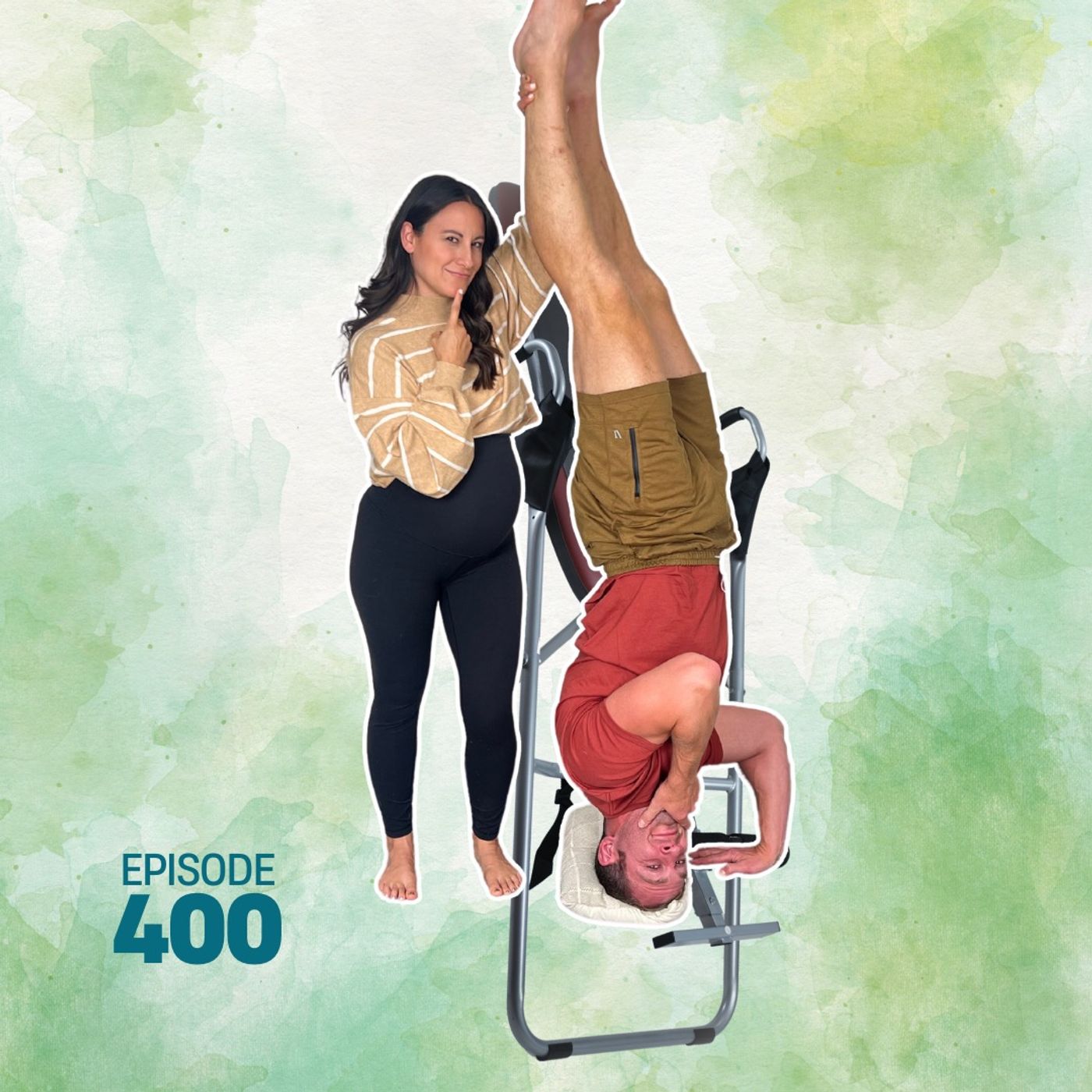
400 | Does An Inversion Table Actually Fix My Low Back Pain? What The Evidence Says
Doctors of physical therapy Dr. Jen and Dr. Dom break down the research on inversion tables for...

Using an Inversion Table for Back Pain: Is It Safe?
Neurosurgeon Dr. Sanjeev Lakhia from Carolina Neurosurgery and Spine Associates provides a...

#319: How to Succeed in High-Stress Situations
Tim Ferriss shares a Stoic philosophy reading on succeeding in high-stress situations, drawing...
Discussed in Podcasts
9 curated moments from top health podcasts. Click any timestamp to play.
What inversion tables actually do to your spine
Dr. Dom and Dr. Jen explain that inversion table therapy is a passive treatment using gravity-facilitated traction to distract lumbar vertebrae, with adjustable angles from slight lean to near-vertical. Results are temporary because the decompression effect reverses once you stand back up.
"Table therapy is a very popular passive treatment for back pain. And it's a form of spinal traction using gravity facilitated traction of the spine that distracts the lumbar vertebrae."
Research shows short-term benefit only
The hosts review a study of 403 participants showing lumbar traction produced lower pain and improved function in the short term but not the long term, and warn against treating inversion as a standalone fix for back pain.
"There was 403 participants involved and compared with sham or no traction, lumbar traction exhibit, it is significantly lower more pain reduction, function and functional improvements in the short term, but not in the long term."
Larger review finds little to no benefit from traction
A review of 32 randomized controlled trials found that traction, either alone or combined with other treatments, had little to no impact on pain intensity, functional status, or return to work for people with low back pain.
"The findings indicated that traction either alone or in combination with other treatments had little to no impact on pain intensity, functional status, or global improvement and return to work amongst people with low back pain."
Rebound spasm risk after decompression
The hosts describe how some patients experience a rebound spasm effect when returning to standing after inversion, because the spine goes from full traction back to compression, sometimes making symptoms worse rather than better.
"You kind of get like a rebound spasm almost. Because now I went from that complete traction and opening to now I'm standing in and compressing again. And now my back stiffened up."
Tim Ferriss on daily inversion therapy for recovery
Tim Ferriss describes his daily inversion therapy routine using a Teeter inversion table and gravity boots. He hangs after weight training or carrying heavy loads, reporting improved sleep and reduced back, neck, and leg pain. He mentions world record holder Jersey Gregorick as another proponent of post-training inversion.
"I hang not just in the morning, potentially, but particularly after a day of bearing weight, whether that includes weight training, and Jersey Gregorick, world record holder, insists on this type of inversion therapy after training, or just wearing a heavy backpack around, a few minutes goes a long way towards better sleep in my case, less back pain, neck pain, leg pain."
How inversion tables work and what they cost
Dr. Lakhia explains that inversion tables cost $200-$300 and work by strapping you in and tilting you to varying degrees, using gravity and body weight to stretch the spine and decompress muscles, ligaments, nerves, and discs.
"Lay in it, get strapped in, and then it'll tilt you basically upside down or any varying degree of that, any angle that you decide. And what we're utilizing there is a concept of gravity and body weight. And the combination of the two theoretically can basically stretch out your spine and decompress tight muscles, ligaments, nerves, and discs."
Pilot RCT shows inversion group avoided surgery at much higher rates
Dr. Lakhia reviews a 2012 UK pilot randomized trial where 13 patients received physiotherapy plus inversion and 11 received physiotherapy alone. Ten of 13 in the inversion group avoided surgery compared to only 2 of 11 in the control group, though functional and pain measures were mixed.
"And in the group that only received physiotherapy, two avoided surgery. So that's compelling. Even if the functional measures, the pain measures, the MRI changes were equivocal or not really significant, it appears that"
Herniated discs cannot be sucked back in with traction
Dr. Lakhia addresses the common belief that traction can retract a herniated disc, comparing disc material to toothpaste out of a tube. MRI studies pre and post treatment showed no significant structural changes.
"If the disc material comes out, it's kind of like toothpaste out of the tube. You really can't put it back in. And this study kind of supports that. The MRIs pre and post treatment really didn't show any significant change."
Traction dosing and safety contraindications
Dr. Lakhia explains that effective traction requires at least 60% body weight force and warns of serious contraindications. He shares a case where an elderly patient suffered a retinal detachment from inversion, and advises against it for those with high blood pressure, stroke history, or visual disturbances.
"When I was practicing in Ohio, I did have a patient who was trying inversion. Now, she was in her 70s, and unfortunately, due to the inversion, suffered a retinal detachment."
Who to Follow
Advocates:
- Dr. Stuart McGill - Spine biomechanics expert, discusses decompression
- Teeter - Company funds research, promotes heavily
- CrossFit athletes - Popular recovery tool in community
Medical Perspective:
Many orthopedic surgeons and physical therapists recommend inversion therapy as conservative treatment before surgery. It's one of the more "mainstream" alternative interventions.
Biohacker Adoption:
- Tim Ferriss has discussed inversion for back health
- Ben Greenfield uses inversion as part of recovery protocols
- Kelly Starrett incorporates hanging/decompression in mobility work
Research Perspective:
Newcastle University's study on avoiding surgery with inversion brought significant credibility to the practice. More evidence-based than many alternative therapies.
Synergies & Conflicts
Spinal Health Stack:
- Inversion therapy (decompression)
- Mobility Training (flexibility)
- Self-Myofascial Release (tissue work)
- Core strengthening
Recovery Stack:
- Inversion post-workout
- Sauna or Contrast Therapy
- Magnesium (muscle relaxation)
- Sleep Environment optimization
Desk Worker Stack:
- Inversion 1-2x daily
- Standing Desk or Treadmill Desk
- Posture Correction
- Movement breaks
Pain Management Stack:
- Inversion therapy
- TENS/EMS (electrical stimulation)
- CBD Oil (inflammation)
- Mindfulness Meditation (pain perception)
Complementary Practices:
- Dead Hangs - Gentler decompression, also targets shoulders
- Yoga - Many inversions in practice
- Qigong - Gentle movement
- Mobility Training - Hip/spine flexibility
- Rucking - Builds back strength
Related Interventions:
- Posture Correction - Address root causes
- Standing Desk - Reduce sitting compression
- Self-Myofascial Release - Muscle/fascia work
- Barefoot Footwear - Ground-up alignment
What People Say
User Experiences:
Inversion therapy has consistently positive reviews across platforms: - Amazon: Teeter tables average 4.5+ stars with thousands of reviews - Reddit: Generally positive in r/backpain communities - Forums: Long-term users often credit it with avoiding surgery
Common Reports:
Criticisms:
The Reality:
More consistently positive than most interventions. Works well for mechanical back pain related to compression. Not a cure but a useful tool. Those with disc issues often report significant benefits. Healthy people may notice less dramatic effects.