
Key Takeaway
Autogenic training shows promise as an adjunctive therapy for anxiety, depression, insomnia, and somatoform disorders, though high-quality evidence remains limited for most psychiatric conditions.
Summary
This narrative review examined the available evidence for autogenic training (AT) across a range of mental health disorders, including anxiety disorders, depression, insomnia, somatoform disorders, and stress-related conditions. The authors synthesized findings from clinical trials, case series, and observational studies spanning several decades of AT research.
The strongest evidence was found for AT in reducing anxiety symptoms and improving sleep quality, with multiple controlled studies showing significant benefits. For depression, the evidence was more mixed, with some studies showing improvements in mood as part of multimodal treatment programs. AT also showed potential benefits for somatoform disorders and psychosomatic complaints, likely through its effects on autonomic nervous system regulation.
The review highlighted several gaps in the literature, including a lack of large-scale RCTs, inconsistent intervention protocols, and limited long-term follow-up data. The authors concluded that AT is a safe, low-cost, and accessible intervention that deserves further rigorous investigation as a complementary therapy in psychiatric care, particularly for conditions involving autonomic dysregulation and chronic stress.
Figures
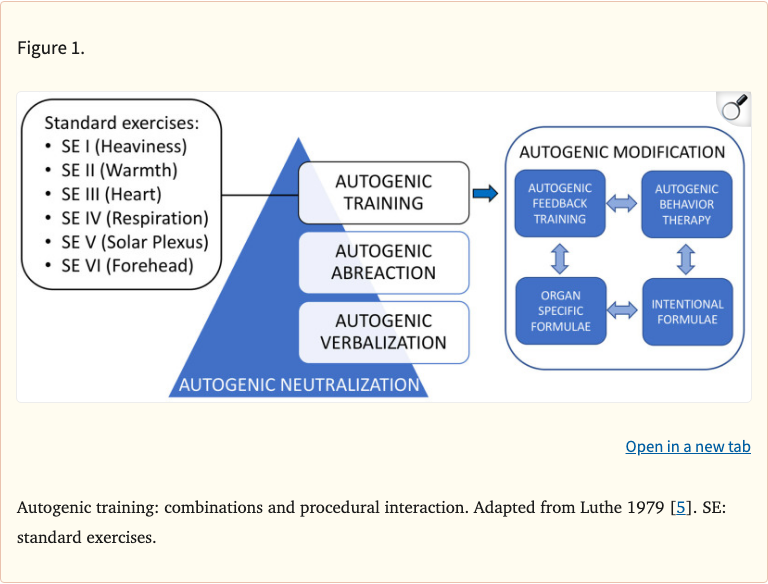 Figure 1