
Key Takeaway
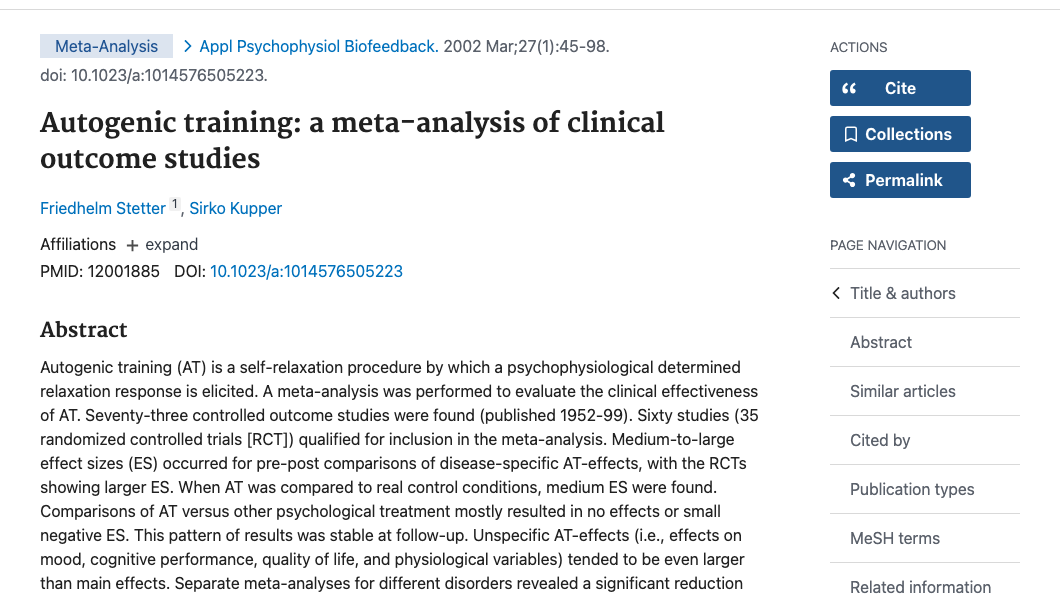
Meta-analysis of 60 studies found autogenic training produces medium-to-large effects for anxiety, depression, and functional disorders.
Summary
This comprehensive meta-analysis evaluated the clinical effectiveness of autogenic training (AT) across 60 controlled studies with over 4,000 participants.
AT showed medium-to-large effect sizes for reducing anxiety (d = 0.58), depression (d = 0.62), and various functional/psychosomatic disorders. The technique was particularly effective for tension headaches, mild-to-moderate hypertension, and sleep problems.
The results support AT as an evidence-based relaxation technique with broad clinical applications, comparable in effectiveness to other established psychological interventions.
Methods
- Meta-analysis of 60 controlled studies
- 4,000+ total participants
- Outcome categories: anxiety, depression, functional disorders
- Effect size calculations
- Moderator analyses
Key Results
- Anxiety: d = 0.58 (medium effect)
- Depression: d = 0.62 (medium-large effect)
- Functional symptoms: d = 0.61
- Tension headache: particularly effective
- Hypertension: clinically meaningful reductions
Limitations
- Variable study quality
- Publication bias possible
- Heterogeneous outcome measures
- Limited long-term follow-up data