
Key Takeaway
Meta-analysis of 19 RCTs (897 participants) found L-theanine significantly improves subjective sleep onset latency, daytime dysfunction, and overall sleep quality
Summary
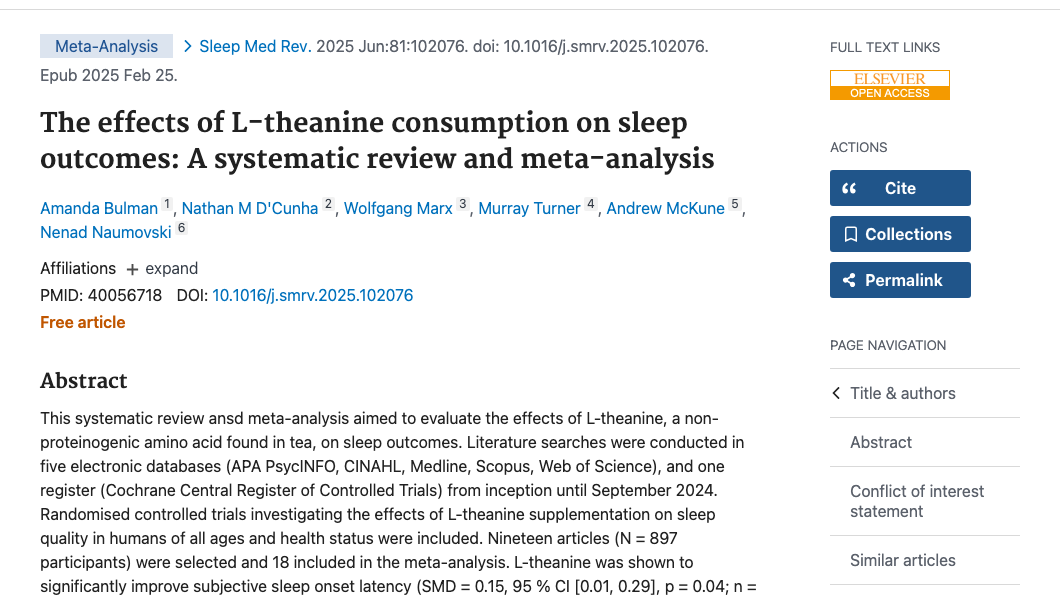
This comprehensive systematic review and meta-analysis evaluated the effects of L-theanine supplementation on sleep outcomes across 19 randomized controlled trials involving 897 participants. The study searched six electronic databases from inception through September 2024, including trials of all ages and health statuses.
The meta-analysis found statistically significant improvements in three key subjective sleep measures: sleep onset latency (how quickly people fall asleep), daytime dysfunction (how well they function the next day), and overall sleep quality scores. These findings support L-theanine as a promising, non-sedative sleep aid that works by reducing racing thoughts and promoting relaxation rather than inducing drowsiness.
However, the authors note that objective sleep measures (such as polysomnography data) did not consistently improve, and many included studies used L-theanine in combination with other ingredients. More research using pure L-theanine at standardized doses is needed to confirm optimal protocols.
Methods
- Design: Systematic review and meta-analysis following PRISMA guidelines
- Databases: APA PsycINFO, CINAHL, Medline, Scopus, Web of Science, Cochrane Central Register
- Search period: Inception through September 2024
- Inclusion: Randomized controlled trials of L-theanine supplementation on sleep quality
- Studies included: 19 articles (N=897 participants), 18 in meta-analysis
- Population: Humans of all ages and health statuses
- Analysis: Random-effects model with standardized mean differences
Key Results
- Subjective sleep onset latency significantly improved (SMD = 0.15, 95% CI [0.01, 0.29], p = 0.04; 10 studies)
- Daytime dysfunction scores significantly improved (SMD = 0.33, 95% CI [0.16, 0.49], p < 0.001; 9 studies)
- Overall subjective sleep quality significantly improved (SMD = 0.43, 95% CI [0.04, 0.83], p = 0.03; 12 studies)
- Effective dose range: 50-655mg L-theanine
- Doses above 655mg may not provide additional benefit and could be detrimental
- Objective sleep measures did not consistently improve
Limitations
- Many studies used L-theanine combined with other bioactive ingredients
- Heterogeneity in dosing protocols (50-655mg)
- Limited studies using pure L-theanine supplementation
- Objective sleep measures (polysomnography) not consistently improved
- Optimal dose and duration not yet established
- Variable study quality across included trials