
Key Takeaway
Isometric handgrip training significantly reduces resting systolic and diastolic blood pressure, supporting its use as a non-pharmacological intervention for hypertension.
Summary
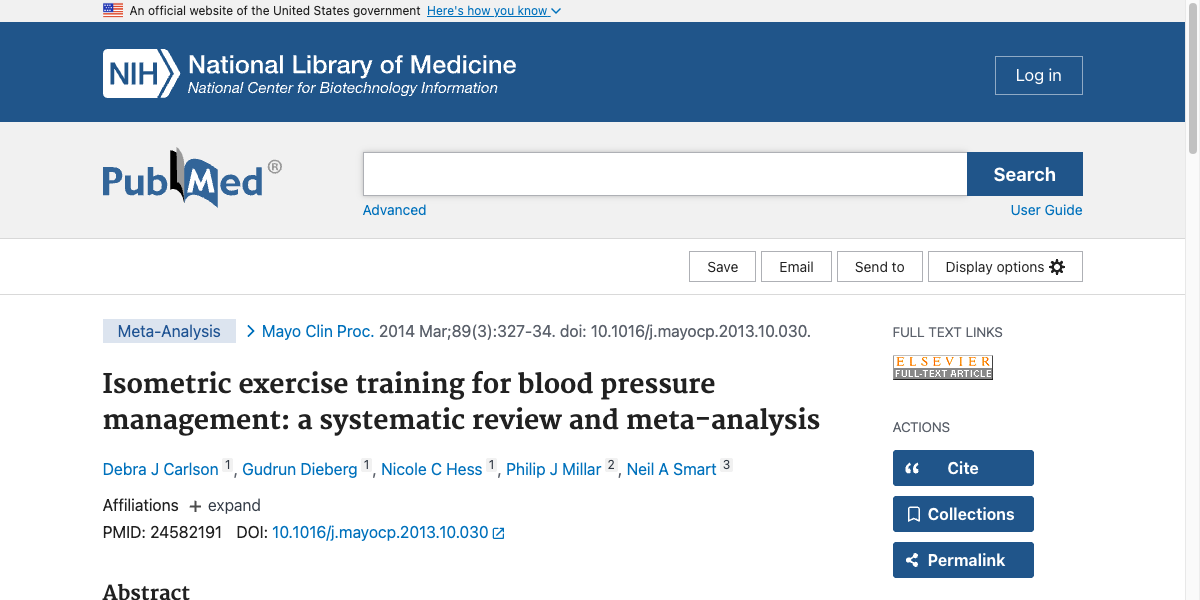
This systematic review and meta-analysis published in Mayo Clinic Proceedings evaluated the evidence for isometric exercise training as a blood pressure management strategy. Carlson and colleagues specifically focused on isometric handgrip training, pooling data from multiple controlled trials to quantify its effects on resting blood pressure in both normotensive and hypertensive individuals.
The analysis confirmed that isometric handgrip training produces clinically meaningful reductions in both systolic and diastolic blood pressure. The magnitude of these reductions was comparable to or exceeded those achieved with some first-line antihypertensive medications, making this a notable finding for non-pharmacological blood pressure management. The training protocols typically involved brief sessions (several minutes per day) performed a few times per week.
Published in a highly respected clinical journal, this review helped establish isometric handgrip training as a credible, evidence-based intervention for blood pressure control. The authors highlighted the practicality of the approach — handgrip exercises require minimal equipment, can be performed almost anywhere, and demand only a small time commitment, making adherence more feasible than many traditional exercise programs.