
Key Takeaway
Isometric handgrip training programs reduce blood pressure in hypertensive individuals, but a single acute session does not produce lasting reductions.
Summary
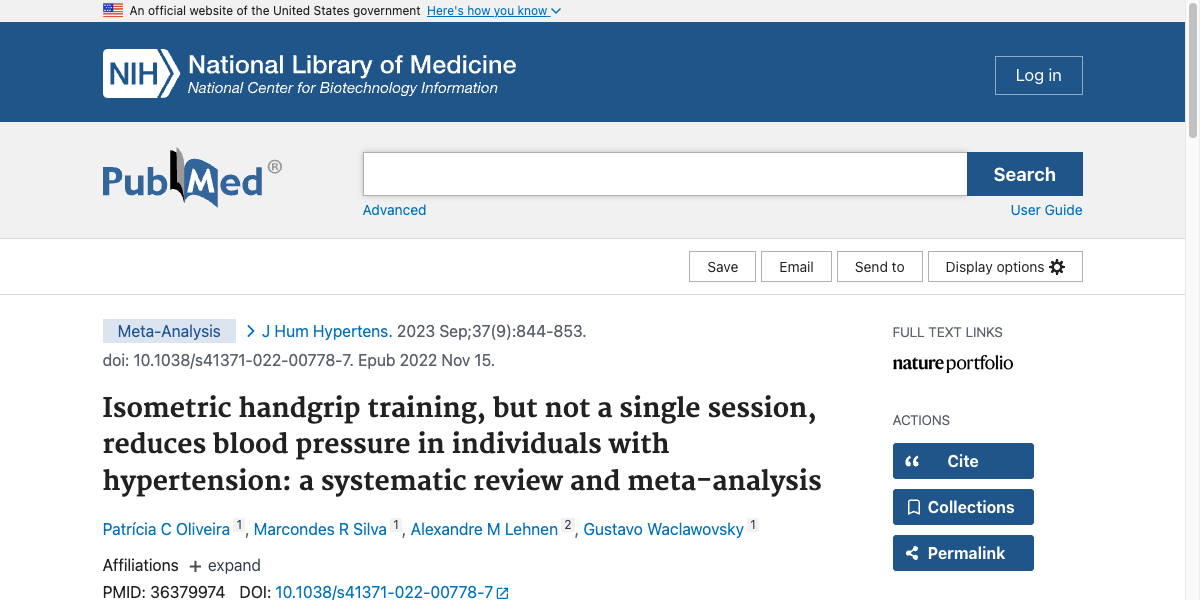
This systematic review and meta-analysis published in the Journal of Human Hypertension investigated a critical distinction in isometric exercise research: whether blood pressure benefits come from chronic training adaptations or from acute single-session responses. Oliveira and colleagues analyzed studies on isometric handgrip exercise in individuals with hypertension, separating trials that examined training programs from those that only measured acute post-exercise responses.
The key finding was that sustained isometric handgrip training — performed regularly over weeks — significantly reduced resting blood pressure in hypertensive individuals. However, a single session of isometric handgrip exercise did not produce meaningful lasting blood pressure reductions. This distinction is important because it clarifies that the mechanism behind blood pressure lowering is a chronic physiological adaptation rather than a transient post-exercise effect.
The results reinforce that consistency is essential for isometric exercise to be effective as a blood pressure intervention. For clinicians and patients, the practical takeaway is that isometric handgrip training must be performed as a regular program, not as an occasional activity, to achieve the cardiovascular benefits demonstrated in the literature.