Key Takeaway
A high-protein breakfast (43% protein) before moderate-intensity exercise increased fat oxidation, suppressed hunger, and improved metabolic markers compared to a standard carb-heavy breakfast in healthy adults.
Summary
This randomized controlled crossover trial directly tested the core premise of the 30/30/30 rule: does a high-protein breakfast before exercise improve fat burning and appetite control? Forty-three healthy adults consumed either a high-protein meal replacement (43% protein, 30% carb, 27% fat) or a control breakfast (15% protein, 55% carb, 30% fat) before performing moderate-intensity aerobic exercise in a whole-body calorimetry unit.
The high-protein condition significantly increased fat oxidation during exercise (+1.07 g/session, p = 0.003) while reducing carbohydrate oxidation. Participants also reported less hunger after exercise in the high-protein condition. Blood markers showed improved metabolic responses including greater insulin, PYY, and GLP-1 levels, along with lower cholesterol and triglycerides.
This is one of the most relevant studies for the 30/30/30 protocol because it examines both components together: high-protein breakfast followed by moderate exercise. The results support the idea that protein-first eating before low-intensity movement shifts fuel utilization toward fat and improves satiety, though the study used a single acute session rather than a long-term protocol.
Methods
- Acute randomized controlled crossover design
- 43 healthy, normal-weight adults (24 males, 19 females)
- Two isocaloric breakfast conditions: high-protein meal replacement (43% protein, 30% carb, 27% fat) vs control (15% protein, 55% carb, 30% fat)
- Moderate-intensity aerobic exercise performed after breakfast
- Whole-body calorimetry unit used to measure energy expenditure and macronutrient oxidation
- Appetite sensations assessed via validated scales
- Metabolic blood markers measured pre and post exercise
Key Results
- Fat oxidation significantly higher in high-protein condition (+1.07 g/session, p = 0.003)
- Lower respiratory exchange ratio with high-protein breakfast (indicating greater fat utilization)
- Reduced carbohydrate oxidation during exercise after high-protein meal
- Hunger increases after exercise were lower in the high-protein condition
- Greater insulin, peptide tyrosine-tyrosine (PYY), and GLP-1 responses with high-protein meal
- Lower cholesterol and triglyceride levels in high-protein condition
Figures
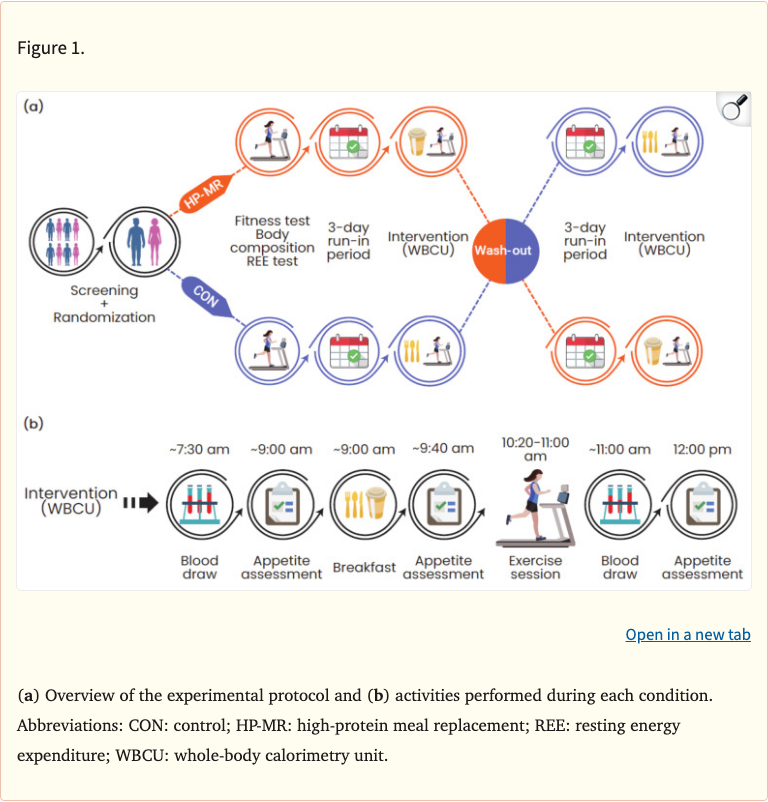 Figure 1
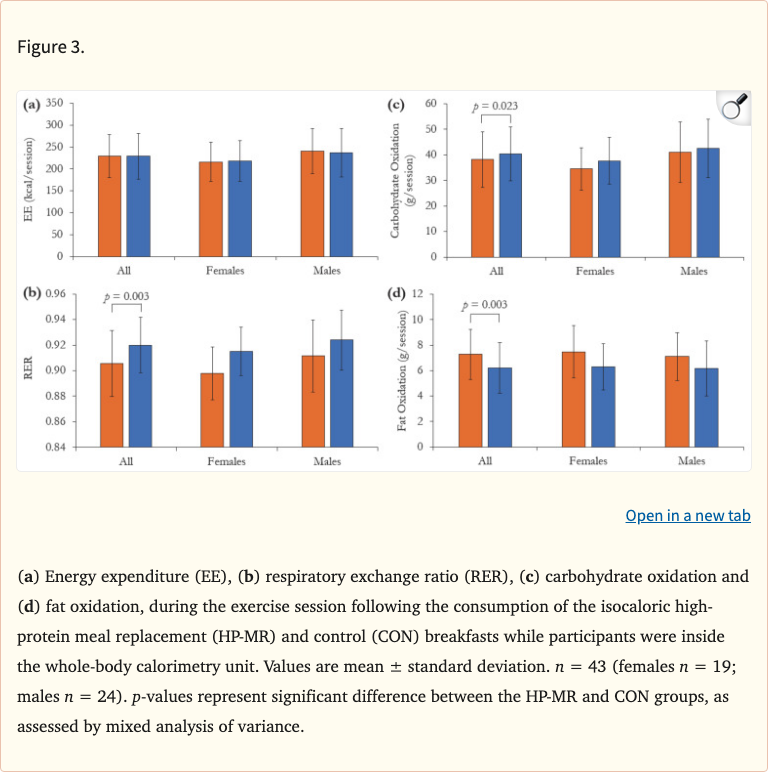 Figure 2
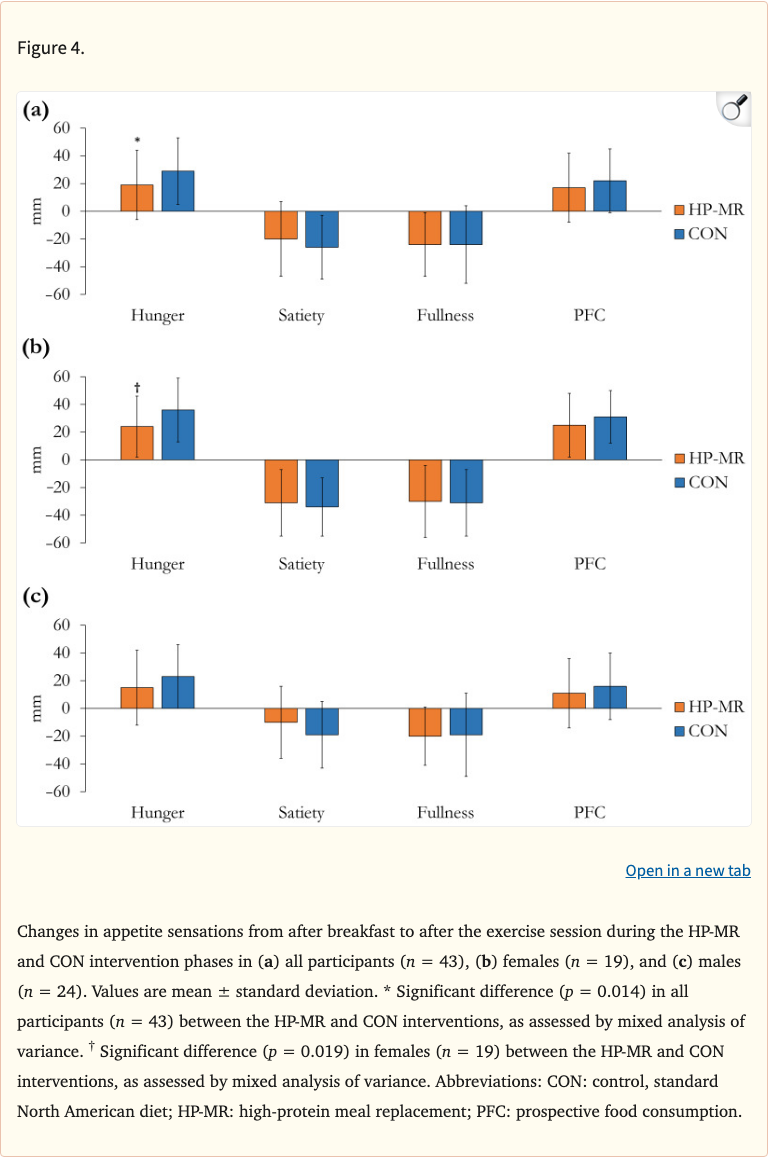 Figure 3
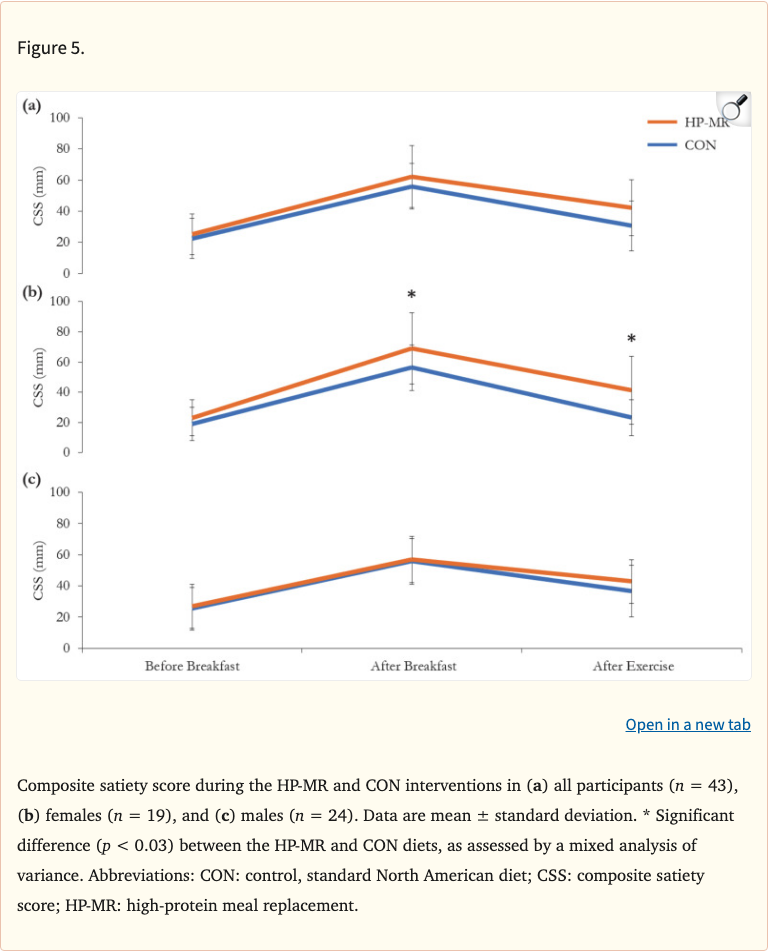 Figure 4
Limitations
- Acute single-session design; does not show long-term effects
- Participants were healthy and normal-weight; may not generalize to overweight/obese populations
- Used a commercial meal replacement rather than whole food protein sources
- Isocaloric design controls for calories but protein percentage (43%) is higher than typical 30/30/30 targets
- No measurement of body composition changes over time