Key Takeaway
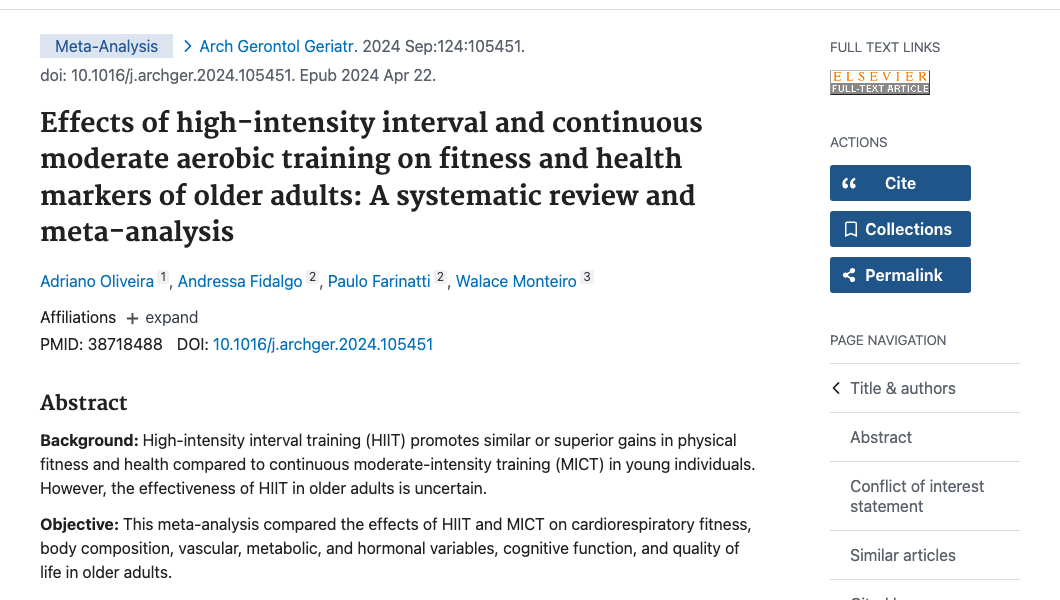
HIIT is superior to moderate-intensity continuous training for improving VO2max in older adults and produces comparable improvements in blood pressure, body composition, and other health markers.
Summary
This systematic review and meta-analysis compared the effects of high-intensity interval training versus moderate-intensity continuous training (MICT) on fitness and health markers specifically in older adult populations. Given that aging is associated with declining cardiovascular fitness and increased cardiometabolic risk, understanding whether HIIT is safe and effective for this demographic is clinically important.
The analysis found that HIIT produced significantly greater improvements in VO2max compared to MICT in older adults, suggesting that higher-intensity protocols may be particularly beneficial for combating age-related declines in cardiorespiratory fitness. For other outcomes including blood pressure, body composition, and metabolic markers, HIIT and MICT produced comparable improvements.
These findings support the inclusion of HIIT in exercise programs for older adults, challenging the traditional conservative approach of prescribing only moderate-intensity exercise for aging populations. The results suggest that when properly supervised, HIIT is both safe and potentially superior for maintaining cardiovascular fitness in later life, which has direct implications for healthy aging and longevity.
Methods
Systematic review and meta-analysis of randomized controlled trials comparing HIIT to moderate-intensity continuous training in older adults (typically aged 60+). Databases were searched for studies reporting outcomes including VO2max, blood pressure, body composition, and cardiometabolic markers. Random-effects meta-analytic models were used to pool effect sizes across studies.
Key Results
- HIIT produced significantly greater improvements in VO2max compared to MICT in older adults
- Blood pressure reductions were comparable between HIIT and MICT
- Body composition improvements (fat mass, lean mass) were similar between protocols
- No significant difference in adverse event rates between HIIT and MICT
- Metabolic markers (glucose, lipids) improved similarly with both approaches
Limitations
- Heterogeneity in HIIT protocols and exercise modalities across studies
- Varying definitions of "older adults" across included trials
- Relatively short intervention durations in most studies (8-16 weeks)
- Limited reporting of long-term adherence and dropout rates
- Potential selection bias as participants in HIIT studies may be more fit than the general older population
- Most studies conducted in supervised settings, limiting generalizability to independent exercise
Related Interventions
Related Studies
More by Oliveira
Discussed In