Key Takeaway
Low-volume HIIT (less than 15 minutes of intense exercise per session) significantly improves VO2max, blood pressure, and body composition, making it a viable time-efficient strategy for cardiometabolic health.
Summary
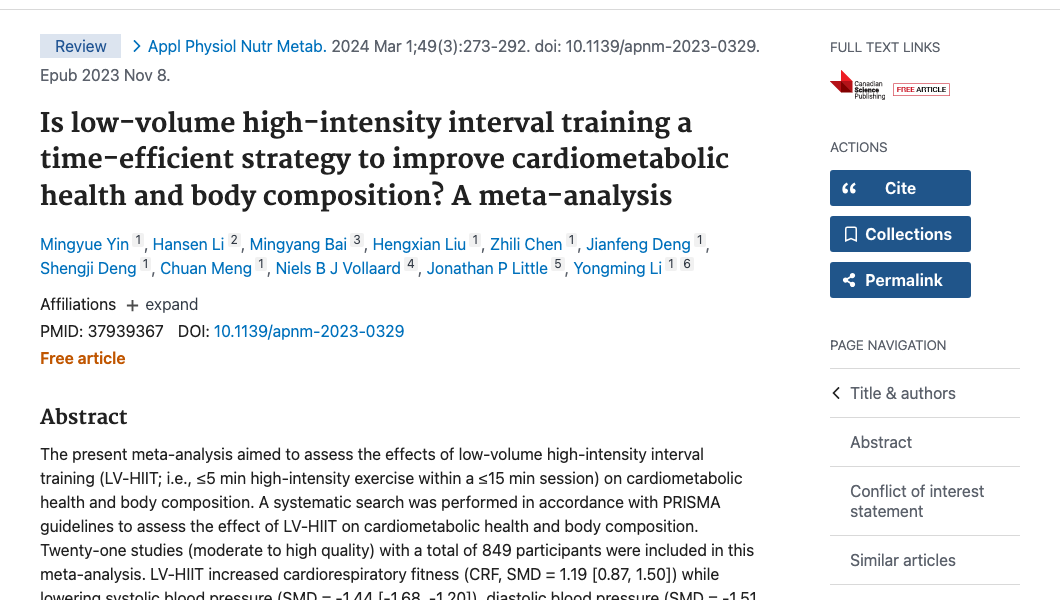
This meta-analysis specifically examined low-volume HIIT protocols — those involving less than 15 minutes of total high-intensity effort per session — to determine whether these ultra-time-efficient workouts can meaningfully improve cardiometabolic health and body composition. This is an important distinction from standard HIIT research, as many people cite lack of time as their primary barrier to exercise.
The pooled analysis found that low-volume HIIT produced significant improvements in VO2max, systolic and diastolic blood pressure, and measures of body composition including body fat percentage and fat mass. These benefits were observed across various populations and HIIT formats, supporting the notion that even very brief high-intensity sessions can drive meaningful physiological adaptations.
The findings have practical implications for exercise prescription, suggesting that protocols as short as 10-15 minutes (including warm-up and recovery) can serve as an effective entry point for sedentary individuals or those with severe time constraints. This challenges the common perception that substantial time commitments are necessary for cardiovascular and metabolic improvements.
Methods
Systematic search of major databases for randomized controlled trials examining low-volume HIIT (defined as protocols with less than 15 minutes of high-intensity exercise per session). Meta-analytic pooling of outcomes including VO2max, blood pressure, body fat percentage, fat mass, and other cardiometabolic markers. Subgroup analyses were conducted by population type and HIIT protocol characteristics.
Key Results
- Significant improvement in VO2max with low-volume HIIT compared to controls
- Significant reductions in systolic and diastolic blood pressure
- Meaningful reductions in body fat percentage and fat mass
- Benefits observed with sessions involving less than 15 minutes of intense exercise
- Improvements comparable to higher-volume exercise protocols for several outcomes
Limitations
- Relatively small number of studies meeting the strict low-volume criteria
- Heterogeneity in specific HIIT protocols (sprint intervals vs. aerobic intervals)
- Most studies were short-term (4-16 weeks), limiting conclusions about long-term effects
- Compliance and adherence data were inconsistently reported
- Potential publication bias toward positive results
- Limited data on adverse events and injury rates with low-volume HIIT
Related Interventions
Related Studies
Discussed In