Key Takeaway
Meta-analysis of 39 studies demonstrating HIIT significantly reduces total, abdominal, and visceral fat mass, with running-based protocols and intensities above 90% HRmax showing the greatest effects.
Summary
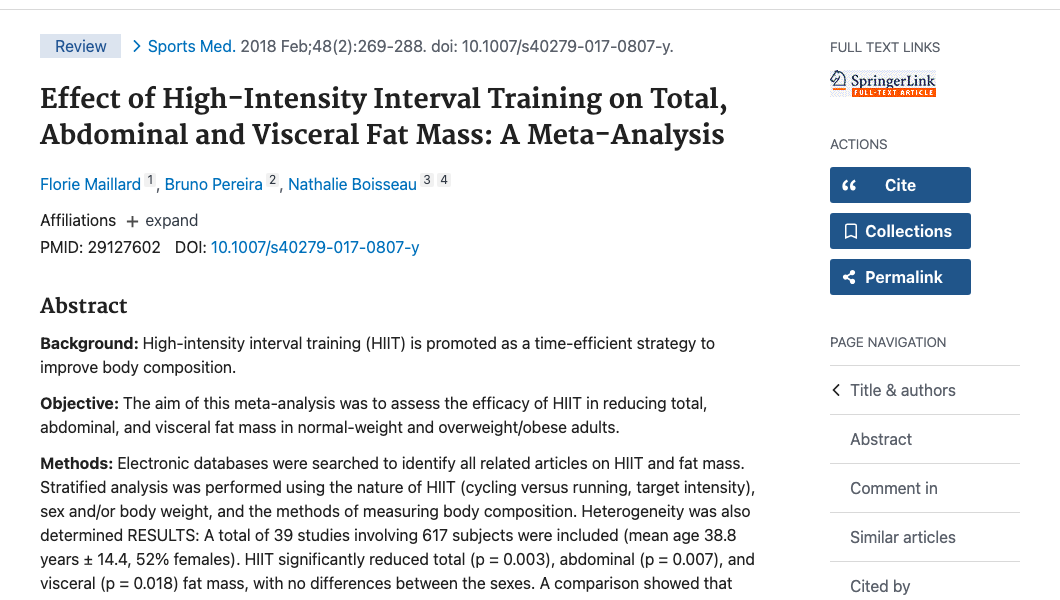
This meta-analysis evaluated 39 studies involving 617 participants (mean age 38.8 years, roughly equal male and female representation) to determine whether HIIT effectively reduces different types of body fat deposits.
HIIT significantly reduced total body fat (p = 0.003), abdominal fat (p = 0.007), and visceral fat mass (p = 0.018), with no differences between sexes. Running-based HIIT proved more effective than cycling for reducing overall and visceral fat. Intensity mattered: protocols above 90% peak heart rate were most effective for total body fat reduction, while moderate HIIT intensities showed stronger effects on abdominal and visceral fat specifically.
The findings establish HIIT as a time-efficient strategy for reducing harmful fat deposits, including the metabolically dangerous visceral fat that surrounds internal organs. The authors noted that optimal protocols may differ depending on which fat depot is being targeted.
Methods
- Systematic review and meta-analysis
- 39 studies, 617 participants
- Mean age 38.8 years, mixed sex
- Compared HIIT effects on total, abdominal, and visceral fat
- Subgroup analyses by exercise mode (running vs cycling), intensity, and sex
Key Results
- Total fat mass significantly reduced (p = 0.003)
- Abdominal fat mass significantly reduced (p = 0.007)
- Visceral fat mass significantly reduced (p = 0.018)
- No sex differences in fat loss outcomes
- Running-based HIIT more effective than cycling for total and visceral fat
- Intensities >90% HRmax best for total body fat
- Moderate intensities more effective for abdominal/visceral fat
Limitations
- Heterogeneity in HIIT protocols across studies
- Most studies were relatively short duration
- Limited data on long-term fat mass maintenance
- Dietary intake not consistently controlled across studies
- Authors called for larger multi-center studies to establish optimal protocols