Key Takeaway
Meta-analysis of 50 studies showing HIIT significantly reduces insulin resistance and improves glucose regulation, with greater benefits for those at risk of type 2 diabetes.
Summary
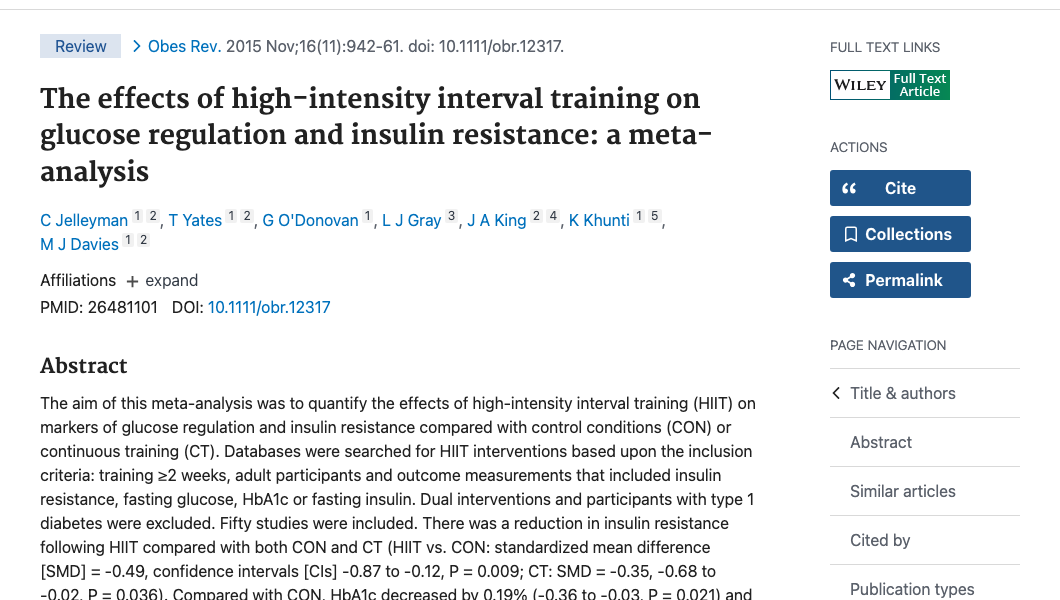
This comprehensive meta-analysis examined 50 studies evaluating the effects of high-intensity interval training on glucose regulation and insulin resistance across diverse populations. The analysis compared HIIT to both non-exercise controls and moderate-intensity continuous training.
HIIT significantly reduced insulin resistance compared to both control conditions (SMD = -0.49, p = 0.009) and continuous training (SMD = -0.35, p = 0.036). HbA1c decreased by 0.19% and body weight dropped by 1.3 kg versus controls. Individuals with type 2 diabetes or those at metabolic risk showed the greatest improvements in fasting glucose.
The authors concluded that HIIT is an effective strategy for improving metabolic health, particularly in populations at risk of or living with type 2 diabetes. They noted that the time efficiency of HIIT makes it especially practical for clinical populations who struggle with exercise adherence.
Methods
- Systematic review and meta-analysis
- 50 studies included
- Compared HIIT vs non-exercise control and vs continuous training
- Outcomes: insulin resistance (HOMA-IR), fasting glucose, HbA1c, body weight
- Subgroup analyses by population risk level
Key Results
- Insulin resistance reduced vs control (SMD = -0.49, p = 0.009)
- Insulin resistance reduced vs continuous training (SMD = -0.35, p = 0.036)
- HbA1c decreased by 0.19% vs control
- Body weight decreased by 1.3 kg vs control
- Greater fasting glucose improvements in type 2 diabetes / at-risk populations
Limitations
- Heterogeneity across included studies in HIIT protocols
- Many studies had small sample sizes
- Short intervention durations in some studies
- Limited long-term follow-up data
- Authors called for larger, longer-duration RCTs