Key Takeaway
HIIT produces large, consistent improvements in cardiorespiratory fitness across diverse adult populations, with effect sizes comparable to or greater than moderate-intensity continuous training.
Summary
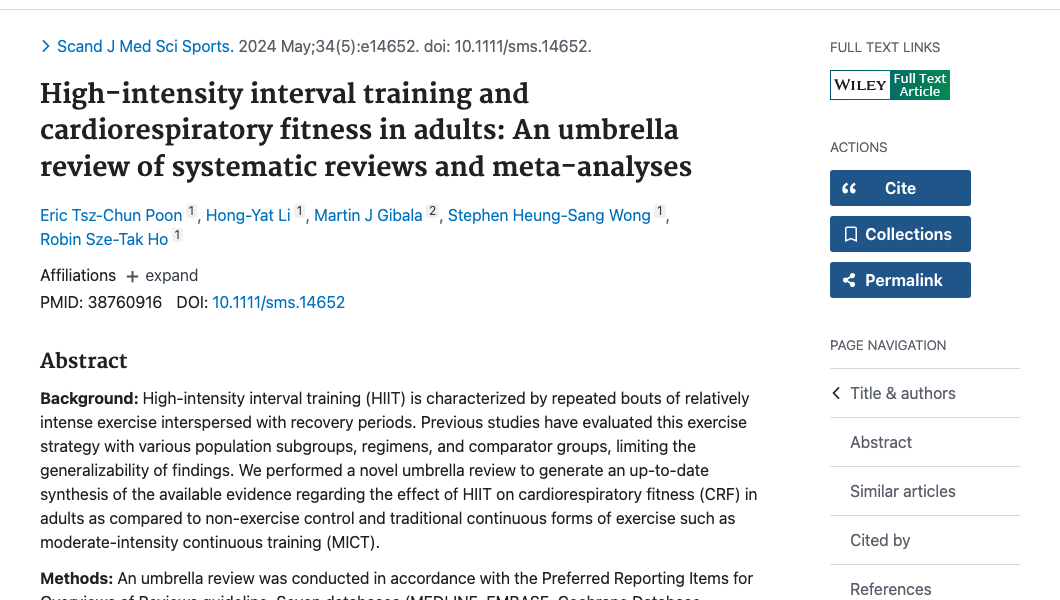
This umbrella review synthesized evidence from multiple systematic reviews and meta-analyses examining the effects of high-intensity interval training on cardiorespiratory fitness (CRF) in adults. By aggregating the highest level of evidence available, the review provides a comprehensive overview of HIIT's impact on VO2max and related CRF outcomes.
The authors found strong and consistent evidence that HIIT meaningfully improves cardiorespiratory fitness across a wide range of adult populations, including healthy individuals, those with chronic conditions, and older adults. The improvements in VO2max were comparable to or exceeded those achieved through moderate-intensity continuous training (MICT), supporting HIIT as a time-efficient alternative.
The umbrella review format allowed the authors to assess the quality and consistency of findings across numerous prior meta-analyses, providing high confidence in the robustness of HIIT's CRF benefits. The review highlights HIIT as a well-supported intervention for improving cardiovascular health at the population level.
Methods
Umbrella review methodology was used to systematically identify, appraise, and synthesize existing systematic reviews and meta-analyses examining HIIT and cardiorespiratory fitness in adult populations. Standard umbrella review protocols were followed including comprehensive database searches, quality assessment of included reviews, and synthesis of pooled effect sizes.
Key Results
- HIIT consistently produced significant improvements in VO2max across multiple meta-analyses
- Effect sizes for CRF improvements were large (Cohen's d typically > 0.5)
- HIIT was at least as effective as moderate-intensity continuous training for improving CRF
- Benefits were observed across healthy adults, clinical populations, and older adults
- Evidence quality was rated moderate to high across included reviews
Limitations
- Umbrella reviews are limited by the quality and heterogeneity of included meta-analyses
- Variation in HIIT protocols across studies (intensity, duration, frequency) limits specificity of recommendations
- Most underlying studies had relatively short intervention durations
- Publication bias in underlying meta-analyses may inflate effect estimates
- Less insight into long-term adherence and sustainability compared to MICT
Related Interventions
Related Studies
Discussed In