
Key Takeaway
A high-protein breakfast (35g) reduced hunger, increased fullness, and decreased evening snacking compared to skipping breakfast or eating a normal-protein breakfast in overweight adults.
Summary
This randomized crossover study examined how breakfast protein content affects appetite, hormonal responses, and brain activity related to food cues in overweight/obese young adults who habitually skipped breakfast.
Methods
- Randomized crossover design
- 20 overweight/obese young adults (18-20 years)
- Three conditions: skip breakfast, normal protein (13g), high protein (35g)
- Measured appetite, hormones (ghrelin, PYY), and fMRI brain responses
- 6-day testing periods per condition
Key Results
- High-protein breakfast reduced hunger throughout the day
- Increased fullness and satiety hormones (PYY)
- Reduced evening snacking on high-fat foods
- fMRI showed reduced brain activation in reward-driven eating regions
- Effects persisted throughout the day, not just post-meal
Figures
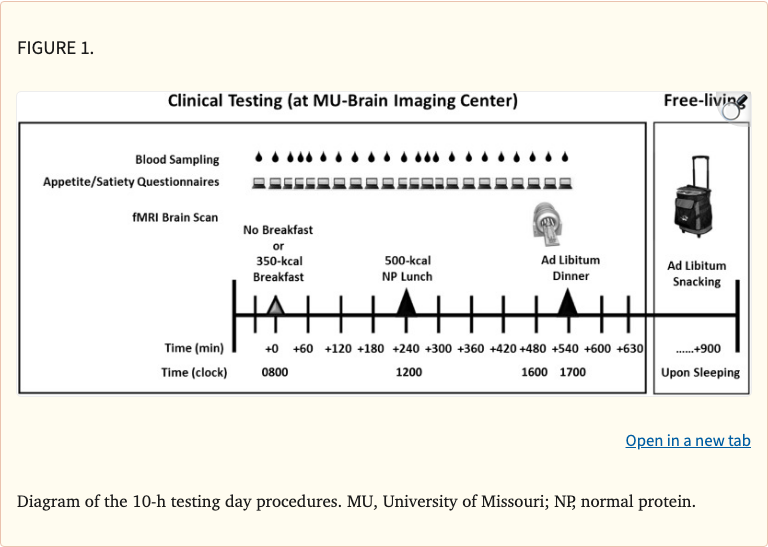 Figure 1
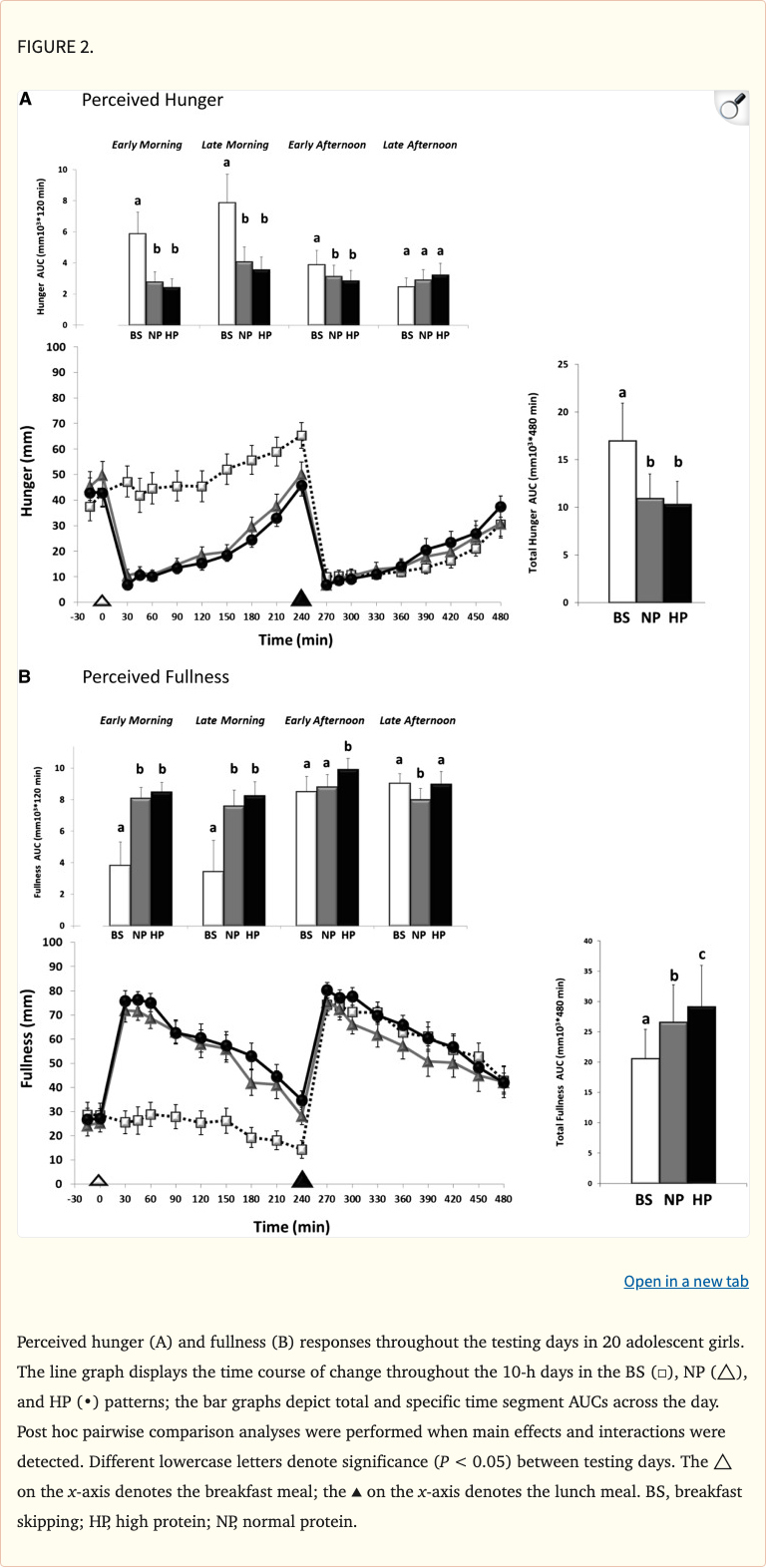 Figure 2
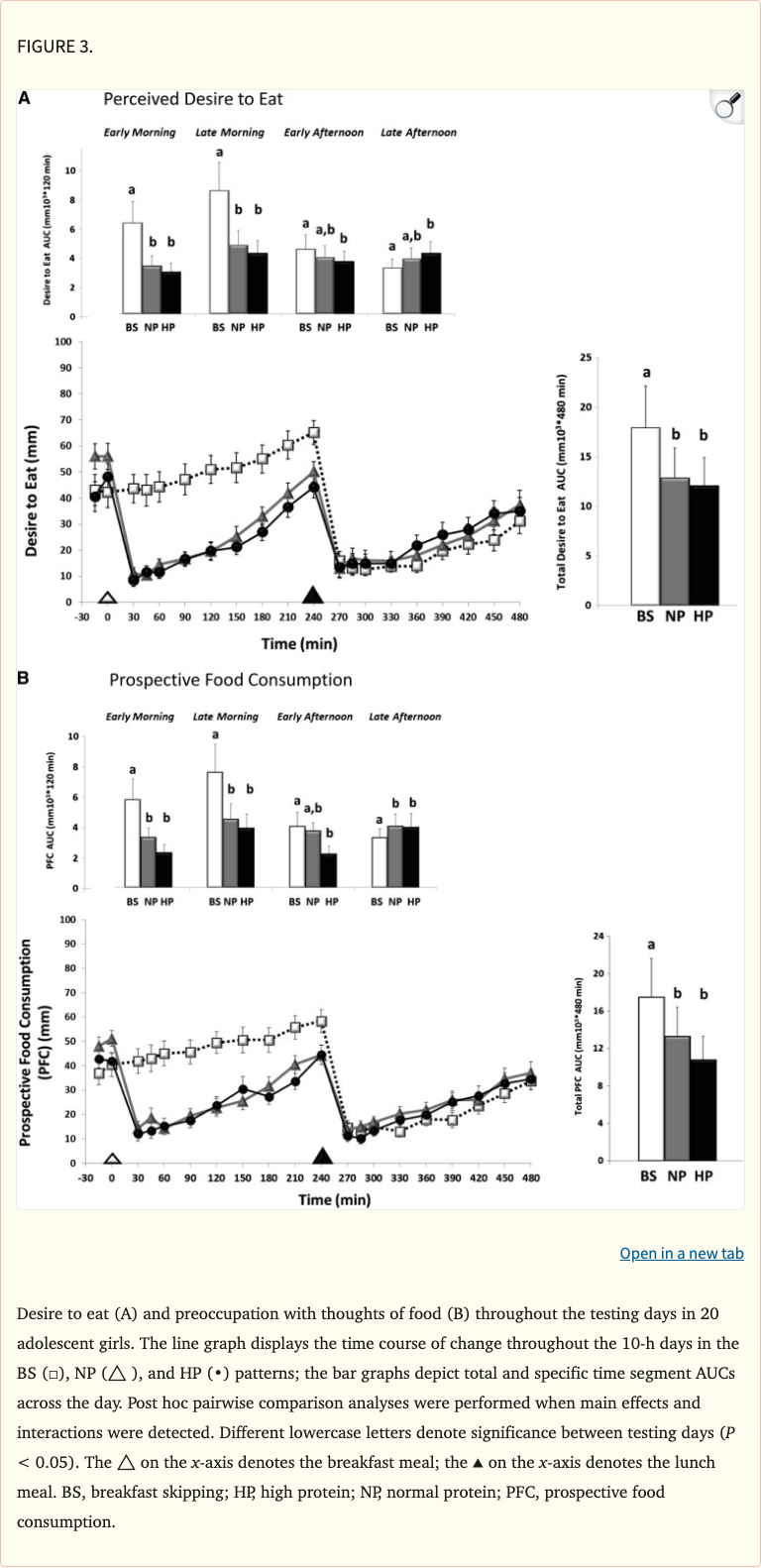 Figure 3
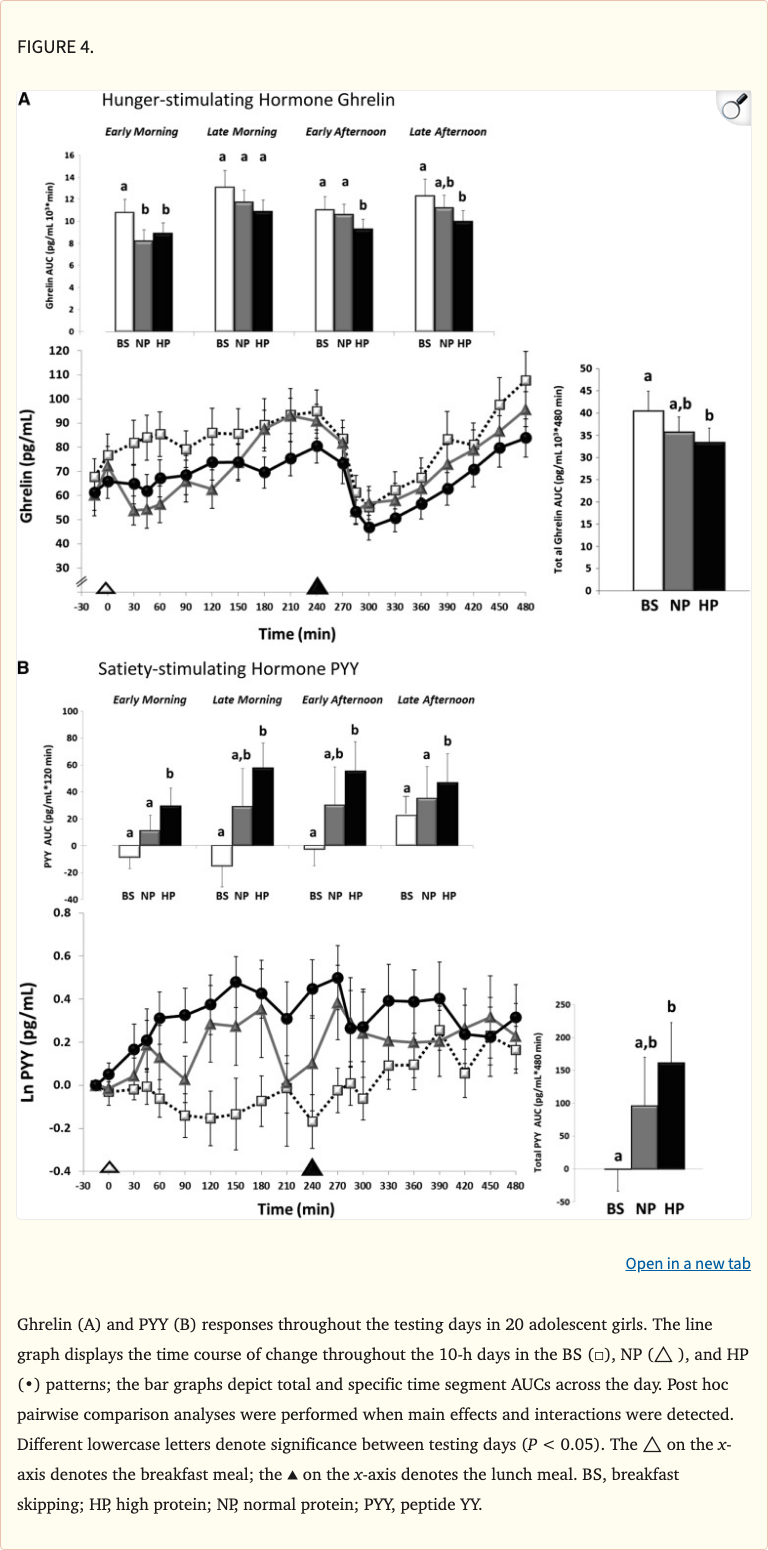 Figure 4
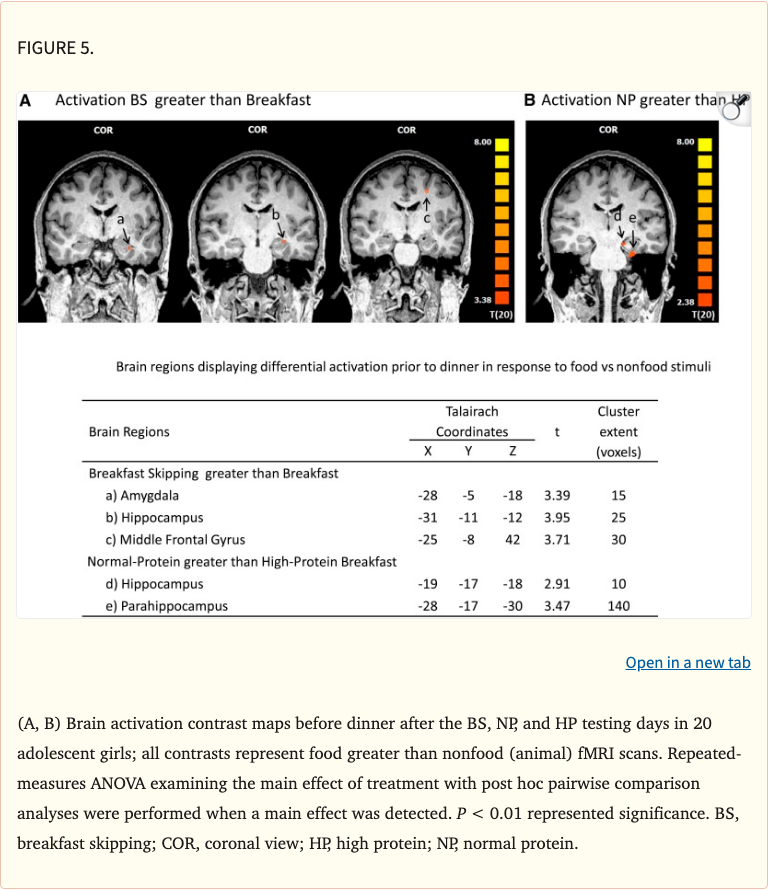 Figure 5
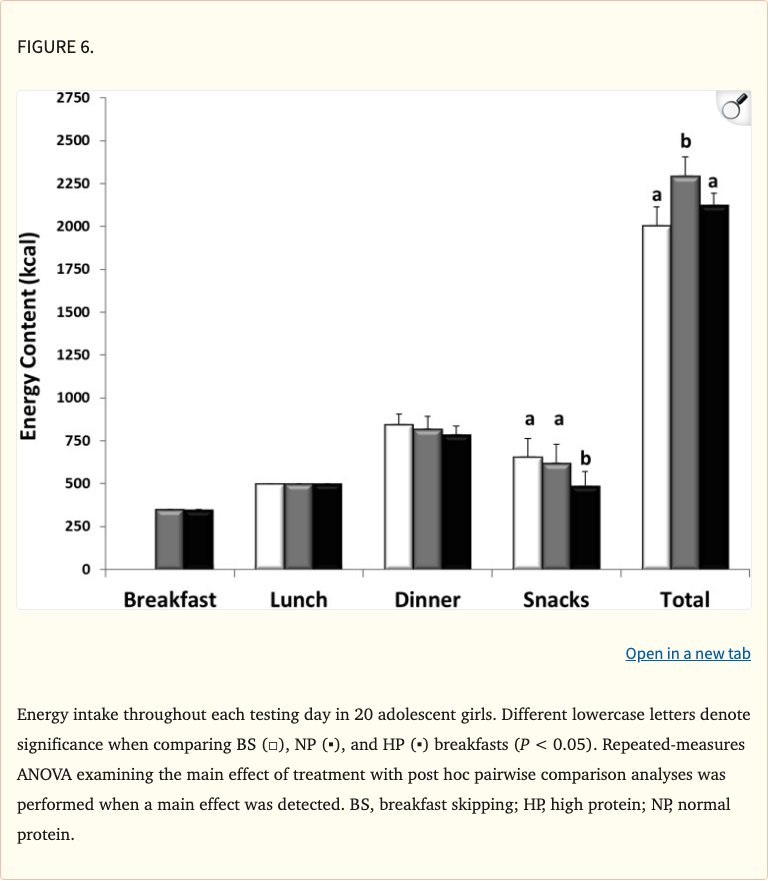 Figure 6
Limitations
- Short duration (6 days per condition)
- Young adult population only
- Controlled laboratory setting
- May not generalize to all populations