
Key Takeaway
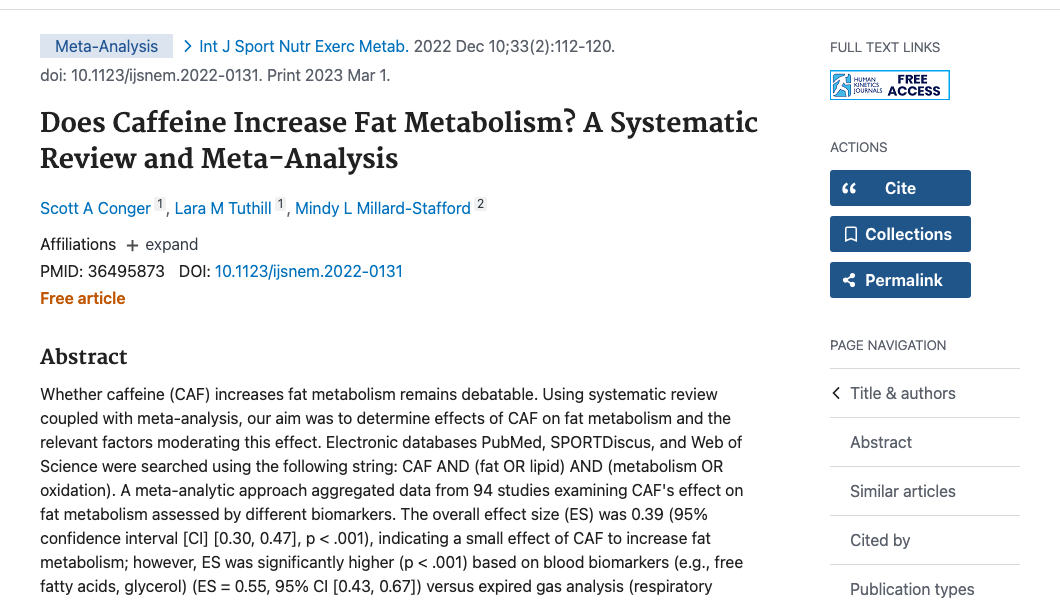
Large meta-analysis of 94 studies confirms caffeine increases fat metabolism (ES = 0.39), with effects larger at rest (ES = 0.51) than during exercise (ES = 0.35).
Summary
This comprehensive meta-analysis pooled data from 94 studies with 105 independent populations and 435 separate effect sizes, making it one of the largest analyses of caffeine's metabolic effects. The overall finding was a small but statistically significant increase in fat metabolism with caffeine ingestion (ES = 0.39, p < 0.001).
An interesting nuance emerged around measurement methods: blood biomarkers like free fatty acids and glycerol showed larger effects (ES = 0.55) compared to whole-body gas exchange measures (ES = 0.26). Fat metabolism increased more during rest (ES = 0.51) than during exercise (ES = 0.35), suggesting caffeine's fat-mobilizing effects may be partially overridden by exercise-driven metabolic demands.
Notably, caffeine dosage, fitness level, and biological sex did not significantly moderate the fat oxidation effect - meaning the benefit appears relatively consistent across populations and doses.
Methods
- Systematic review and meta-analysis of 94 studies
- 105 independent study populations
- 435 separate effect sizes analyzed
- Compared blood biomarkers vs. gas exchange measures
- Subgroup analyses by rest/exercise, fitness, sex, and dose
Key Results
- Overall fat metabolism effect: ES = 0.39 (95% CI: 0.30-0.47), p < 0.001
- Blood biomarkers (FFA, glycerol): ES = 0.55
- Gas exchange (RER): ES = 0.26
- Rest conditions: ES = 0.51
- Exercise conditions: ES = 0.35
- No significant differences by fitness level, sex, or dosage
Limitations
- Heterogeneous study protocols and exercise modalities
- Blood biomarkers may overestimate whole-body fat oxidation
- Most studies used acute single-dose caffeine
- Clinical significance of small effect size unclear for weight management
