
Key Takeaway
Barefoot and minimalist running promote a forefoot strike pattern that reduces impact loading rates and may lower injury risk, though a gradual transition period is essential to avoid metatarsal stress injuries.
Summary
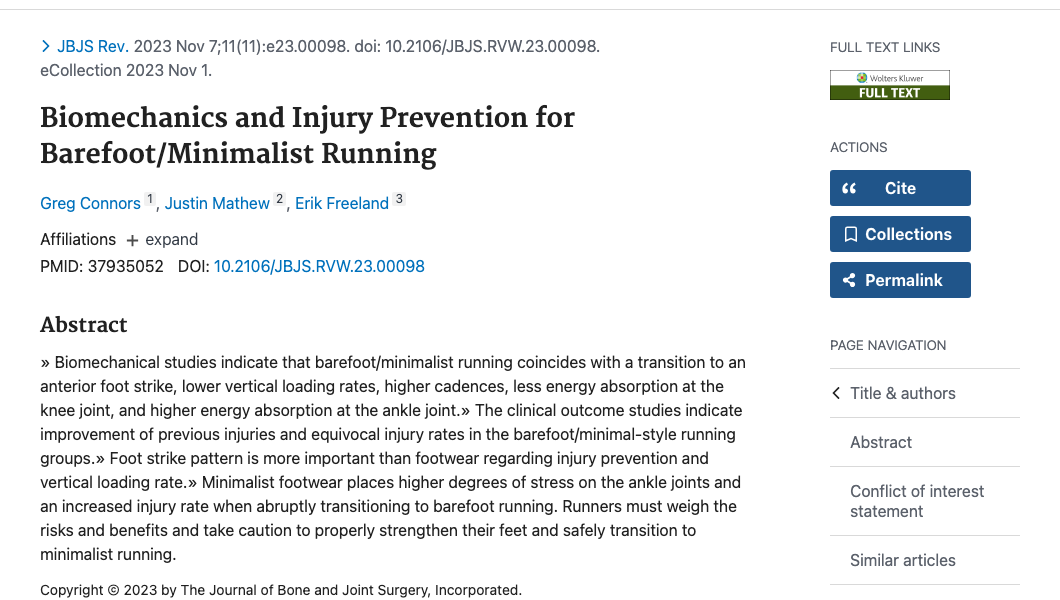
This narrative review examines the biomechanical differences between barefoot/minimalist running and conventional shod running, with a focus on injury prevention implications. The authors synthesize evidence on how footwear influences gait mechanics, ground reaction forces, and injury patterns.
The review finds that barefoot and minimalist running naturally encourages a forefoot or midfoot strike pattern, shorter stride length, and higher cadence. These biomechanical changes reduce vertical impact loading rates — a factor strongly associated with common running injuries like tibial stress fractures and plantar fasciitis. However, the shift also increases loading on the calf muscles and Achilles tendon, which can cause injuries if the transition is too abrupt.
The authors emphasize that a gradual transition protocol is critical for safely adopting barefoot or minimalist running. They recommend progressively increasing minimalist mileage over 8-12 weeks while maintaining some conventional shoe use. The review concludes that minimalist footwear can be a valuable tool for injury prevention when adopted properly, but is not a one-size-fits-all solution — individual biomechanics and injury history should guide footwear choices.