
Key Takeaway
Large meta-analysis showing that 60-75 minutes of moderate-intensity physical activity daily can eliminate the increased mortality risk associated with prolonged sitting.
Summary
This meta-analysis examined the joint associations of physical activity and sedentary time with mortality using device-measured data from over 44,000 adults across 4 countries.
The key finding was that high levels of moderate-intensity physical activity (60-75 minutes per day) appeared to eliminate the increased risk of death associated with high sitting time (8+ hours daily). This provides an actionable target for those who cannot reduce their sitting time.
Walking is the most accessible way to accumulate this activity level, making this study highly relevant for office workers and others with sedentary occupations.
Methods
- Harmonized meta-analysis of 4 cohort studies
- 44,370 adults followed for 4-14 years
- Activity measured by accelerometer (not self-report)
- Analyzed joint effects of activity + sedentary time
- Stratified by activity level and sitting time
Key Results
- 8+ hours sitting increased mortality risk by 27% in least active
- 60-75 min/day moderate activity eliminated sitting-related risk
- Light activity provided some benefit but less than moderate
- 10+ hours sitting still risky even with some activity
- Most active quartile had lowest mortality regardless of sitting time
Figures
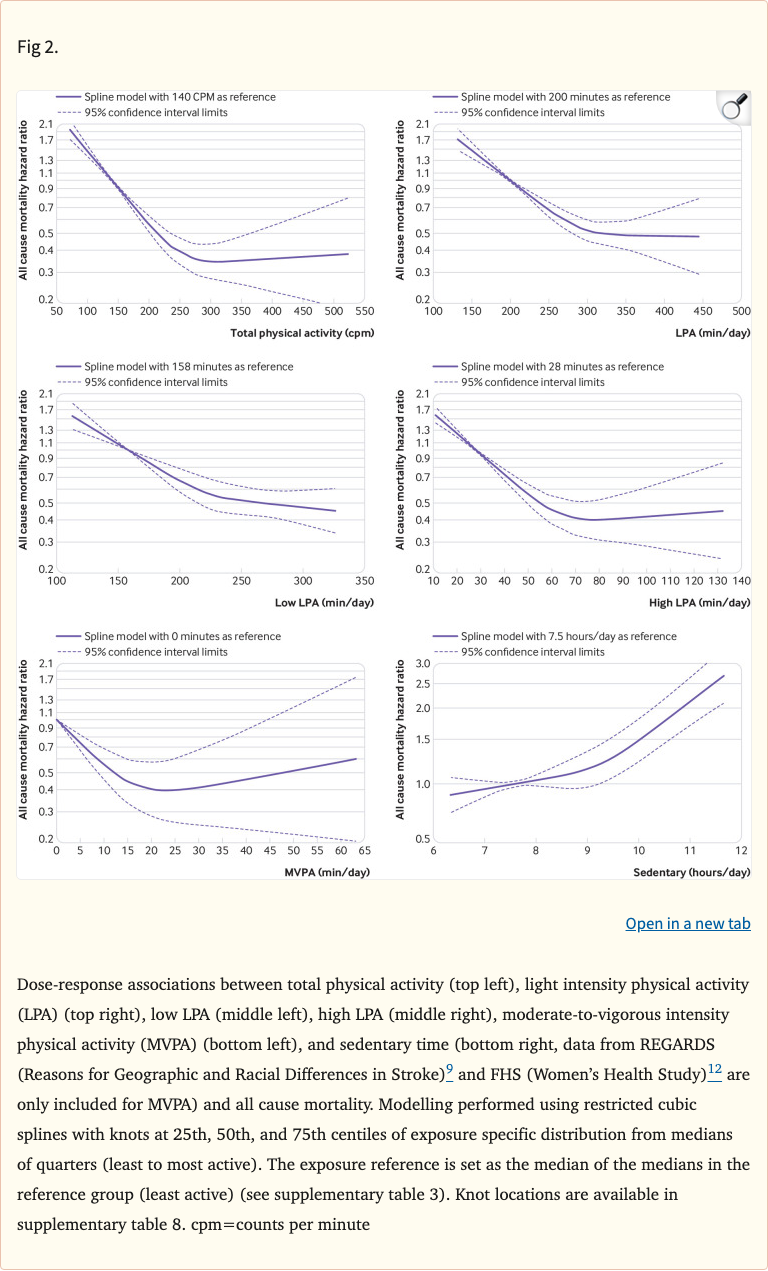 Figure 1
Limitations
- Cannot distinguish sitting types (leisure vs. work)
- Single measurement period
- Potential reverse causation (sick people sit more)
- Most participants were European, predominantly white