
Key Takeaway
A single float session produced significant and substantial reductions in anxiety and improvements in mood across 50 participants with anxiety and stress-related disorders.
Summary
This study from the Laureate Institute for Brain Research examined the effects of a single float session on participants with clinical anxiety, stress-related disorders, and depression. It represents one of the most rigorous modern studies of flotation therapy.
Fifty participants with diagnosed anxiety-related conditions underwent a single 60-minute float session. Results showed large effect size reductions in anxiety (Cohen's d = 0.79), stress, muscle tension, pain, and depression, with concurrent improvements in serenity and overall well-being.
The study demonstrated that flotation therapy can provide rapid relief from anxiety symptoms, even after just one session, making it a promising intervention for anxiety disorders.
Methods
- 50 participants with anxiety and stress-related disorders
- Single 60-minute float session
- Pre/post self-report questionnaires
- Measures: State-Trait Anxiety Inventory, Visual Analog Mood Scales
- Anxiety, stress, muscle tension, pain, depression measured
Key Results
- State anxiety: 37% reduction (large effect, d=0.79)
- Stress: Significant reduction
- Muscle tension: Significant reduction
- Pain: Significant reduction
- Depression: Significant reduction
- Serenity: Significant increase
- Effects significant across all diagnostic groups
- Those with highest baseline anxiety showed greatest improvements
Figures
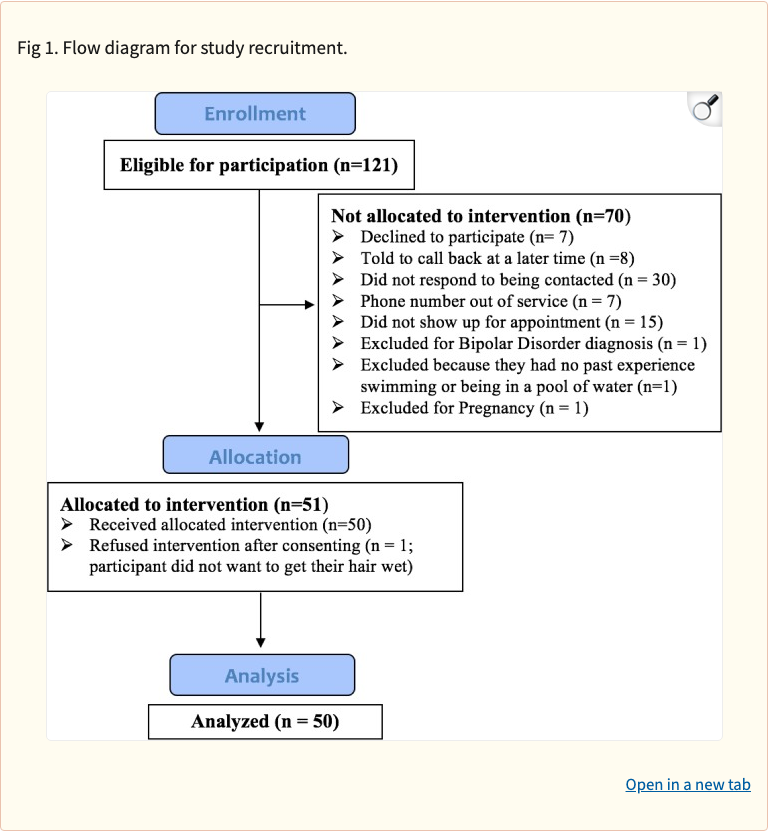 Figure 1
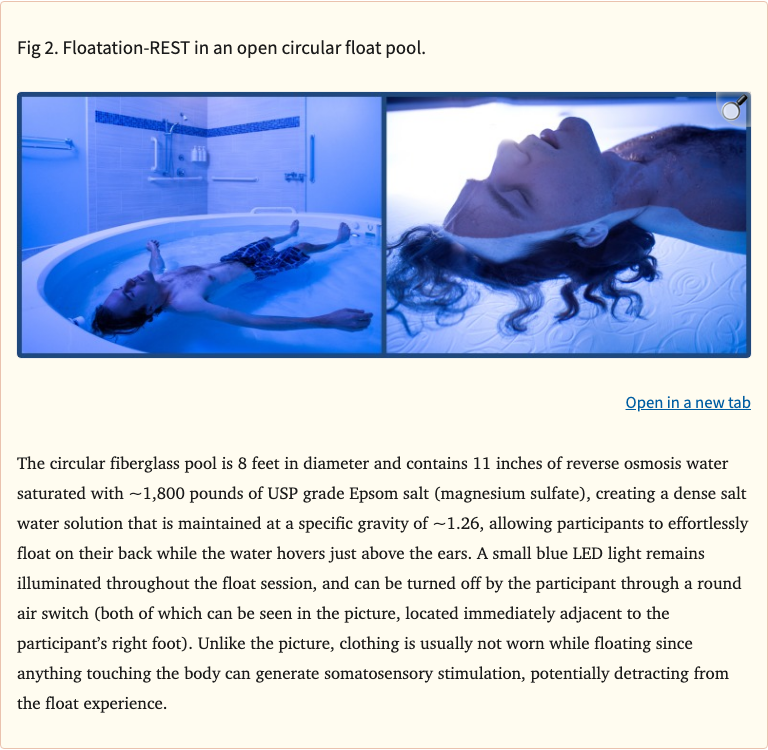 Figure 2
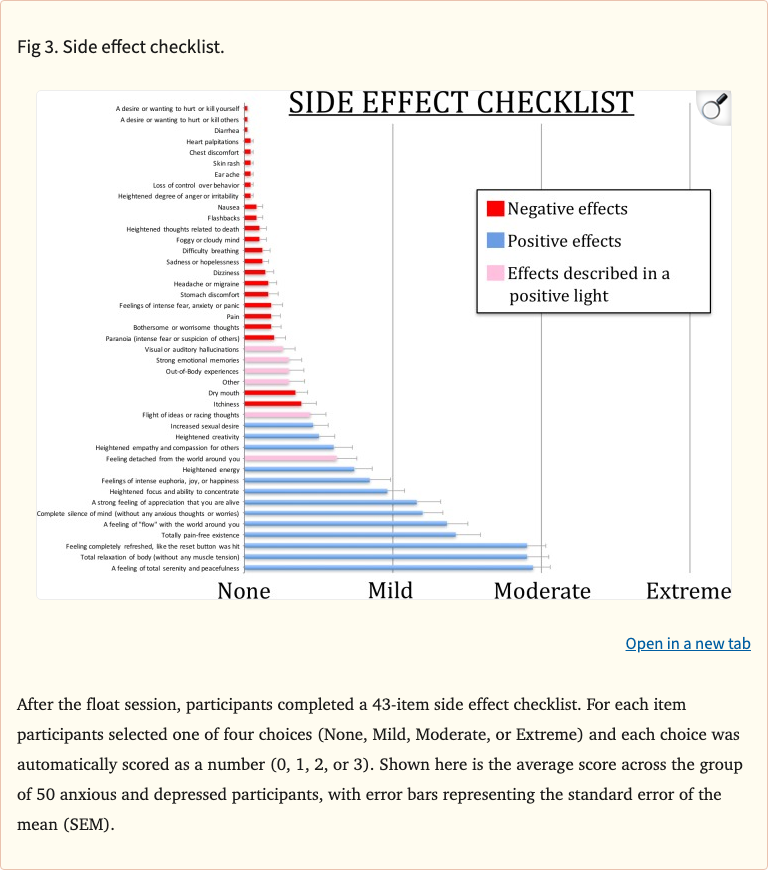 Figure 3
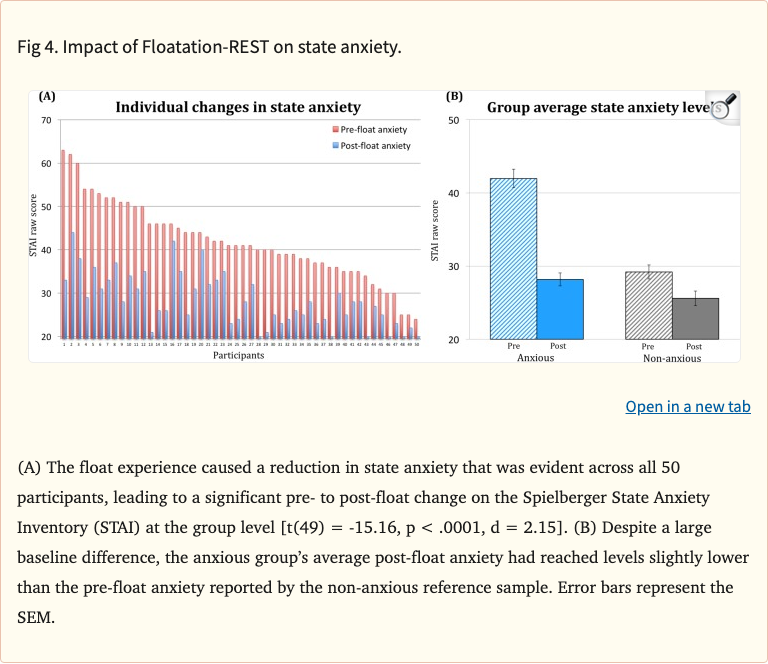 Figure 4
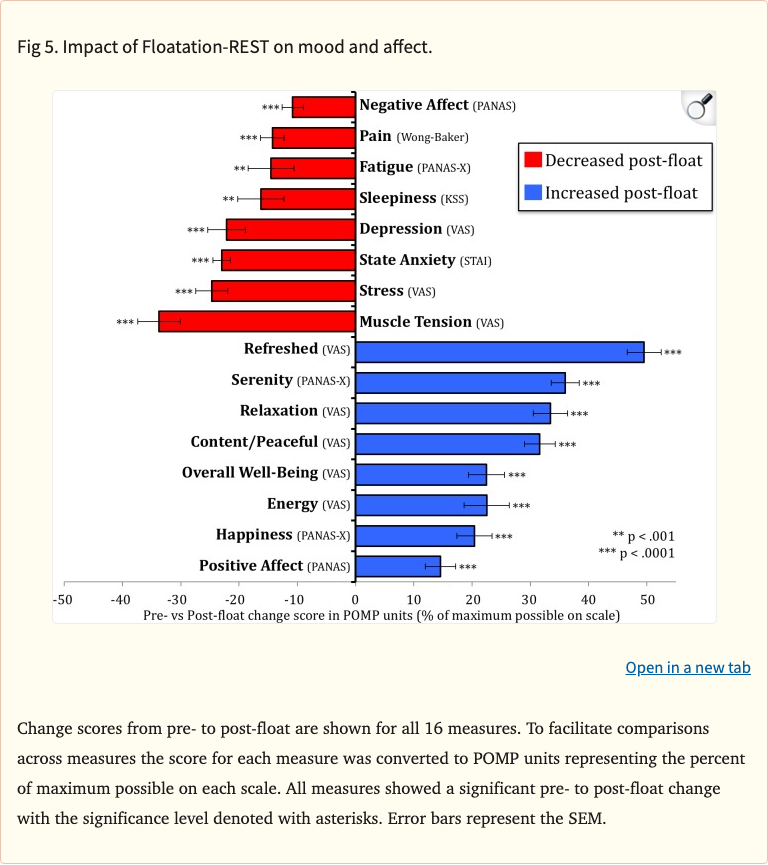 Figure 5
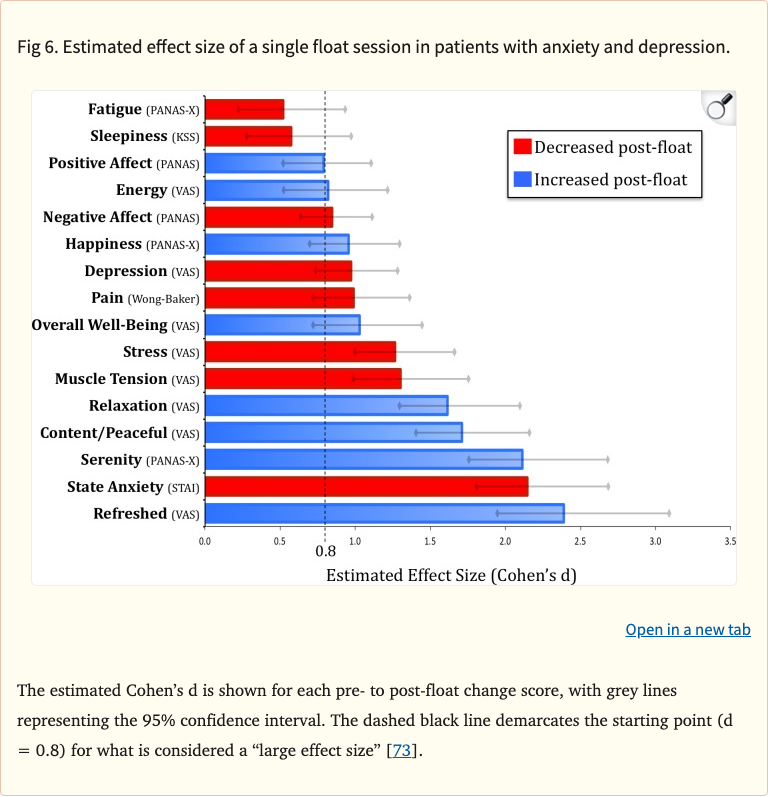 Figure 6
Limitations
- No control group (single-arm study)
- Single session only (durability of effects unknown)
- Self-report measures only
- Expectancy/placebo effects possible
- Participants knew they were receiving intervention