
Key Takeaway
PRP injections provide superior pain relief and functional improvement compared to hyaluronic acid and placebo for knee osteoarthritis
Summary
Comprehensive meta-analysis of 30 randomized controlled trials evaluating PRP injections for knee osteoarthritis and cartilage lesions. The analysis included over 2,500 patients and compared PRP to hyaluronic acid, saline placebo, and corticosteroids.
Methods
- Systematic review following PRISMA guidelines
- Included 30 RCTs with 2,562 patients
- Outcomes measured: pain (VAS, WOMAC), function (IKDC, KOOS)
- Follow-up ranged from 3-24 months
- Subgroup analysis by PRP preparation type (leukocyte-rich vs leukocyte-poor)
Key Results
- PRP superior to hyaluronic acid at 6 and 12 months (p<0.001)
- PRP superior to saline placebo at all time points
- Effect size for pain reduction: SMD -0.73 vs HA, -0.84 vs placebo
- Leukocyte-poor PRP showed better results than leukocyte-rich
- Better outcomes in mild-moderate OA (K-L grades 1-3) vs severe
- No significant difference vs corticosteroids at 3 months, but PRP better at 12 months
Figures
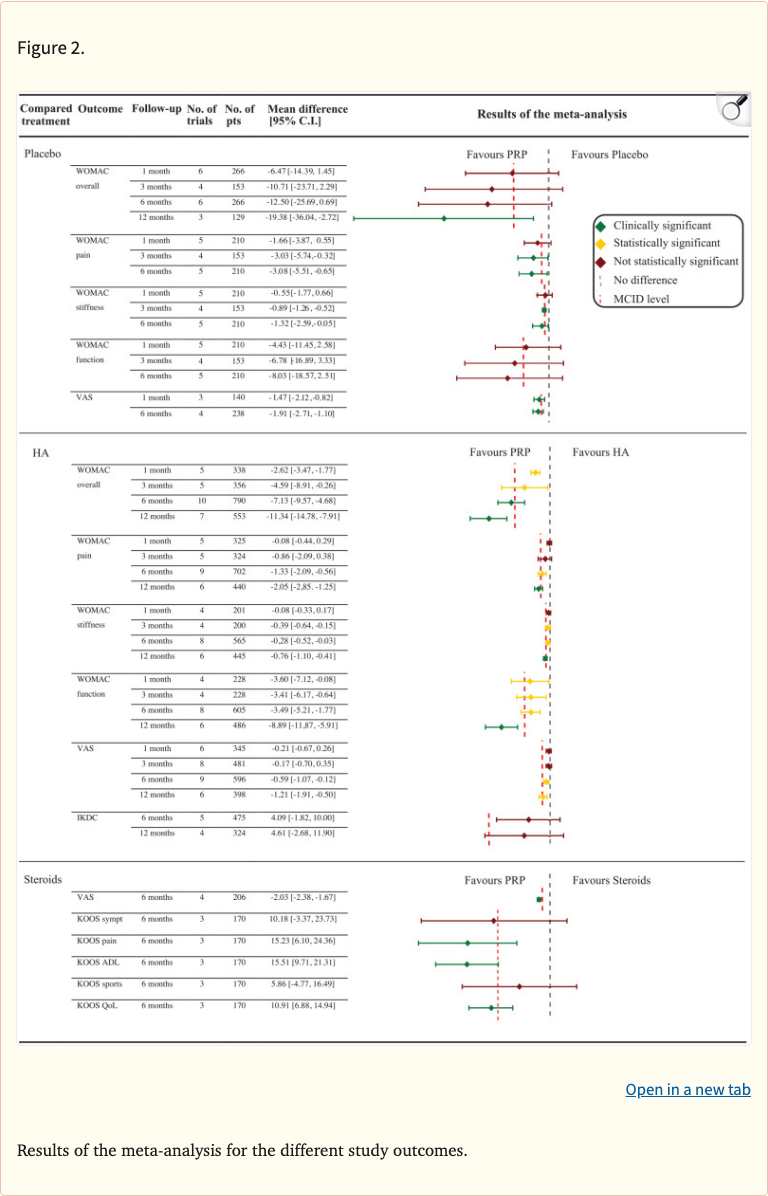 Figure 1
Limitations
- Heterogeneity in PRP preparation protocols across studies
- Variable platelet concentrations achieved
- Most studies had follow-up ≤12 months
- Publication bias possible (negative studies less likely published)
- Cost-effectiveness not assessed